Pakistan has emerged as one of the top five countries worldwide for absolute reductions in child mortality, driven largely by sustained immunization efforts over the past five decades.
According to health authorities, the country has averted an estimated 2.6 million child deaths from vaccine-preventable diseases, marking a major public health achievement rooted in science, coordination, and community outreach.
Since the establishment of the Expanded Program on Immunization (EPI) in 1978, Pakistan has vaccinated more than 160 million children and 130 million mothers.
This long-running initiative, implemented in collaboration with international partners, has transformed the country’s health landscape.
Building on earlier success, such as the eradication of smallpox in 1976, Pakistan has demonstrated how consistent investment in vaccines can yield life-saving results across generations.
Globally, vaccines have saved an estimated 154 million lives since 1974, and Pakistan’s contribution to this progress is significant.
Immunization efforts in the country are estimated to prevent up to 17% of all childhood deaths, making vaccines the single most cost-effective public health intervention available.
Read More: AKU Hospital Marks World Immunization Week with Community Engagement
One of the most notable successes has been the dramatic reduction in paralytic polio cases. Since 1994, cases have dropped by 99.8%, from approximately 20,000 annually to just 31 reported in 2025.
Several regions, including Punjab, Sindh, Islamabad, Gilgit-Baltistan, and Pakistan-administered Kashmir, have achieved certification for elimination, ensuring that around 80% of the population now lives in areas where neonatal tetanus is no longer a public health threat.
These gains are the result of coordinated efforts by the government, international organizations, frontline health workers, and communities.
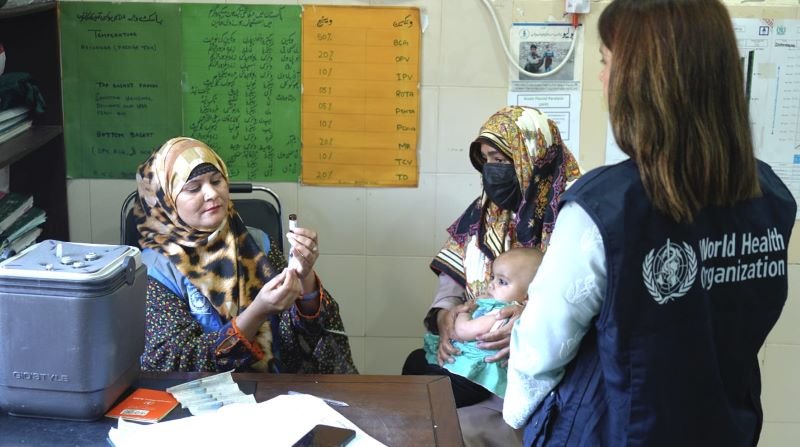
Each year, millions of children and women are immunized against a wide range of diseases, while large-scale campaigns continue to target polio.
The workforce behind these efforts is vast, comprising tens of thousands of routine vaccinators and hundreds of thousands of polio workers; the largest such network in the world.
Beyond saving lives, immunization has significantly reduced illness, disability, and hospitalizations, easing the burden on families and the healthcare system.
Health experts estimate that for every death prevented through vaccination, an average of 66 years of healthy life is gained, underscoring the broader societal impact.
As World Immunization Week approaches, health officials have emphasized the importance of continued trust in vaccines. They stress that vaccines are safe, effective, and essential to protecting future generations from preventable diseases.