Nadi (TDI): Pacific Island nations are being called on to overhaul how they supervise their financial systems, with a senior regional official warning that weak regulation could cut the region off from global banking networks and leave communities without access to basic financial services.
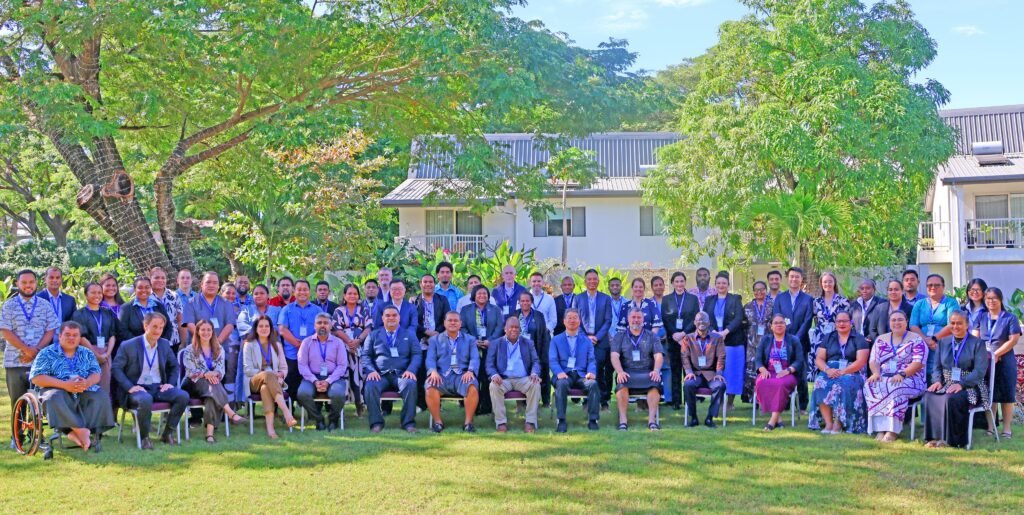
The call came as the Pacific Islands Forum Secretariat (PIFS) opened a three-day Pacific Risk-Based Supervision Workshop in Nadi, Fiji, on Tuesday.
The workshop has brought together central bank governors, financial supervisors, regulators and international partners from across the region.
Acting Director of Programs and Initiatives at PIFS, Denton Rarawa, told participants that Pacific nations face growing pressure from financial crime risks, limited supervisory resources and dependence on international financial flows.
At the heart of the workshop is a push to move away from rigid, rule-based oversight toward risk-based supervision; an approach that concentrates regulatory effort where threats are greatest rather than applying blanket compliance requirements across the board.
#CorrespondentBankingRelationships
A wrap up of Day One of the Pacific Risk Based Supervision workshop convened under the Strengthening Correspondent Banking Relationships in the Pacific Project.
The workshop looks at strengthening supervisory capacity, establish regional… pic.twitter.com/IvHGymj3y5
— Pacific Islands Forum (@ForumSEC) May 19, 2026
“The effectiveness of an AML/CFT system depends not on how many rules exist, but on how intelligently effort is directed to where the risks are greatest,” Rarawa said.
Rarawa warned that weak or unpredictable regulatory systems could trigger de-risking by international banks, pushing up transaction costs and causing Pacific countries to lose correspondent banking relationships.
For economies heavily reliant on cross-border money flows, including remittances from diaspora communities, that prospect poses a serious development risk.
By contrast, he argued, a credible and consistently applied risk-based approach would send a clear signal to international partners.
“A well-articulated and consistently applied risk-based supervisory approach signals maturity, competence, and seriousness of purpose,” he said.
The workshop also addressed financial inclusion; a persistent challenge across Pacific communities, particularly in remote areas.
Read More: New Zealand, Cook Islands Enter Into Defense Pact, Ending Quarrel Over China Deal
Rarawa said a risk-based approach allows supervisors and institutions to distinguish between higher and lower-risk activities, enabling simplified and proportionate measures where appropriate.
The concern is that overly strict compliance regimes, if poorly targeted, end up penalising low-risk customers and locking out the very people financial systems are meant to serve.
Rarawa acknowledged that building effective supervision remained challenging for small Pacific states given limited resources, staffing and technical capacity, but said progress was achievable through regional cooperation, peer learning and technical assistance.
The World Bank and the Reserve Bank of Fiji are supporting the workshop. The gathering reflects growing urgency in the region around anti-money laundering and counter-financing of terrorism (AML/CFT) frameworks.
Pacific nations vary widely in economic size and structure, but share common vulnerabilities, such as small open economies exposed to external shocks and heavily reliant on cross-border financial services.
“By continuing to strengthen risk-based supervision within our AML/CFT frameworks, we not only protect our financial systems from criminals and abuse, but also promote trust, inclusion, and sustainable engagement with the global economy,” Rarawa said.