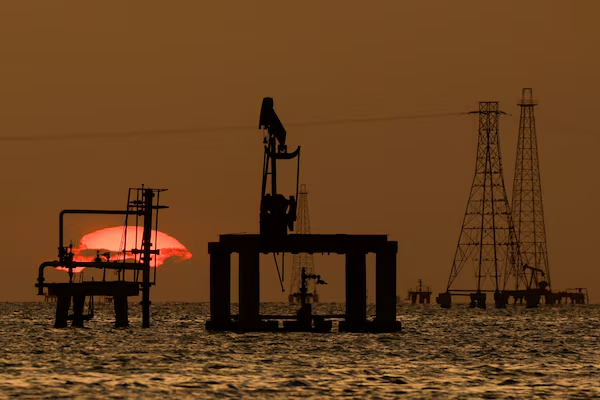
New York (TDI): Global oil prices moved toward significant weekly gains on Friday despite efforts by the United States to ease supply concerns through a temporary waiver allowing countries to purchase stranded Russian oil shipments.
Benchmark Brent Crude futures for May rose 10 cents, or 0.1%, to $100.56 per barrel by 0400 GMT, putting the contract on track for roughly a 9% weekly increase. Meanwhile, West Texas Intermediate (WTI) crude for April slipped 16 cents, or 0.2%, to $95.57 per barrel, but remained poised for a 7% gain for the week.
The price surge comes despite Washington issuing a 30-day licence permitting buyers to purchase Russian oil and petroleum products currently stranded at sea. Scott Bessent said the measure was intended to stabilise global energy markets shaken by the ongoing war involving Iran, Israel and the United States.
However, market analysts said the waiver provides only limited relief. Emril Jamil, a senior analyst at LSEG, noted that Brent prices have already surpassed the $100-per-barrel mark and remain supported despite attempts to calm markets through the Russian oil waiver and emergency stockpile releases, according to Reuters.
Read More: PNSC Oil Vessels Reach Karachi Under Pakistan Navy Escort
Analysts say the main concern continues to be disruptions to shipping through the Strait of Hormuz, a key energy corridor that carries nearly one-fifth of global oil shipments. Ongoing conflict and tanker attacks in the region have significantly restricted maritime traffic and heightened fears of a prolonged supply crunch.
The announcement on Russian oil followed a move by the United States Department of Energy to release 172 million barrels from the US Strategic Petroleum Reserve to curb soaring prices. The decision was coordinated with the International Energy Agency, which plans to release a record 400 million barrels from strategic reserves worldwide.
Read More: World Faces Historic Oil Supply Disruption Amid Iran War: IEA
Despite these measures, renewed tensions in the Middle East have continued to drive prices higher. Both Brent and WTI benchmarks surged more than 9% on Thursday, reaching their highest levels since August 2022.
Adding to the uncertainty, Iran’s Supreme Leader Mojtaba Khamenei warned that Tehran would continue the fight and maintain pressure on global oil supply routes, including the Strait of Hormuz, as leverage against the United States and Israel.
Meanwhile, US officials have suggested that the United States Navy could potentially lead an international coalition to escort commercial vessels through the Strait of Hormuz once military conditions allow safe passage, in an effort to restore shipping and stabilise energy markets.