As the COP31 Climate Conference meets in Antalya, Turkey, from 9 to 20 November 2026, 39 countries agreed to support a commitment to triple nuclear energy by 2050, up from 22 initially.
These developments are deeply real for Pakistan today. According to the World Meteorological Organization (WMO), the period from January to September 2026 was 1.47°C above the pre-industrial (1850-1900) average. The period also confirms that 2023 to 2026 are the four warmest years on record, also discussed at COP31.
As a result of the 2010 floods, around 20 million people not only lost their lives, but a large number were also displaced and injured. According to the IFRC, the 2025 floods hit about 6.9 million people and killed 1037 people. Due to climate change, Pakistan was ranked 1st globally in 2025 and 8th globally in 2017 by the Global Climate Risk Index.
The country faced significant damages, approximately US$3.8 billion (PPP) from 1996 to 2015. Currently, Pakistan is facing dual challenges: the first is a persistent energy crisis, while the second one is a climate emergency accelerated by a massive use of fossil fuels.
Read More: Pakistan Climate Finance Gets Boost as CVF-V20, JS Bank Sign MoU
However, the only solution to these two challenges is the peaceful use of nuclear energy. To deal with this crisis, Pakistan should prefer nuclear energy because it is a cost-effective, sustainable, affordable, and climate-friendly source. Thus, nuclear energy can help Pakistan address dual challenges: addressing the chronic energy issue and meeting its climate change commitments at global forums.
In 2025, the global CO2 concentration hits 426.8 parts per million (ppm), a 53% increase from the industrial level. This is also because fossil fuels have been the primary source of human emissions since the 1950s. Approximately 57% of Pakistan’s electricity comes from thermal power plants, which rely on carbon-intensive, limited processes and release large amounts of thermal energy. Even so, Pakistan still faces a shortfall of 9000 MW.
On the other hand, Pakistan’s overall economic growth depends heavily on imported fossil fuels, with the energy sector accounting for 76.1% of overall CO2 emissions. Furthermore, Pakistan imports 80% of oil and 60% of natural gas; as a result, it cannot resist market shocks, process fluctuations, price volatility, or supply disruptions This is also because its storage systems, LNG terminals, and pipeline systems are insufficient.
Geographically, Pakistan sits at the heart of the climate crisis and is directly affected by CO2 emissions from neighboring countries like China and India. Therefore, Pakistan needs to invest not only in renewable sources such as hydropower, solar, and wind, but also in nuclear energy to fully meet the country’s energy demand.
Globally, nuclear energy is operating. According to the World Nuclear Outlook (2026), it generated a record of 2702 TWh in 2025, about 9% of world electricity, and reduced 1.25 billion tons of CO2 a year. Similarly, the IEA reports a 2025 record and expects steady growth through 2030.
Furthermore, scientific estimates show that nuclear reactors produce 1/3 CO2 at a rate lower than hydro, solar, and wind power generation. Therefore, nuclear power is an environmentally friendly energy source because it emits a small amount of GHGs.
On the other hand, unlike solar and wind power plants, nuclear power plants work continuously, offering a stable and reliable source with the highest capacity factor. Nuclear energy is a reliable source for Pakistan because it is not vulnerable to external factors like water availability and weather patterns.
Moreover, nuclear power reactors met 27% of Pakistan’s total energy needs in December 2022, with the cost of generated energy as low as half a US penny per unit. By using nuclear energy, Pakistan will be able to save an estimated 6,785.7million dollars in fuel imports.
It may also require less space than solar power, which needs 75 times more land to produce the same amount of energy as nuclear energy.
One of the main benefits of nuclear energy is the issue related to nuclear waste and its disposal. Nuclear facilities generate far less radioactive waste than other energy sources. For instance, the amount of waste produced by nuclear plants in seventy years equals the waste generated by coal plants in one hour.
In addition, the IAEA’s latest safety measures and mechanisms further address the issues related to nuclear waste management. A large amount of investment is required for the construction of nuclear power plants. It is also debatable that given the high construction and maintenance costs of renewable energy alternatives, nuclear power generation becomes more feasible.
Only 11 reactors out of about 550 reactors began construction worldwide in 2025. More than 550 GWe of government targets remain unmet. Although there are some challenges associated with NPPs, such as the safety and security of the plants, the Fukushima nuclear incident raised global concerns about the safety and security of nuclear plants.
Despite this, France currently uses nuclear energy to reduce its dependence on fossil fuels, and Japan has restarted the world’s largest nuclear power stations given the importance of nuclear energy. Pakistan, with more than five decades of experience in safe and secure operation of NPPs under IAEA safeguards, can prioritize nuclear power for mitigating climate change impacts and meeting the growing energy demand.
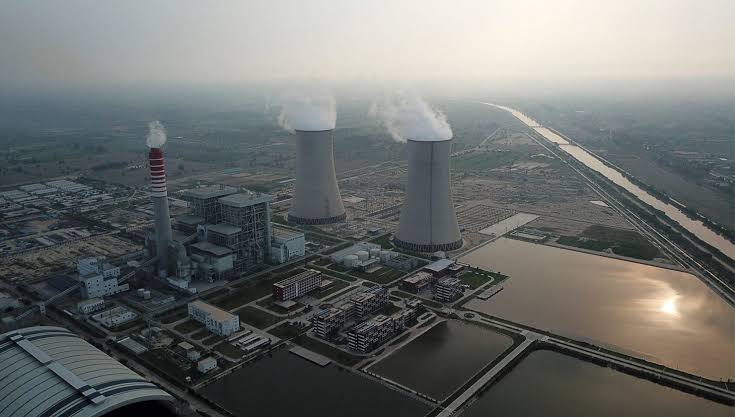
In September 2026, Pakistan and the IAEA signed a safeguards agreement for Chashma-5, a 1200 MW unit due to be commissioned in 2028, after the IAEA Board of Governors approved it in March. This means the IAEA recognizes Pakistan’s nuclear safety and security record.
Pakistan should strengthen a long-term nuclear energy plan and requisite institutional structure while maintaining the highest safety standards, especially under IAEA safety and regulatory frameworks. The IAEA itself now projects global nuclear capacity of 641 GWe in its low case and 1045 GWe in its high case by 2050, against 377.1 GWe operable at the end of 2025.
Read More: PM Shehbaz Calls for Grant-Based Climate Finance at COP31 in Türkiye
In the same way, Pakistan must seek international cooperation in the peaceful application of nuclear energy to meet its growing energy demands. Pakistan has already started its nuclear energy output. Therefore, Pakistan’s Nuclear Energy Mission 2050 appears promising and aims to reduce the adverse impact of the climate crisis.
The combination of nuclear energy with other renewable energy (wind, solar, hydropower) can only work in long-term planning. In this situation, the nuclear renewable hybrid energy system (N-RHES) is increasingly being considered as a promising solution to meet the increasing energy demand.
The floods of 2010 and 2025 show what delay costs. As a vulnerable nation, Pakistan must ensure cleaner energy in the form of nuclear energy to participate in global efforts as targeted in the Paris Agreement until the middle of the century, to curb greenhouse gases.
An ambition of the Pakistan Atomic Energy Agency (PAEC) to deal with the nuclear option is important and necessary. To further mitigate the effects of climate change and meet the growing energy needs of its population, Pakistan needs to place a greater focus on expanding its nuclear energy generation capabilities.
*The views presented in this article are the authors’ own and do not necessarily reflect the views of The Diplomatic Insight.*
Faridullah Khan
Faridullah Khan is an International Relations graduate of BUITEMS, Quetta, whose research focuses on climate change, strategic studies, nuclear arms, regional livelihoods, traditional security and non-traditional security in Balochistan. He is currently an intern at the Balochistan Think Tank Network (BTTN).