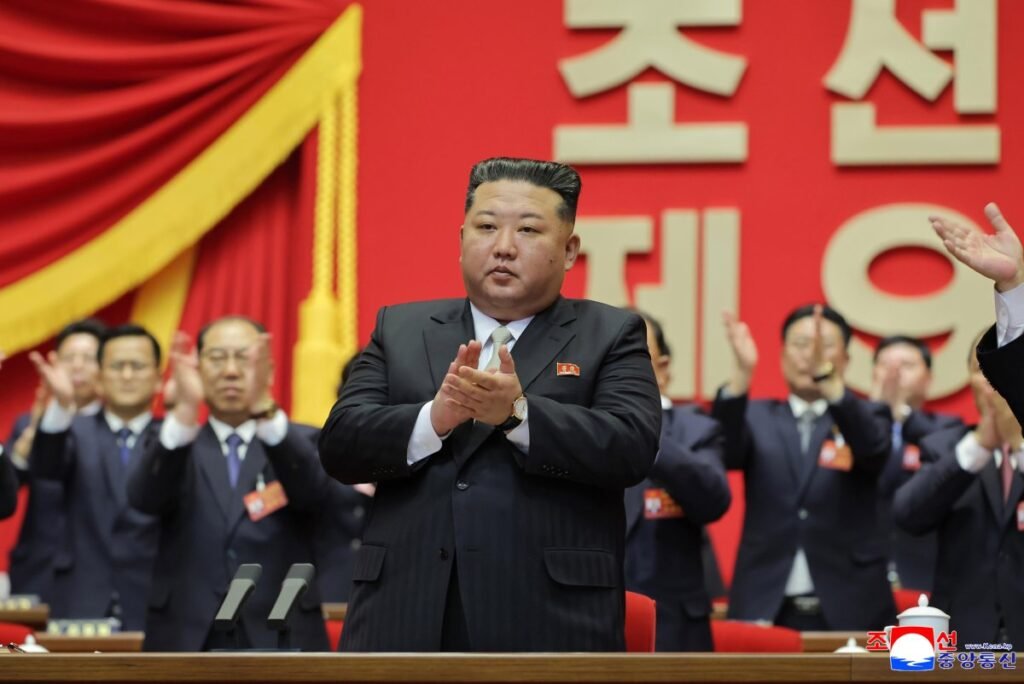
In January 2024, Kim Jong-un stood before the DPRK’s Supreme People’s Assembly and declared something no North Korean leader had formally uttered in seven decades.
Reunification with South Korea, he declared, was no longer an achievable goal. Seoul was no longer a separated kin, but a major enemy that should be treated as a foreign nation. He then ordered constitutional amendments to codify this doctrine.
Nine months later, the amendment was passed. The phrase “realizing the reunification of the homeland” was removed from the constitution. South Korea was defined as an enemy state with constitutionally separated territorial boundaries.
As a sign that this was not empty rhetoric, the Reunification Gate, which had been standing since 2001, was demolished, the national anthem was changed, and websites aimed at South Korean audiences were shut down one by one.
The international community has responded with condemnation and concern. But a more fundamental question remains unanswered: if reunification is no longer the goal of either party, is the entire framework of diplomacy and global governance built on that assumption still relevant?
The challenge isn’t just about North Korea. The challenge is whether the international system can adapt when its fundamental premises are crumbling from within.
Read More: Belarus and North Korea Sign Friendship Treaty in Pyongyang
Since the end of the 1950-53 Korean War with an armistice that never became a peace treaty, the international community has built its entire diplomatic framework on the Korean Peninsula on one assumption: that the two sides would eventually unite.
The UN has never officially recognized the division of Korea as permanent. Inter-Korean diplomacy, from the 2000 Summit to the 2018 Peace Process, has all used the language of “reconciliation” and “progress toward reunification.” The Six-Party Talks, which took place from 2003 to 2009, were designed to resolve the nuclear issue as a prerequisite for normalization, which, implicitly, led to reunification.
The problem is that this assumption has never been seriously tested because neither side has the incentive to do so. South Korea maintains the assumption of reunification because it provides moral legitimacy for its claim to be the legitimate government of the entire Korean nation.
The United States maintains it because it provides a coherent diplomatic framework without having to confront the more complex question of DPRK recognition. China maintains it because it provides a rationale for continuing engagement with both sides without having to choose.
And the DPRK itself maintains it as long as reunification can be used as a domestic propaganda tool for the historical destiny of the Korean nation.
What happened in January 2024 was that the DPRK unilaterally withdrew from that tacit agreement. And when one party departs from shared assumptions that were never formally contracted, there is no international mechanism available to manage the consequences.
2024 Amendments: A Strategic Declaration
There’s a compelling argument here. Some analysts interpret this constitutional amendment as a tactical maneuver by Kim Jong-un to strengthen his negotiating position or consolidate domestic power.
In this sense, removing reunification from the constitution signals that the DPRK wants to negotiate from a stronger position, not that it has completely abandoned the possibility of reunification forever.
But the scale of the changes made doesn’t support that tactical reading. Constitutional amendments are not easily reversible. Korea Economic Institute noted that this was the first time the DPRK had added a territorial clause to its constitution, and that the clause explicitly defined North Korea as separate from South Korea.
The removal of reunification monuments and the change of the national anthem were actions that would require significant symbolic and political costs to reverse. Pyongyang also destroyed cross-border roads and railways as a direct implementation of the new constitution, calling it a “gradual and permanent separation” of South Korean territory.
More significant is the ideological context behind it. Since late 2023, DPRK official media has systematically replaced the language of “fellow Koreans” with the language of foreign relations. This is not a rhetorical adjustment.
It is an ideological restructuring that took years to implement and will become increasingly difficult to reverse as time passes, as new generations of North Koreans will grow up in a system that has never recognized the narrative of reunification as a national goal.
Regional Polarization and Collapse of Collective Mechanisms
The DPRK’s constitutional amendments did not occur in a vacuum. They are part of a larger geopolitical configuration in an increasingly polarized East Asia. On the one hand, the DPRK has simultaneously deepened its ties with China and Russia.
Pyongyang and Moscow signed a defense treaty in 2024 that stipulates military support if the other is attacked. North Korea has delivered ammunition and ballistic missiles to Russia for use in Ukraine, in exchange for access to military technology and diplomatic protection in international forums. On the other hand, South Korea, Japan, and the United States have strengthened their trilateral coordination in response.
The immediate consequences of this polarization for global governance are very concrete. In March 2024, Russia vetoes UN Security Council resolution which would extend the mandate of the Panel of Experts, which has been monitoring sanctions compliance against the DPRK. China abstained.
This was not simply a procedural defeat. The panel was the only remaining independent mechanism for documenting sanctions violations, including North Korean arms transfers to Russia. With its mandate expiring, the international community loses its most important oversight tool with no readily available replacement.
More fundamentally, East Asia lacks an adequate regional security architecture. There is no permanent multilateral forum in the region equivalent to the OSCE in Europe or the AU in Africa. The Six-Party Talks have been defunct since 2009.
The ASEAN Regional Forum is consultative in nature and lacks an enforcement mechanism. As a result, every crisis on the Korean Peninsula is managed through slow, uncoordinated, ad hoc responses, further hampered by great power rivalry.
When Institutions Use Outdated Maps
The crux of the matter is that international institutions are still operating within a Korean diplomatic framework designed to manage the process toward reunification, not to manage two countries that each define as permanent enemies. This isn’t just a matter of effectiveness; it’s a matter of relevance.
The UN institutionally still uses the language of “denuclearization of the Korean Peninsula” as an implicit goal leading to normalization and reconciliation. The sanctions framework established since 2006 is designed to create pressure to push the DPRK back to the negotiating table toward that shared goal.
But if the DPRK has officially redefined its goal as permanent separation rather than reunification, then sanctions pressure no longer has the same reference point. Pyongyang will not “return to the table” toward a goal no longer enshrined in its constitution.
At the regional level, South Korea itself faces an unresolved conceptual dilemma. The ROK constitution still states that reunification is a national goal, and the Ministry of Unification still operates under that mandate. In this new context, the institution’s existence is not wrong, but its mandate needs to be recalibrated.
As noted by Korea Economic Institute, the South Korean government itself used the phrase “two states” for the first time in an official document in 2024, a small but significant shift that suggests Seoul is coming to terms with the new reality even if it remains reluctant to acknowledge it publicly.
Three Recommendations for a New Paradigm
The following three recommendations do not aim to resolve the question of Korea’s long-term future. Their goal is more limited: to establish a framework relevant to the current situation, not to a future one.
First, the international community needs to adopt the Coexistence Governance paradigm, a framework that focuses on managing the two Koreas as separate entities to be governed simultaneously, rather than as two parts of a single nation awaiting reunification.
The most relevant historical precedent is Germany’s Ostpolitik under Willy Brandt in the early 1970s. Basic Treaty 1972, the agreement between West and East Germany did not mean Bonn abandoned the goal of reunification, but rather recognized that managing the GDR as a reality was the only way to create meaningful diplomatic space.
The result was not reunification at that time, but it created the conditions that made reunification possible two decades later. The lesson for Korea is this: pragmatic recognition of the reality of separation does not preclude long-term possibilities, but it does create space for more effective short-term crisis management.
Second, East Asia needs the Northeast Asia Security Dialogue, a permanent forum involving the DPRK, ROK, the US, China, Russia, and Japan. What distinguishes this proposal from the failed Six-Party Talks is its premise. The Six-Party Talks were designed with denuclearization as a prerequisite for meaningful participation.
This new forum should be modeled on the CSCE Helsinki model of 1975, a regional security forum that discusses common rules of the game and shared interests without making any single issue the ticket to entry. ASEAN, which has working relationships with all six parties and is not considered partisan by any bloc, could act as a co-facilitator, legitimizing the process without overwhelming the agenda.
Read More: North Korea Calls Seoul’s Apology on Drone Incursions ‘Fortunate’ & ‘Wise’
Third, the international community needs to develop Functional Cooperation separate from politics, particularly in the areas of food, health, and climate change. This is not a gift to the DPRK. It is a recognition of the reality that the humanitarian crisis in North Korea does not await a resolution of the nuclear issue.
More than 10 million North Korean citizens is currently experiencing chronic food shortages, and the massive floods of 2023 and 2024 exacerbated the situation. The WFP has been operating in the DPRK since 1995 and has a technical channel independent of diplomatic relations.
Institutionalizing humanitarian cooperation through UN agencies like the WFP and the WHO, separate from political negotiations, is a realistic step because it does not require either party to change its political position.
The DPRK has made a rare strategic decision in international politics: officially and constitutionally changing its fundamental goals. The international community has yet to respond to the scale of this change.
What the 2024 amendments reveal is not just about North Korea. They reveal something more uncomfortable: that the global governance architecture on the Korean Peninsula is built on assumptions that have never been explicitly confirmed by all parties. And when one party formally withdraws from those assumptions, existing institutions lack a protocol for responding.
The UN cannot act due to its veto. There is no sufficiently authoritative regional forum. And the existing diplomatic framework still uses maps that no longer reflect the actual terrain.
The greatest challenge on the Korean Peninsula is not just North Korea with its nuclear program or the newly codified “two enemies” doctrine. The greatest challenge is whether the global governance system can adapt when the basic assumptions that have served as its foundation are no longer valid. And that question, unfortunately, extends far beyond Korea.
*The views presented in this article are the authors’ own and do not necessarily reflect the views of The Diplomatic Insight.

Boby Purba
Boby Purba is an undergraduate student of International Relations at Universitas Kristen Indonesia. His research interests focus on global governance, international political economy, and the structural dynamics of power within multilateral institutions. He writes on issues concerning the Global South, institutional reform, and democratic accountability in international politics.