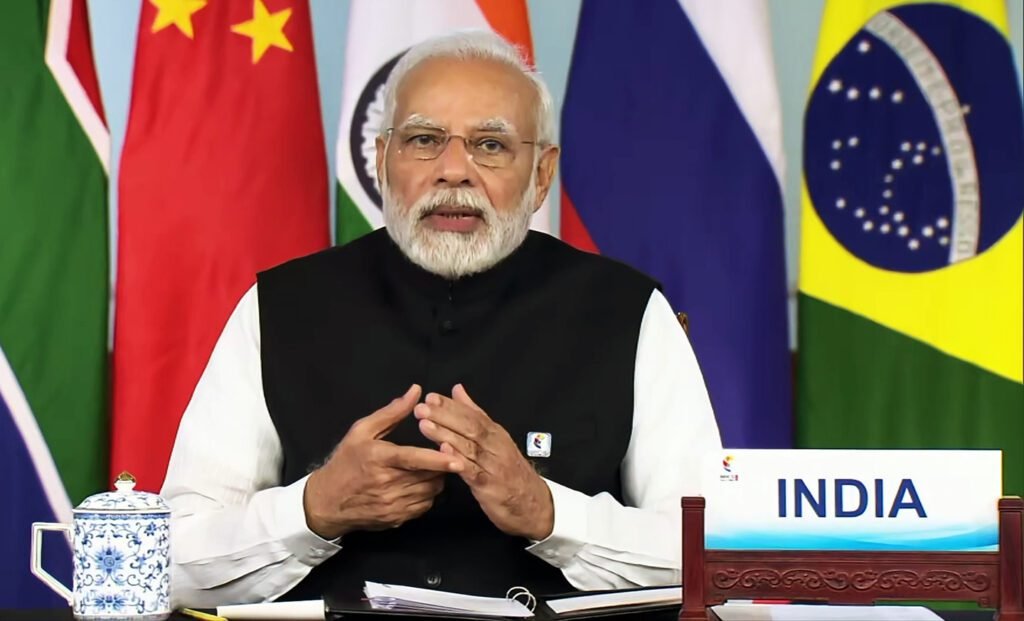
New Delhi (TDI): Indian Prime Minister Narendra Modi departed for Israel on Wednesday for a two-day visit aimed at expanding cooperation with one of New Delhi’s key trade and defense partners, a trip that has also sparked political criticism at home.
In his departure statement, Modi described the relationship as a “robust and multifaceted strategic partnership,” adding that ties have grown significantly in recent years. During the visit, he is scheduled to hold talks with Israeli Prime Minister Benjamin Netanyahu, meet President Isaac Herzog, and address the Knesset.
India and Israel established full diplomatic relations in 1992, but engagement deepened markedly after Modi took office in 2014. Cooperation has steadily expanded across defense, agriculture, advanced technology and cyber-security, while India has sought to balance its broader diplomatic interests across the Middle East.
Earlier this week, officials from both sides began negotiations in New Delhi on a proposed India-Israel Free Trade Agreement (FTA). According to the Indian government, bilateral merchandise trade reached $3.62 billion in 2024–2025, reflecting steady commercial growth.
Modi previously visited Israel in 2017, the first such trip by an Indian prime minister, followed by Netanyahu’s reciprocal visit to India in 2018. The two leaders, both seen as right-leaning figures in their domestic politics, have publicly described each other as friends.
Read More: Congress Demands Modi Clarify China’s Claim of Mediating Pak-India Truce
The visit also comes against the backdrop of wider regional developments. In September 2023, New Delhi unveiled plans for the India–Middle East–Europe Economic Corridor, a connectivity initiative linking railways, ports, power grids, data infrastructure and pipelines through countries including Saudi Arabia and Israel. However, the project’s momentum slowed after the October 7 attacks by Hamas and the subsequent war in the Gaza Strip.
At home, the trip has drawn criticism from opposition figures. Senior Congress leader Priyanka Gandhi Vadra publicly expressed hope that Modi would address the humanitarian toll in Gaza, including the deaths of civilians, during his speech to Israel’s parliament.
India, home to 1.4 billion people and a Muslim population of roughly 220 million, has long walked a diplomatic tightrope, strengthening defense and economic ties with Israel while maintaining close relations with Gulf states and Iran. New Delhi has invested in Iran’s Chabahar port as a trade gateway to Afghanistan and continues engagement with regional actors across competing blocs.
Read More: Why India Cannot Replicate Israel
Indian conglomerate Adani Group operates the Mediterranean port of Haifa, underlining growing commercial stakes. Meanwhile, Israeli drone technology has featured in India’s evolving defense capabilities, including during heightened tensions with Pakistan in May 2025.
Modi’s visit is widely seen as an effort to reinforce strategic alignment with Israel while navigating complex regional sensitivities.