The most analytically honest way of understanding the current U.S.-Israel war against Iran is to junk the language of “victory” altogether. What is taking place is neither a traditional war of clear-cut results rather a structural struggle between two incompatible theories of power: industrial supremacy vs. civilizational survival. In that contest, Iran, despite material inferiority, is in a paradoxical advantage.
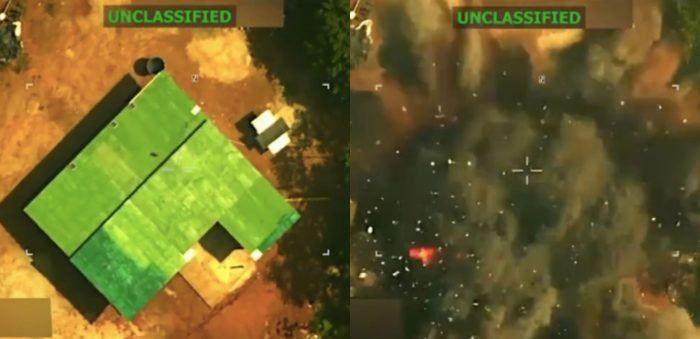
The first part of the war appeared to confirm American and Israeli assumptions. Hundreds of precision strikes damaged vital infrastructure as well as command structure. By classical military measures, this was an overwhelming success. Yet it is this very success which may be strategically misleading. History from Vietnam to Iraq, shows that the destruction of command nodes does not necessarily mean political collapse.
Iran is not just a state, it’s a shock absorption system. Its decentralization, ideological lamination and resistance of own forces through decades of sanctions have built up a kind of resilience that cannot easily be measured in destroyed assets.
Already, the war is entering its second phase; asymmetry. Iran’s interruption of the straits of Hormuz through which a substantial amount of global oil flows proves a fundamental strategic reality: Iran need not have parity with the United States to enforce systemic costs. It needs only persistence. Through the use of drones, mines and dispersed missile systems, Tehran has weaponized geography. Each cheap strike that forces a costly interception is not tactics, but an economic movement against the models of Western warfare.
On the Israeli front, the myth of impervious defense has begun to rub off. Even interception rates that are high cannot eradicate vulnerability but rather transfer it from one place to another over a period of time. Failure isn’t the issue, but the problem with arithmetic. Interceptors are finite whereas Iran’s ability to revamp more cost-effective offensive systems seems more elastic. Over time, this imbalance will favor more often than not, the side that can endure the attrition, rather than the one that can temporarily dominate the battlefield.
Read More: The Myth of Iranian Threat
If the United States goes to ground invasion, then the war will be in its most decisive stage and paradoxically Iran’s strongest position. Geography alone is prohibitive: mountainous topography, dense urban centers, and enormous distances make a difference in logistics. But the more fundamental problem is a sociopolitical one. Iran has been preparing for just this sort of scenario for decades, when the concept of irregular warfare doctrine was ingrained in the military and civilian establishment.
A U.S. ground campaign would not look like Iraq in 2003 – it would look like Iraq after 2004, on steroids and in a more ideological mode. Supply lines would lengthen, resistance would multiply and the line between battlefield and society would disappear.
This is where the ideology often dismissed in the West in the strategic analysis, becomes operationally decisive. The concept of Mehdiwayat (belief in the eventual reappearance of the Mahdi and eventual justice) is not just a theological concept in itself, but is a psychological force multiplier. Someone who internalizes the inevitability of ultimate victory and is less bound by sense and fear crops the cost-benefit equation of endurance.
This position is also institutionally based: Iran’s constitution (Article 154) requires that Iran support the “oppressed” against “oppressors”; this formulation supplies a formal justification for its behavior in its external conduct. Similarly, the institution of Marjaeyat, the authority of senior clerics gives Iran a latent capacity for transnational mobilization.
In a scenario of existential threat, the result of a unified clerical call may be a transformation of the conflict from being a state war into a more extensive Shi’a mobilization network extending from Iraq to Lebanon and beyond. This is not hypothetical here, it is structurally embedded.
Regionally the war is already leaping outside the sumptuary boundaries assigned to it. Iran’s strategy lacks escalation for the sake of escalation, but has escalation for diffusion. By putting pressure on various fronts, Gulf infrastructure, Levantine proxies, and now potentially Red Sea, Iran increased the pressure for the United States to defend everywhere simultaneously.
Read More: Iran War Widens as Houthis Fire Missile at Israel
Of special interest with the change is the new emphasis placed on the Bab al-Mandeb Strait. Iranian-connected actors have signaled the potential to open a second maritime chokepoint, to complement Hormuz, essentially turning global trade routes into chokepoints of current trade. If Hormuz strangles energy, Bab al-Mandeb strangles circulation, and creates a kind of double advance on globalization itself. This is not escalation, it is strategic geometry.
The economic front may prove to be the decisive one. War is supported not just with weapons but systems of production and belief. Disruptions incurred by energy markets, insurance costs, and worldwide supply chains have second-order effects that are far beyond the battlefield. Iran’s strategy seems calculated to make every effort to exploit exactly these vulnerabilities to turn a regional war into a global economic conundrum. In such a scenario, even non-involved states start to pressure de-escalation indirectly strengthening Iran’s position.
A parallel diplomatic track looks more and more like a performance. While Washington signals a willingness to talk, in Tehran such overtures have actually been dismissed for the most part, and the demands on both parts, again maximalist and mutually incompatible unless they come at the common ground.
For the United States, backward should be too afraid of projecting weakness after visible military escalation; for Iran, compromise under pressure would damage the principal logic – its resistance principle. The result is a, so to speak, strategic impasse where diplomacy only continues on a rhetorical level with no real structural orientation to de-escalate on both side, which only makes the conflict much longer than it had to be, not shorter.
None of this does mean that Iran is “winning” in a conventional sense. Its infrastructure is damaged, its population is stressed and its strategic environment still remains hostile. But wars are not judged on the basis of damage inflicted; they are judged on political results. If Iran can stave off regime collapse and sustain costs, as well as deny its adversaries of a decisive end-state, it is unsurpassable as a form of strategic success that would outweigh losses at the tactical level.
The unorthodox but defensible conclusion is this, the longer the war goes on the more it favors Iran, not necessarily because Iran has more strength, but because the structure of the war gives elective blessings of endurance over the divine benefits of dominance. The United States and Israel can win battles, destroy targets and show superiority. But unless they can translate that superiority into a stable political outcome which, history suggests, is profoundly difficult, then Iran’s strategy of survival may end up changing the meaning of victory.
*The views presented in this article are the author’s own and do not necessarily reflect the views of The Diplomatic Insight.*