On International Migrants Day, the world recognizes the extraordinary potential of human mobility. This day serves as a critical reminder that migration is not merely a movement of people but a powerful engine for global development and economic resilience. When migration is managed strategically, it fills vital labor gaps and provides financial stability to families through remittances, which are projected to reach $685 billion by 2025.
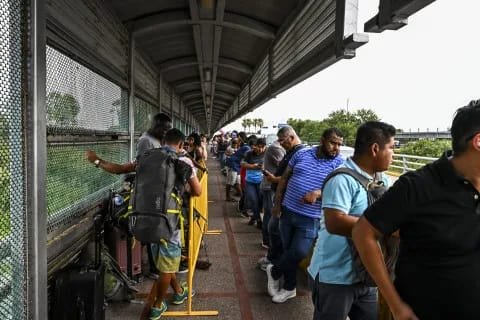
However, this global recognition stands in direct contrast to the reality found at many borders. In the era of globalization, the world celebrates the free flow of capital, services and goods, yet it often criminalizes the movement of the very people who make this economic flow possible.
Developed states frequently find themselves in a contradictory position regarding their borders. They face a clear structural need for migrant labor to maintain their productivity and address demographic challenges, yet they simultaneously reject the presence of these migrants within their societies. This results in a system where migrants are sought after as cheap labor but are legally and socially marginalized once they arrive.
US and Mexico: The Cycle of Seasonal Utility and Rejection
The relationship between the US and Mexico serves as the most prominent example of these contradictions. For a long period, the US economy has relied heavily on Mexican labor, making the two nations interdependent. However, their shared history is marked by a cycle of recruitment and rejection, where immigrants are used when needed and then pushed back when their labor is no longer convenient.
For decades, American employers have turned to Mexico to sustain their industries, specifically during times of labor shortages. This was formalized through the Bracero Program (1942–1964), a series of diplomatic agreements that brought millions of Mexican guest workers to fill shortages in the US agricultural sector. The program established a precedent of viewing migrant labor as a commodity, workers were expected to be available when needed and to depart as soon as their work was done.
Despite this formal recruitment, the foundation of a deportation regime was simultaneously being built. While millions were invited to work, the INS (Immigration and Naturalization Service) deported 5.5 million unauthorized Mexican workers during the same years. A notable moment in this era was “Operation Wetback” in 1954, where 1.2 million arrests were made to calm the anti-immigrant sentiment, even though the US economy remained entirely dependent on that same labor force.
The Illusion of Liberalization
The cycle of using labor and then rejecting the laborer continued with the Hart-Celler Act of 1965. Although it was celebrated as a liberal and anti-racist reform that removed old racial quotas, it actually had a restrictive and damaging effect on Mexico. By placing the Western Hemisphere under numeric limits for the first time, the law instantly defined a long-standing and necessary worker flow as illegal.
Mexico immediately felt the law’s sting in 1968. It now had to compete for a limited number of visa slots, meaning many who had easily found work previously no longer had a legal way to change their status. They became America’s dream workers vulnerable and easily deportable. Historian James Cockcroft described this as a “revolving door” system: seasonally lax border inspections when labor recruitment was at its peak, followed by ruthless mass deportations when those same workers were no longer required.
This created a game of cat-and-mouse where workers would be deported only to return again, knowing the US economy still needed them. In 1976 and 1980, Congress further restricted Mexico’s visa limits, dropping them as low as 18,200. This severe restriction did not stop the flow; it simply accelerated the pace of unauthorized entry, ensuring a large pool of workers remained in a legally unsafe position.
From Circular Labor to Permanent Isolation
By the 1980s, the increasing visibility of unauthorized migrants led to claims that the US border was out of control. In response, the Immigration Reform and Control Act (IRCA) of 1986 was signed. It attempted to balance the tension by granting amnesty to nearly 3 million undocumented immigrants, allowing them to finally step out of the shadows.
However, the law also introduced employer sanctions and a 50 percent increase in the INS budget. The US government began pouring 90 percent of its budget into border interdiction and only 10 percent into workplace verification. This shift inadvertently turned a circular migratory process into permanent settlement.
Because the danger and cost of crossing the border rose so sharply, unauthorized immigrants who successfully entered the US could no longer risk returning home for the off-season. Instead, they were forced to stay put, living isolated and fear-filled lives in the US.
By 1996, the legal framework shifted toward even harsher measures with the Illegal Immigration Reform and Immigrant Responsibility Act (IIRIRA). This law empowered the Border Patrol to deport individuals without judicial review and redefined minor, non-violent offenses as aggravated felonies. This stripped migrants of legal protections and fueled a national narrative that viewed the illegal alien as a primary security threat.
The War on Terror further intensified this securitization. Following the September 11 attacks, immigration was increasingly viewed through the lens of national security. Laws like the USA Patriot Act and the creation of the Department of Homeland Security (DHS) allowed for the monitoring of communications and the rapid removal of suspects. This era saw a massive increase in the number of agents and the use of biometric identifiers, further criminalizing the migrant presence.
The 2025 Paradox
2025 has introduced a complex dual reality in US-Mexico relations, where formal diplomatic cooperation is increasingly overshadowed by aggressive domestic enforcement. On the international stage, new agreements between the US and Mexico aim to modernize migration through bilateral cooperation, establishing joint task forces to monitor patterns and investing in economic development in Central America. By addressing these root causes, both nations claim to be expanding legal pathways such as work permits and refugee resettlement to reduce the reliance on dangerous, unauthorized routes.
A major component of this strategy involves the use of advanced technology to ensure these legal pathways are successful. Investment in border infrastructure now includes surveillance drones and biometric systems designed to fully secure the borders and provide operational control. Rather than just serving as a barrier, these high-tech tools are framed as a way to enhance safety and improve the accuracy of records for those entering through official channels.
However, this collaborative rhetoric stands in stark contrast to a domestic landscape in the US that has become the most restrictive in decades. While diplomats discuss streamlining, the new administration implemented 181 executive actions within its first 100 days to curtail arrivals and accelerate deportations. This internal shift led to a historic decline in the foreign-born population, falling from a record high of 53.3 million in January 2025 to 51.9 million by June the first significant contraction since the 1960s.
Consequently, the legal environment for unauthorized immigrants already within the US has become extremely precarious. Invisible protections that once provided a buffer, such as DACA or various parole programs, are facing widespread rescission. For many, the loss of work permits and deportation stays has made staying in the US impossible, forcing a significant number of people to leave the country voluntarily to avoid the trauma of formal removal proceedings. Ultimately, the 2025 dynamic illustrates a profound struggle: a world where the US and Mexico manage migration through high-level agreements, yet the actual experience for the migrant is legal instability and a systemic push toward exclusion.

Tayyaba Arif is a student of International Relations, and takes keen interest in conflict reporting and the dynamics of regional and global affairs. She is especially committed to SDG 17, and believes in effective partnerships and promoting cooperative initiatives. She can be reached at [email protected]