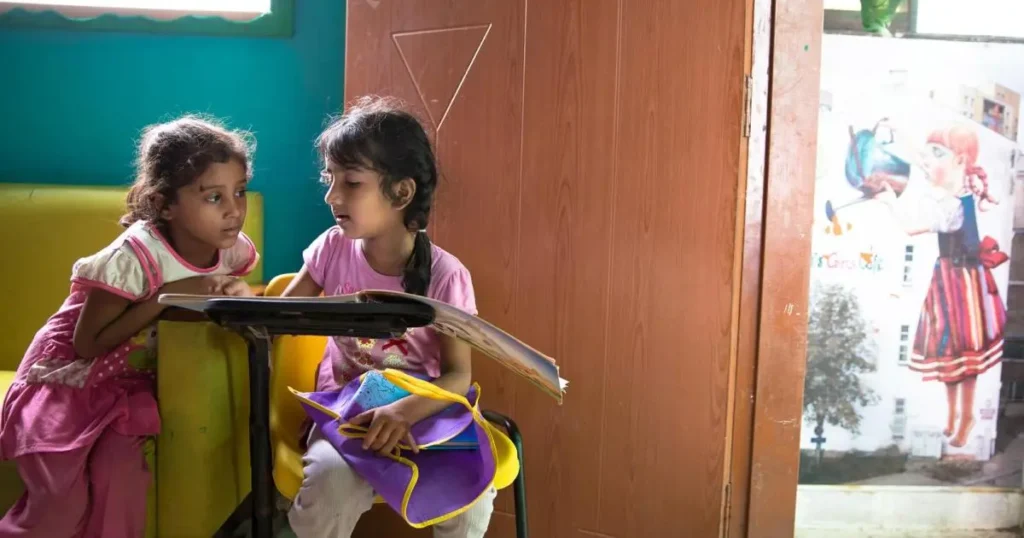
“Every girl, everywhere, deserves equality, opportunity, and dignity.”
(UN Secretary-General António Guterres)
On December 19, 2011, the United Nations General Assembly declared October 11 as the International Day of the Girl Child, to recognize girls’ rights and the unique challenges girls face around the world. Since then, the day has become a global platform to amplify girls’ voices and highlight their struggles and achievements.
Each year brings a new theme reflecting the spirit of resilience and leadership among girls. The 2025 theme, “The girl I am, the change I lead,” captures their determination to lead movements for equality, education, and peace despite continuing barriers.
This year also marks thirty years since the Beijing Declaration and Platform for Action which is the world’s most ambitious blueprint for gender equality. The progress since then is remarkable. Nearly 91 million more girls are in primary school and 136 million more in secondary school than in 1995. However, women’s enrolment in tertiary education has tripled to 139 million.
Moreover, today, 114 countries have enshrined the right to education in law. These achievements reflect decades of advocacy and investment which shows that when girls learn, nations thrive. Yet, despite this progress, 133 million girls remain out of school and women continue to face barriers to educational leadership even though they make up the majority of teachers worldwide.
The International Day of the Girl is therefore both a celebration and a call to action. It reminds the global community that the journey toward equality is far from complete. As UNESCO’s campaign #HerEducationOurFuture highlights, education is not only a human right but also a catalyst for sustainable change. It is the foundation on which girls can claim agency, leadership, and freedom.
Every classroom that opens to a girl expands the future of her community and strengthens the fabric of humanity itself. However, as we celebrate progress, the reality remains stark. “Girls everywhere are leading change from climate action to equality and peace, yet millions are still denied their right to learn.” These words capture the paradox of our era that progress is achieved yet justice is unfinished.
Read More: Home, Displacement & the Cost of Hope: A Young Afghan Girl’s Struggle
Additionally, according to UNICEF, girls aged 15–19 are twice as likely as boys to be out of education, employment, or training. In fragile or conflict-affected areas, they are 90 percent more likely to be out of school than girls in stable settings. Nearly one in four adolescent girls who have ever been in a relationship have experienced intimate partner violence, and one in five young women aged 20–24 were married as children. In crisis zones, these numbers almost double, showing how poverty, instability, and discrimination converge to silence young lives.
The effects extend beyond statistics. Conflict and displacement heighten the risk of child marriage, sexual violence, and maternal mortality. In the past two decades, self-harm has been one of the leading causes of death among adolescent girls, reflecting how deeply structural inequalities affect mental health and wellbeing. Yet change remains within reach.
There are proven, life-changing solutions like access to schooling, comprehensive healthcare, protection from violence, and economic empowerment that can create a future where every girl can thrive. Moreover, investing in girls is not only an ethical obligation but it is one of the smartest actions societies can take to yield extraordinary returns for entire economies and generations to come.
When the voices of girls are heard, policy changes follow. When their education is prioritized, communities grow resilient. And when girls lead, the world moves closer to fairness, peace, and sustainability.

Noor ul Sabah
Noor ul Sabah is a feminist researcher focused on intersectional approaches to gender, technology, and governance. Her work explores how power and identity shape experiences of violence, migration, and citizenship.