The most consequential number to emerge from the Iran war is not a casualty figure or a barrel price. It is an inventory count.
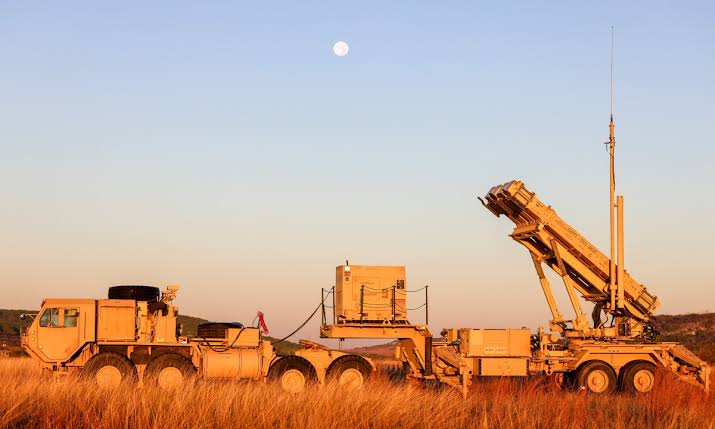
By CSIS’s late-July accounting, the United States had drawn its Patriot interceptor stockpile down from roughly 2,330 before the war to somewhere between 759 and 827 — a fall of about two-thirds — and its THAAD stockpile from 452 to an estimated 239–257, close to half, in five months of fighting.
These are analytical estimates built from public procurement records, not classified disclosures, and their authors are careful to say so. But the direction is not in dispute, and it exposes something the war’s louder headlines obscured: the decisive constraint on American air defense is not technological but industrial, and the Iran war has turned a known weakness into a demonstrated one.
The mechanics of the depletion are straightforward. Terminal High Altitude Area Defense is the system designed to intercept the medium- and intermediate-range ballistic missiles that make up the hardest part of the Iranian threat, and it is the scarcest asset in the inventory.
Lockheed Martin has historically produced about 96 THAAD interceptors a year. CSIS analyst Wes Rumbaugh has documented that no new THAAD interceptors were delivered to the U.S. inventory between July 2023 and early 2026, the product of budgetary and production constraints that predate the war entirely.
Read More: Pentagon Orders Defense Industry to Surge Weapons Output as US Stockpiles Buckle in Iran War
When the June 2025 Twelve-Day War consumed over 150 THAAD rounds and the 2026 conflict consumed more than 200, the arithmetic became unforgiving: replacing what was fired in this war alone, at the historical production rate, would take more than two years of full-capacity manufacturing.
Mark Cancian of CSIS put it plainly — of the major interceptors, “THAAD is probably the worst,” because the inventory was small to begin with and roughly half of it is now gone.
This is where the analysis usually reaches for the cost-exchange ratio — the arresting observation that a multimillion-dollar interceptor is being spent to destroy a Shahed drone that costs the attacker a fraction as much. The figures are real: CSIS estimates a Patriot PAC-3 MSE at roughly $4 million and a THAAD round at around $12–13 million, against Shahed-type drones that Iran fields for tens of thousands of dollars.
But it is worth being careful here, because CSIS itself has warned against leaning too heavily on this framing. In a 2024 analysis, the center cautioned that the cost-exchange comparison “obscures both the complexity of air and missile defense engagements and the complicated value of air and missile defense” — a $12 million interceptor that protects an airbase, a carrier, or a city is not obviously overpriced relative to what it defends. The dollar ratio, on its own, proves less than it appears to.
Read More: Why Trump’s Iran War Has Become Washington’s Quagmire
The ratio that actually matters is not measured in dollars but in time and magazine depth. A defender can, in principle, absorb an adverse cost ratio if it can replace what it fires. What it cannot absorb is an adverse replacement-rate ratio — spending interceptors faster than the industrial base can rebuild them — and that is the ratio the Iran war has exposed.
Iran’s saturation doctrine is designed to exploit exactly this. Waves of cheap drones force the expenditure of scarce interceptors, and the constraint that bites is not the Pentagon’s budget but Lockheed Martin’s production line, which runs on annual cycles measured in dozens to a few hundred units while the war consumed inventory in weeks.
This is why the depletion is strategic rather than fiscal. The FY2027 budget request includes some $95 billion for munitions with a further $21 billion in supplemental funding, and Lockheed Martin has signed framework agreements to raise THAAD output toward 400 interceptors a year and Patriot production substantially.
But CSIS assesses that new orders will not begin arriving until around 2029, and that Patriot and THAAD stocks will not return to prewar levels until roughly then. Money has been appropriated. Interceptors take years regardless.
The strategic consequence is what CSIS calls a window of vulnerability, and its most important dimension is not in the Middle East at all. The interceptors expended over the Gulf are the same systems the United States would rely on to deter or blunt a Chinese campaign in the Indo-Pacific.
As CSIS’s July report noted, there are no good alternatives to Patriot and THAAD for ballistic missile defense, and Navy Standard Missile assets capable of similar intercepts are generally positioned too far away to substitute. Every interceptor fired at an Iranian missile is one not available for a Taiwan contingency, and one that cannot be replaced for years.
The Iran war has, in effect, spent down a portion of the American deterrent in the Pacific to defend positions in the Middle East — a trade that was never explicitly decided and whose costs will not be visible until they are needed elsewhere.
Reporting that senior officials warned about interceptor depletion before the decision to halt further strikes on Iran suggests the constraint was already shaping operational choices, which is what a magazine-depth crisis looks like before it becomes a crisis of defeat.
There is a further vulnerability beneath the production one, and it deserves more attention than it has received: the interceptors themselves are mineral-intensive in ways their targets are not.
As mineral-supply analyst Amanda van Dyke has documented, a modern interceptor embodies far more tungsten, antimony, tantalum, rare-earth magnets and gallium-based electronics than the plywood-and-commercial-chip drone it destroys — meaning the cost-exchange asymmetry is also a materials asymmetry, and several of those materials are substantially controlled by China.
Read More: China Tightens Drone Export Controls on US. What Does It Mean for Iran War?
A sustained high-intensity air-defense campaign therefore runs, at its base, through supply chains that pass through the strategic competitor most likely to be the adversary in the next such campaign. This is not a claim that production would halt in a crisis, which would require its own evidence, but it is a structural dependency that the replenishment plans now underway do not obviously resolve.
None of this means American air defense failed in the Iran war; it intercepted a great deal, and the systems performed. The lesson is narrower and more uncomfortable.
Air defense architecture built around small numbers of exquisite, slow-to-produce, mineral-intensive interceptors is economically and industrially mismatched against an adversary using cheap mass — not because the interceptors are too expensive per shot, but because the production base behind them was sized for a world of short wars and rare intercepts.
The Iran war was neither. The $95 billion and the framework agreements are the right response to the wrong problem if they simply rebuild the same architecture faster; the deeper question, which the depletion forces and which cheaper layered defenses and directed-energy systems only begin to answer, is whether an interceptor-centric model can be sustained at all against saturation.
The magazine emptied faster than anyone planned. What refills it, and whether it should be refilled with the same thing, is the decision the war has made unavoidable.
*The views presented in this article are the author’s own and do not necessarily reflect the views of The Diplomatic Insight.*

Aleena Saif Ullah
Aleena Saif Ullahis an MPhil Scholar in International Relations at the University of Punjab, Lahore. She can be reached at[email protected]