For decades, debates about global capital have focused on two questions: how much money crosses borders and where it goes. Tokenization may force policymakers to confront a third: how fast can it move?
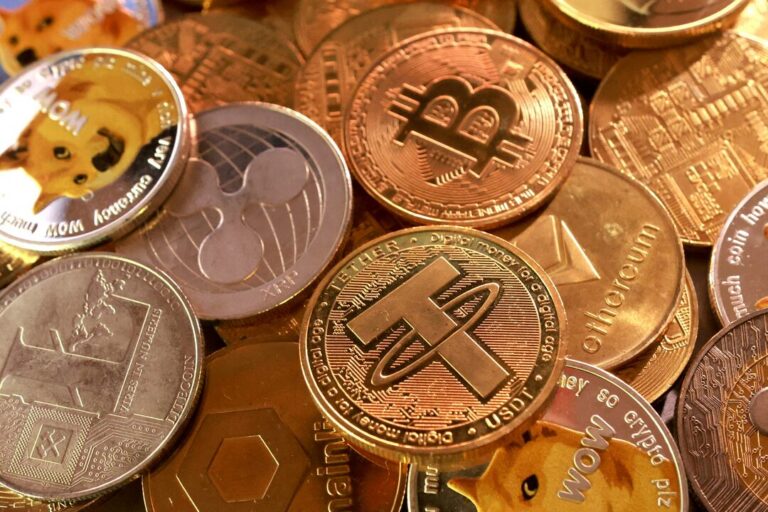
By representing financial assets on programmable digital ledgers, tokenization promises to make markets cheaper, more accessible, and more efficient. Bonds, funds, and other securities could be divided into smaller units, traded across digital platforms, and settled much faster than in conventional financial infrastructure.
These benefits could be particularly valuable for emerging economies seeking deeper capital markets and broader investor participation. Yet speed changes markets in both directions.
Technology that allows investors to enter a market more easily can also make portfolios easier to rebalance when conditions deteriorate. For emerging-market central banks, the next phase of financial globalization may therefore be defined by the growing velocity of global capital.
Settlement speed is not the same as capital mobility. Tokenization can compress operational frictions, but portfolio reallocation still depends on market depth, foreign-exchange liquidity, custody, regulation, and investor mandates. The relevant risk is that tokenization removes one layer of friction from markets that are already highly sensitive to shifts in global sentiment.
Capital speed could be observed through settlement latency, turnover during stress, redemption intensity, intraday FX demand, and the time required for markets to absorb large portfolio reallocations without disorderly price movements.
The International Monetary Fund’s October 2026 Global Financial Stability Report places tokenization firmly within the debate on financial stability. Its chapter on “Scaling Tokenization: New Efficiencies, New Vulnerabilities” examines both the efficiencies created by tokenized markets and the new channels through which financial stress could spread.
Traditional financial markets contain frictions. Transactions pass through intermediaries. Settlement takes time. Different jurisdictions operate under different infrastructures and trading hours. Cross-border transactions often require several operational steps.
Financial innovation has spent decades removing these obstacles. Friction raises costs and limits access to capital. Tokenization could remove more of it.
Programmable assets, shared ledgers, and automated execution can shorten settlement cycles and potentially enable more continuous markets. Investors may eventually be able to move between assets and jurisdictions with fewer operational barriers.
The relevant question is therefore changing. Policymakers need to ask how quickly portfolios can be reallocated once global sentiment changes.
Indonesia and the Importance of Time
This creates a paradox. Emerging economies have much to gain from faster markets. Tokenization could broaden access to domestic securities, reduce transaction costs, increase liquidity, and potentially lower the premium investors demand for holding less liquid assets.
A government bond that becomes easier for international investors to buy could reach pools of capital that previously remained outside the market. But the same infrastructure does not distinguish between optimism and fear.
Consider a sudden change in expectations about US interest rates, a geopolitical shock, or a sharp rise in global risk aversion. Such events already cause investors to rebalance portfolios away from riskier assets.
In conventional markets, that adjustment encounters operational and institutional frictions. In increasingly tokenized markets, some of those frictions could become smaller.
The result does not necessarily have to be larger capital outflows. It could instead be faster price discovery, faster portfolio adjustment, and faster transmission of global shocks.
Read More: Indonesia’s Next Trade Advantage Must Be More Exporters
That distinction is crucial. An economy may be capable of absorbing US$5 billion of portfolio adjustment over several weeks very differently from the same adjustment compressed into several days. The quantity of capital may be identical. The pressure placed on market liquidity, exchange rates, and central-bank responses may not be.
Indonesia provides a useful illustration. Bank Indonesia manages external volatility through a combination of monetary policy, foreign-exchange intervention, market-based monetary instruments, hedging facilities, and the continued deepening of money and foreign-exchange markets.
These instruments reflect a broader reality facing emerging-market central banks: resilience depends not only on attracting capital, but also on ensuring that financial markets can absorb rapid changes in investor behavior. Tokenization adds a new dimension to that challenge.
If markets become faster, policy transmission may also need to become faster. Central banks may need more timely information about liquidity conditions, stronger hedging markets, deeper domestic investor bases, and surveillance systems capable of identifying stress as it develops. The challenge is to build new shock absorbers for faster markets.
Speed Can Also Strengthen Markets
There is an important counterargument. Speed is not inherently destabilizing. Faster settlement can reduce counterparty risk. Greater transparency from shared ledgers could improve market surveillance. Tokenization may broaden investor participation and deepen liquidity, making markets better at absorbing shocks.
Faster price discovery may also allow markets to reach equilibrium sooner rather than prolonging uncertainty. This is why the central policy question is not whether tokenization is good or bad. It is whether financial institutions and regulatory architecture can evolve at the same speed as the markets they oversee.
Real-time settlement may require more sophisticated real-time liquidity management. Automated transactions may require safeguards against procyclical feedback loops. Cross-border tokenized markets may require stronger regulatory cooperation because financial infrastructure will increasingly operate across jurisdictions that remain governed nationally.
For emerging economies, market deepening must therefore acquire a new meaning. It cannot be measured only by transaction volumes, new instruments, or the number of investors. A deep market is also one capable of absorbing speed.
Read More: Capitalism and Democracy: A Relationship Under Strain in a Changing World
Global finance has already experienced several transformations. Capital became increasingly international, then increasingly digital. Tokenization could make it increasingly programmable and continuous.
The same infrastructure that helps capital reach an emerging market more efficiently could allow investors to reconsider that position more quickly. The same technology that improves liquidity during normal periods could accelerate portfolio adjustment during periods of stress.
None of this makes tokenization undesirable. It makes resilience more important. For emerging-market central banks, the challenge ahead may therefore be larger than managing the volume or direction of capital flows.
In tokenized markets, they may increasingly have to manage their speed. In the next era of global finance, the economies best prepared for capital mobility may not be those capable of preventing money from moving quickly, but those whose financial systems can remain stable when it does.
*The views presented in this article are the authors’ own and do not necessarily reflect the views of The Diplomatic Insight.*

Ircham Andrianto Taufick
Ircham Andrianto Taufick is an Indonesian economic op-ed writer and Team Head of Payment System and Currency Management Policy Implementation and Supervision Bank Indonesia Representative Office of North Sulawesi Province. He writes on the intersection of monetary stability, payment systems, digital finance, and regional economic development. He can be reached at [email protected]