As one of the nations with the largest Muslim population globally, Indonesia has played a symbolic role in fostering solidarity within the Islamic world as a whole. In recent years, it has actively promoted cooperation among Muslim countries at the OIC platform, and helped foster economic collaboration among Gulf countries.
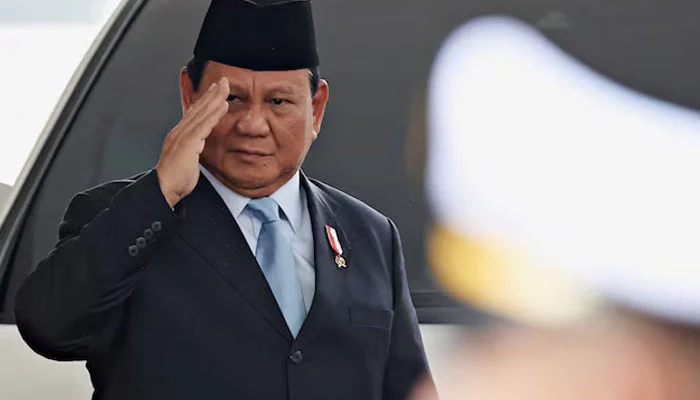
The incumbent President, Prabowo Subianto, advances the sustainability of Indonesia’s independent and active foreign policy in relation to other Muslim nations, such as Pakistan. However, the sudden cancellation of his planned visit to Pakistan, immediately after his trip to India, raises questions about whether Indonesian diplomacy under Subianto is sophisticated in maintaining geo-political balances
or possibly vulnerable against external actors such as India.
India and Indonesia share a bilateral relationship rooted in profound of cultural and historical ties. Both countries have aimed to protect their political independence, build self-reliant economies, and follow a neutral foreign policy reflected in their involvement in the Non-Aligned Movement.
Indonesia is India’s second-largest trading partner in ASEAN, with trade volume reaching $29.4 billion in (2023-2024), driven by Indian exports and imports through coal, crude palm oil, refined petroleum, and algaculture products.
During Subianto’s trip, India is said to have offered defense collaboration and increased benefits through its Act East Policy, which aligns closely with Indonesia’s Global Maritime Fulcrum strategy. These converging interests potentially added weight to India’s diplomatic leverage.
Read More: PM Shehbaz, Indonesian Defense Minister Pledge Closer Ties
On the other hand, Indonesia and Pakistan have a deep-rooted historical relationship built on mutual respect at both regional and global levels. This bond is strongly influenced by the legacy of leaders like President Soekarno and Pakistan’s founder, Muhammad Ali Jinnah. Significant defense ties also were built during President Habibie’s era and General Pervez Musharraf’s administrations in the early 2000, including visits and joint military exercise.
The relationship was further strengthened in 2018 with the signing of Defense Cooperation Agreement under President of Jokowi Dodo.
According to the Pakistani analyst, Qamar Cheema, President Prabowo Subianto had initially announced visits to both India and Pakistan, but later postponed his visit to Pakistan. He claimed that India pressured Indonesia to cancel Islamabad visit, because Indian government did not want the visit to negatively impact its relations with Indonesia.
Although India’s Ministry of External Affairs did not give any statement, this situation has
led to speculation about Indonesia’s diplomatic stance — whether it signals a shift in strategy or is only a reaction to external pressure.
From strategic realignment and realpolitik perspectives, the cancelled visit to Pakistan appears to be a pragmatic diplomatic step. Subianto may view India as more significant economically and geopolitically, rather than Pakistan. India, as member of BRICS and one of Asia’s major economic power, holds great influence in global politics, which Indonesia could leverage to strengthen its power position.
Additionally, this move can be seen as an attempt to maintain strong relations with India, rather than a sign of distancing from Pakistan. It reflects Indonesia’s attempt to avoid any immediate diplomatic setback while focusing on long-term national interest.
Read More: Indonesia Celebrates Nyepi Day; Pakistan Extends Greetings
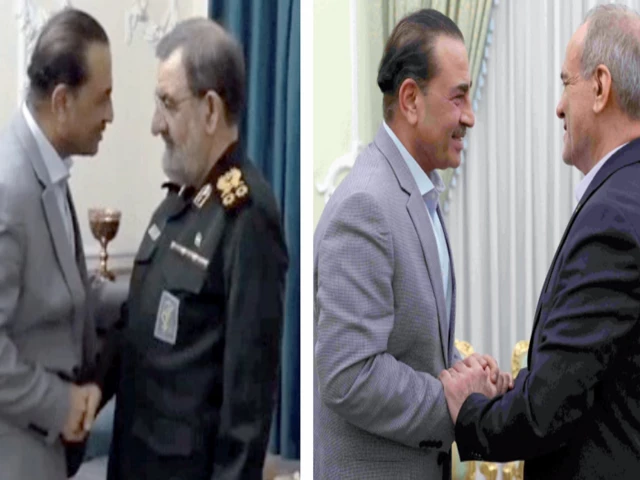
Notably, soon after Prabowo’s cancelled visit, Indonesia’s Minister of Defense, Lt. Gen. (Retd) Sjafrie Sjamsoeddin, visited Pakistan and met with Prime Minister Shehbaz Sharif and Army Chief Field Marshal Syed Asim Munir.
Their discussions focused on defense cooperation, regional security, economy, trade, strategy, and defense production. This timely defense-level visit was widely seen as Indonesia’s way of reaffirming its strong ties with Pakistan, somewhat neutralizing the impression left by the cancelled President’s visit.
It served two clear purposes: first, signaling that Jakarta remains committed to maintaining its image and partnership among Muslim nations, particularly Pakistan. Second, encouraging the multidirectional diplomacy strategy with a pragmatic approach to balance relations with both countries without bringing down either.
This visit served as damage control and reaffirmed Indonesia’s interest in bilateral relations and to mitigate negative perceptions in Pakistan’s public discourse.
The cancellation of Prabowo Subianto’s visit to Pakistan did not create a negative image of Indonesia in the eyes of Pakistan and the broader Muslim world, because it was properly managed.
The visit of Minister of Defense gave a clear signal that Indonesia remains committed to maintaining strong ties with both India and Pakistan.
Hence, the Indonesian President must uphold the country’s strategic position as a respected nation on the international stage and treat Pakistan with the same diplomatic importance as other Muslim-majority countries such as Saudi Arbia, Egypt, Malaysia, Türkiye, and etc.

Lidzikri Ahmad Syaru Robbani
Lidzikri Ahmad Syaru Robbani is an Indonesian International Relations student at the
International Islamic University of Islamabad, and is currently working as an intern at Consortium for Asia-Pacific Studies (CAPS), Pakistan. He can be reach at [email protected]