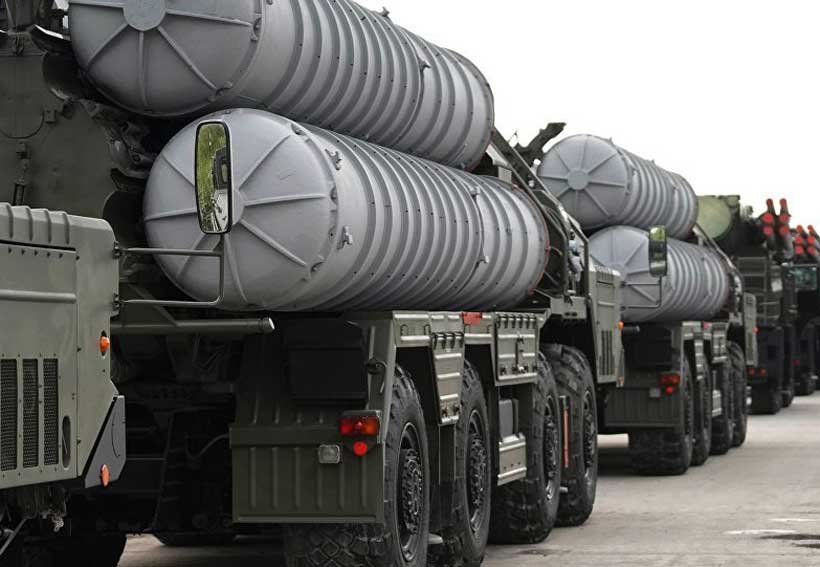
The recent delivery of the fourth squadron of the S-400 long-range surface-to-air missile system to India by Russia has been discussed in New Delhi and Moscow as a breakthrough: a move to upgrade defense relations and enhance air defense capabilities.
However, for Islamabad, the purchase is a reason to question and not to panic. Even the most advanced military hardware is not predetermined fate; it is a tool whose usefulness and weakness depend on doctrine and integration, training, and the greater strategic context.
Context matters. First of all, the S-400 is an anti-access/area-denial (A2/AD) weapon used to deprive an enemy of air superiority in specific areas, secure critical assets, and complicate aerial operations. Its radars, long-range interceptors, and layered engagement architecture can be very daunting to an opponent defended. But the coming of a system does not necessarily imply unimpeachable protection.
The operational effectiveness is determined by its network into air-defense command-and-control, its electronic warfare (EW) capabilities, resilience, logistics, and sustainment, and the capabilities of the army that operate and maintain it.
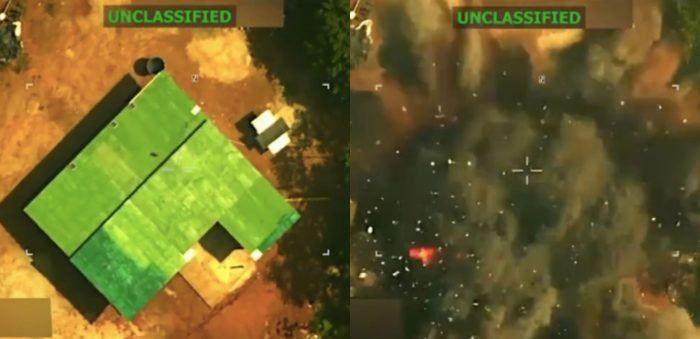
Pakistan has historically been able to respond to new challenges using asymmetric means. The May 25 strikes on S-400 targets near Adampur and Bhuj were reported and serve to highlight a number of lasting lessons regarding the modern war in South Asia.
Read More: India’s Pursuit of Integrated Theatre Commands and Erosion of Crisis Stability in South Asia
To begin with, strategic systems are as safe as they are used tactically. Fixated or ill-disguised launchers, radars, or support nodes are all good targets. The contemporary air-defense systems demand both mobility and dispersion as well as active control of emissions to prevent detection and attack.
When components of a system are concentrated or commonly act within predictable locations, they can be targeted, not necessarily through brute force of missiles falling upon them, but by a very narrow focus on their most vulnerable points: radars, command units, logistic nodes, and repair units.
Second, it is impossible to overestimate the role of integrated warfare and intelligence. Effective strikes on sophisticated systems are usually a demonstration of quality situational awareness: signals intelligence and imagery, human reporting, and electronic signatures that indicate patterns. Getting that picture is, in many cases, a campaign in itself, taking advantage of windows left by operational errors or vulnerabilities.
The alleged participation of Pakistan thus brings out the salience of the ISR (intelligence, surveillance, reconnaissance) and EW not just in overcoming the air defenses but also in influencing the strategic calculus upon which escalation dynamics are based.
Third, the presence of the S-400 modifies, but does not refute, calculations. Systems such as the S-400 add to the cost of some operations and can compel opponents to change their tactics, such as using more stand-off weapons, low-observable platforms, electronic attack, decoys, or saturating attacks to overwhelm the defenses. Such an adaptation is foreseeable.
For Pakistan, it implies not just investing in counter-air capabilities, but also in survivable command-and-control, resilient communications, and choices that preserve strategic ambiguity at lower thresholds while maintaining credible deterrence.
Fourth, strategic signaling is as important as kinetic action. The politicizing of strikes, whether fully checked or partially aimed as a message, serves political and military purposes. It is an indicator of ability, determination, and readiness to challenge any perceived effort to upset the regional equation. Signaling, however, is also prone to escalation, especially when misunderstood; therefore, restraint and effective communication channels are imperative to avoid spiraling unintentionally.
Read More: India Set for Record $2bn Drone Procurement to Boost Defense Capabilities
There are three policy implications for Pakistan. Militarily, Islamabad must keep enhancing its asymmetric capabilities: mobile air-defense suppression capabilities, electronic warfare suites, sea-based strike capabilities, and precision stand-off capabilities, which complicate any effort to dominate the unchallenged airspace.
Pakistan needs to deepen its diplomatic engagement with regional and international stakeholders to put its security issues in context, so that they can de-escalate tensions without compromising credible deterrence. Tactically, Islamabad ought to pressure New Delhi to adopt more explicit crisis-management procedures to reduce the likelihood of tactical encounters escalating into a broader war.
Finally, to the international community, the delivery of S-400 to India must be seen in the perspective of strategic balance, but not as a given truth that would grant immunity. High-tech defenses modify the operational environment, but also welcome countermeasures and modifications. South Asia will need sustainable stability that does not rely on a single platform, but rather on arms control, confidence-building, and mutual understanding, recognizing that no state benefits when unchecked escalation is allowed.
The May 25 lessons are harsh: complex systems can be explored and hit in the right circumstances, and the shadow of such interactions can either prevent or fuel. The calculus of Pakistan in the future must focus on credible defense as well as open lines of crisis de-escalation, whereby capability should not serve as an excuse for miscalculation.
*The views presented in this article are the authors’ own and do not necessarily reflect the views of The Diplomatic Insight.

Musavir Hameed
Musavir Hameed is currently serving as Research Officer at Balochistan Think Tank Network, Quetta and can be reached at musavirkhan88@gmail.com