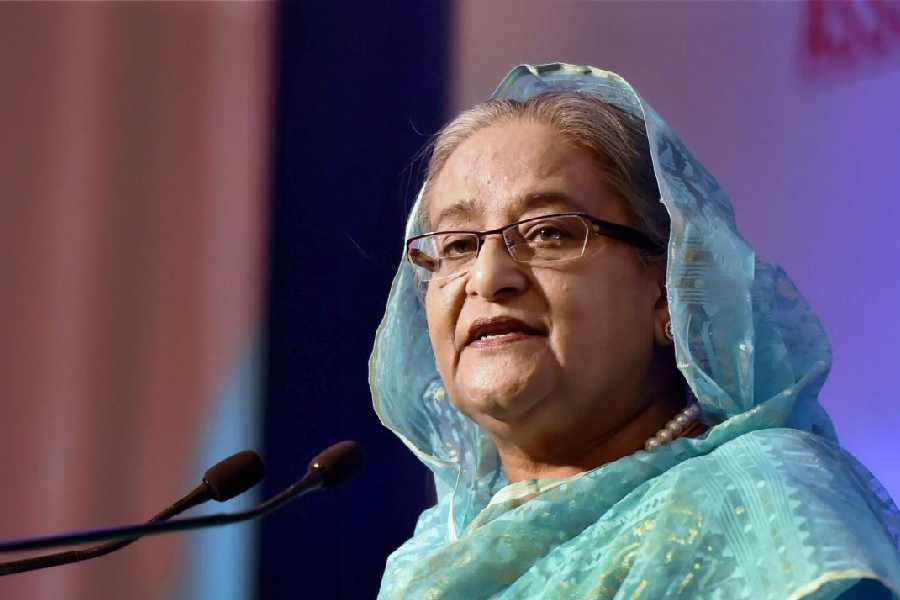
Over lunch in my department’s lounge a few days ago, a few professors and I circled the question all of Dhaka is asking. Will Hasina come home in December?
The speculation has left a trail. Awami League cadres stage provocative marches, crude cocktail bombs go off, and property is vandalized. July Fighters are attacked. Garment workers with real grievances watch their protests get hijacked for wider unrest. Intelligence agencies have reportedly traced both foreign and domestic hands behind the effort to destabilize the country.
Hasina insists she is coming. Around December, she and her senior leaders will leave India and surrender to a court. The party calls it courage, a revival, a second 1981. It is, essentially, a strategy.
The UN human rights office, invited by the interim government itself, examined the killings of July and August 2024. As many as 1,400 people died, most from military rifles and metal-pellet shotguns in the hands of security forces.
Read More: Bangladesh Prosecutor Says Sheikh Hasina Will Face Execution if She Returns
Thousands were wounded, and 12 to 13 percent of the dead were children. The former government, its security agencies and violent groups tied to the Awami League committed grave violations.
Abu Sayed was 23, a student at Begum Rokeya University. On 16 July he led a protest in Rangpur, posed no threat, and was shot with pellets on live television. The country watched a young man die. Then it watched the state call the protesters traitors.
The order came from the top. On 18 July the home minister pushed the border guard commander to use lethal force far more readily. Drones and helicopters joined in. More than 11,700 people were arrested and detained. Four days earlier, Hasina had branded the protesters children of Razakars, a word that means collaborators of Pakistan’s 1971 killers.
The verdict
On 17 November 2025, the International Crimes Tribunal convicted Hasina and former home minister Asaduzzaman Khan Kamal. She was found guilty on all five counts of crimes against humanity and sentenced to death, the first former prime minister in Bangladesh to receive that sentence. Her orders, her incitement and her failure to punish attackers made the case.
One honest caveat. The government’s verified toll is 834, while the UN’s is 1,400, and the tribunal leaned on the higher figure. Numbers can be argued. The pattern cannot. Security forces shot unarmed students.
Dhaka’s prosecutors are blunt. The 30-day appeal window has closed, and in their reading she has no legal option left but to face her sentence.
Ask what the Awami League has told the families of the dead. Almost nothing. It called the verdict illegal and marched until 30 November. It calls itself a victim of tremendous repression and points to more than 140 former MPs in jail.
Persecution is a serious charge, and due process matters even for the accused. But look at the order of grief. The party mourns its jailed MPs loudly. It offers no clear apology for the children shot in the streets, no acknowledgment of the 44 police officers also killed, and no account of what its student wing and cadres did. A party that wants a future must first answer for its past. This one treats the question as an insult.
A strategy, not repentance
Hasina says she has made no contact with the government, because justice is no subject for “secret talks.” She claims online meetings across 125 of the 300 constituencies. Her allies talk of rebuilding and lifting the ban.
Read closely, the vow is a tool. It lifts demoralized activists. December works as a symbol, a way to build pressure and reclaim political space. The date is a rally cry first and a legal act second. Short of a coup, civil war or foreign invasion, an actual return is close to impossible. The real aims are plain: keep the party relevant, hold the morale of its workers, and drain the government’s confidence and public trust.
Some call it a manufactured crisis, and I agree. The interviews, the self-set deadline, the flash processions and the social media echo all breed panic where no real emergency exists. The answer is composure. The government has largely shown it, avoiding the mass arrests and heavy policing that would hand the party a fresh grievance.
Surrender is a noble word. It means something only when you accept the court’s power. Hasina rejects the tribunal’s legitimacy. So what is she surrendering to? A stage, perhaps. A final act of political theatre in which a convicted leader recasts mass killing as her own persecution.
Had she been willing to face justice, she would not have fled and left her people to bear the consequences. She could have stayed and fought at home, as Begum Khaleda Zia did. Instead, a vindictive politics of enforced disappearances and killings kept her in power until the end. Then, with the blood of as many as 1,400 citizens on her hands, she flew to India.
Government’s dilemma
The ruling BNP, led by Tarique Rahman, has drawn its line. On 6 November the home minister declared that the Awami League will not resume political activity. The party hailed the verdict as justice. Even Jamaat-e-Islami and the BNP, who agree on little, now trade accusations of secret deals with the Awami League. That shows how toxic the association has become.
Still, her pledge is shrewd, because it corners Dhaka. Officially the government wants her back. A real return forces a choice it would rather avoid: carry out the execution, or find a way out through appeal or clemency. Hanging the daughter of Sheikh Mujibur Rahman after a trial held in her absence invites an Awami League backlash and heavy foreign pressure.
Sparing her puts crowds in the streets demanding her death. Hasina inside Bangladesh is more dangerous to this government than Hasina in Delhi.
For her, the gain is image. Appearing ready for prison or the gallows projects bravery and self-sacrifice, and her supporters can contrast it with Tarique Rahman staying away during Awami League rule. It signals solidarity with activists claiming persecution and gives her a platform to attack the tribunal and her conviction in absentia.
Read More: Hasina Seeks New Passport, Fuelling Speculation Over Possible Return to Bangladesh
Do not assume July repeats itself. The mobilization that toppled her is unlikely to assemble the same way again, and the BNP has already disappointed. Gas bills that once ran 750 to 1,000 taka are nearing 3,000. People who cannot afford daily meals may forget what Hasina did, and some already say life was better under her. That is the saddest part. The struggle for freedom and genuine independence remains unfulfilled.
Abroad, her prospects look thin. Western capitals know who drives her publicity push, and the UN findings make open sympathy costly. The party is also trying to exploit the garment workers’ wage protests, and only a fair settlement will close that opening. With local elections reportedly due from January, many loyalists may decide their futures lie with the major parties.
This is the truth the Awami League must absorb. Its fall was not engineered in a foreign capital. It followed a month of killing, and a society that watched.
India hosts Hasina. Dhaka calls sheltering people convicted of crimes against humanity an unfriendly act. Delhi answers with studied ambiguity, calling the decision hers. That will not last. If she lands in Dhaka, a reckoning follows. If she doesn’t, the bluff is exposed. Either way, India’s long investment in one leader and one party stands exposed.
Delhi reportedly has two conditions. The Bangladesh Army must bring her back, preferably on a military aircraft, as she fled on one on 5 August 2024. And Dhaka must guarantee her an appeal against the death sentence and a fresh trial over July.
Dhaka’s stance carries an irony. It demands extradition yet resists a voluntary return, echoing how the Awami League treated Chowdhury Mueen-Uddin, the UK-based Jamaat leader convicted in absentia in 2013. It demanded his extradition loudly but never filed a formal request, because the demand served politics more than law.
This time a request exists, but India will not grant it on terms Dhaka could accept. Her offer to surrender upsets the script. Dhaka may not truly want her home, and insisting on a closed route is a safe way to say no.
India is in a bind too. A voluntary return would ease its extradition headache, yet Delhi will not want to be seen watching an ally walk toward possible execution. Dhaka could also blame it for any return outside the treaty. Her August press conference in Delhi reportedly derailed preparations for Tarique Rahman’s first visit, and Dhaka’s reluctance to issue travel papers lets India keep her without saying so.
Her political activity in Delhi complicates rapprochement with the BNP government and limits Bangladesh’s drift toward China and Pakistan. Ironically, both capitals may prefer her outside Bangladesh, for different reasons.
Read More: Bangladesh Sentences Seven Aides of Ousted Premier Hasina to Death
Pressure builds in London as well. Six British politicians want their government to seek assurances that she will not be executed if she returns. They ask for lawyers of her choice, a fair chance to challenge the conviction, and independent scrutiny of any detention.
For a region that values calm, the lesson is plain. Betting on a single family is not a foreign policy. It is a liability. What does returning within December mean to the Awami League? A lifeline for exhausted loyalists. A legal gambit against the ban. A show of defiance. Above all, a way to dodge the harder, quieter task of moral reckoning.
The party that governed for fifteen years has options. It can keep asking Bangladesh to forget July 2024. Or it can earn a place in the country’s future by telling the truth about its past. A courtroom appearance will not settle that choice. Only honesty will.
Here is a test it could pass. Before December, it could name the dead, apologize to the families, and call for a transparent, internationally observed review of its own conduct. It could accept that a party can be great in its history and guilty in its recent record.
Its leader’s own words make the plan clear: homecoming without confession. That is why the promise rings hollow. Bangladeshis are not waiting for a flight. They are waiting for an apology.
*The views presented in this article are the authors’ own and do not necessarily reflect the views of The Diplomatic Insight.*

Sayed Anwar
Sayed Anwar is a researcher and Master’s student in the Department of International Relations at Jahangirnagar University, Savar, Dhaka, Bangladesh. His work focuses on South Asian security, regional strategic studies, and the geopolitics of West Asia, and has appeared in South Asia Monitor, Pakistan Today, and other outlets. He can be reached at[email protected]