Gaza (TDI): Hamas announced on Monday that it has dissolved the governing body that has administered the Gaza Strip for nearly two decades, clearing the way for a technocratic administration to assume responsibility for civilian governance.
The decision marks a major political development for the Palestinian movement, which has governed Gaza since taking control of the territory from the rival Fatah movement in 2007, following its victory in the 2006 Palestinian legislative elections.
According to Hamas officials, Mohammed al-Farra, head of the government’s emergency committee, has formally resigned and dissolved the body to facilitate the transfer of administrative responsibilities to the National Committee for the Administration of Gaza (NCAG).
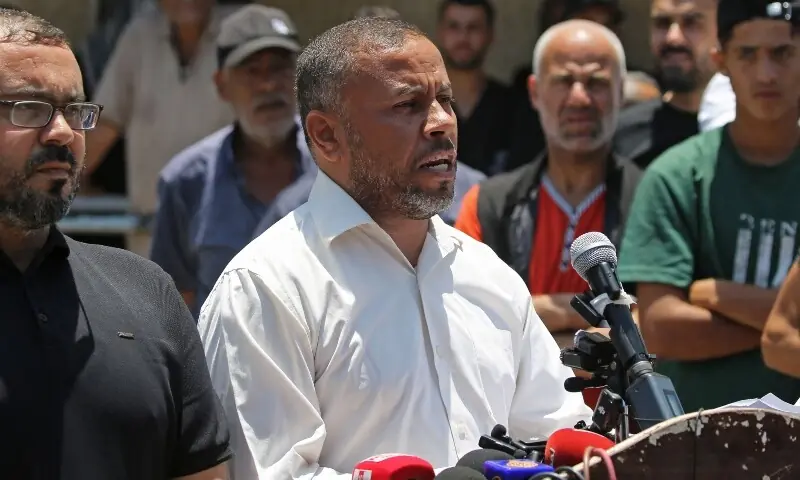
Hamas spokesperson Hazem Qassem said the group had decided to step away from governing Gaza in an effort to remove obstacles to the political process and support a smooth administrative transition.
Read More: Board of Peace Seeks UNSC Pressure to Disarm Hamas
He said Hamas was prepared to hand over governmental responsibilities to the technocratic committee and expressed hope that the NCAG would soon begin operating inside Gaza.
The National Committee for the Administration of Gaza, headed by Palestinian technocrat Ali Shaath, was established following the ceasefire agreement between Hamas and Israel brokered by the United States in October 2025. However, the committee has so far remained outside Gaza, reportedly because of Israeli objections to its deployment.
A Hamas official said the movement had already informed other Palestinian factions of its decision during recent meetings in Cairo. According to the official, the factions welcomed the move, describing it as an important step toward enabling the committee to assume responsibility for civilian administration.
Since the ceasefire took effect last October, Hamas has repeatedly stated that it is willing to relinquish day-to-day governance. However, negotiations over the group’s military wing and its weapons remain unresolved and continue to complicate efforts to advance the next phase of the ceasefire agreement.
Read More: Israeli Strike Kills Son of Hamas Chief Negotiator
The first phase of the truce included the release of Israeli hostages held by Hamas in exchange for Palestinian prisoners detained by Israel.
Talks on the second phase, which envisages the disarmament of Hamas and the gradual withdrawal of Israeli forces from Gaza, have remained stalled for months.
Meanwhile, Israeli forces have continued military operations and expanded their presence across large parts of Gaza. Hamas has maintained that any discussion regarding its weapons must be linked to the establishment of a Palestinian governing authority and broader political arrangements.
The future governance of Gaza remains one of the most contentious issues in ongoing negotiations. Israel has repeatedly ruled out any return of Hamas to power while also rejecting, for now, the immediate transfer of control to the Palestinian Authority based in Ramallah.