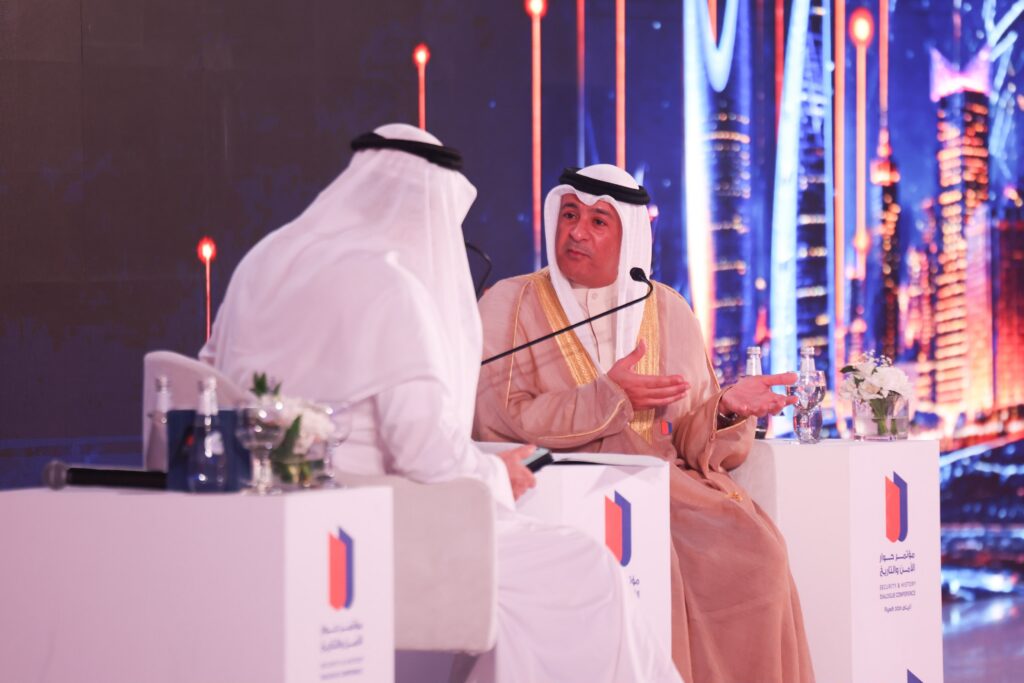
Riyadh (TDI): The Secretary General of the Gulf Cooperation Council said the Gulf states must shift from reacting to crime to dismantling criminal networks before they strike, as the bloc nears completion of a new strategy targeting cybercrime and artificial intelligence-enabled offenses.
Jasem Mohamed Albudaiwi made the remarks while addressing the Security and History Dialogue Forum in Riyadh, an event organized by Saudi Arabia’s Ministry of Interior under the theme “Our History and Our Future: Security and Prosperity.”
Held under the patronage of Prince Abdulaziz bin Saud bin Naif, the Saudi Interior Minister, the forum drew more than 160 speakers from inside the Kingdom and abroad to discuss lessons from past security experiences and how they might inform future strategy.
معالي الأمين العام لمجلس التعاون @jasemalbudaiwi: ملتقى حوار الأمن والتاريخ يجسد أهمية كبرى لتعزيز الخبرات الأمنية لمواجهة التحديات الأمنية المستقبلية. https://t.co/5C1sNPQLq5#مجلس_التعاون#المملكة_العربية_السعودية pic.twitter.com/Zg9ryV9jiv
— مجلس التعاون (@GCCSG) September 6, 2026
In his remarks, Albudaiwi described security as a foundational pillar of the GCC since its founding, arguing that the bloc’s strength lies in member states’ ability to act collectively against shared threats.
He said the changing nature of cross-border crime demands more forward-looking tactics, including choking off the financial and logistical resources that sustain criminal networks rather than simply responding once crimes occur.
He pointed to progress on a joint Gulf framework for combating narcotics trafficking and money laundering, alongside the near-finished draft of the GCC Strategy for Combating Cybercrime and AI Crimes.
Albudaiwi noted that artificial intelligence and other emerging technologies cut both ways for security agencies, offering powerful new tools for police work while simultaneously being weaponized by criminals for more sophisticated schemes.
Read More: GCC, China Hold Meeting in Riyadh to Strengthen Strategic Partnership
The Secretary General said GCC member states are actively building capabilities designed to anticipate emerging crime patterns, with an emphasis on protecting individuals, families, and communities as central to any security strategy.
He also highlighted the importance of joint operational readiness, singling out the “Arabian Gulf Security” exercise as a concrete example of how member states’ security agencies coordinate, sharpen rapid-response capacity, and adapt to shifting threat scenarios.
Closing his address, Albudaiwi noted that security and development are increasingly intertwined given the scale of transformation underway across Gulf states, saying successful national experiences within the GCC should be treated as shared regional assets that other members can draw on.
“Security does not stand on the margins of development, but rather protects its path and safeguards its gains,” he said, adding that modern technology increasingly gives security agencies the ability to head off risks before they materialize.