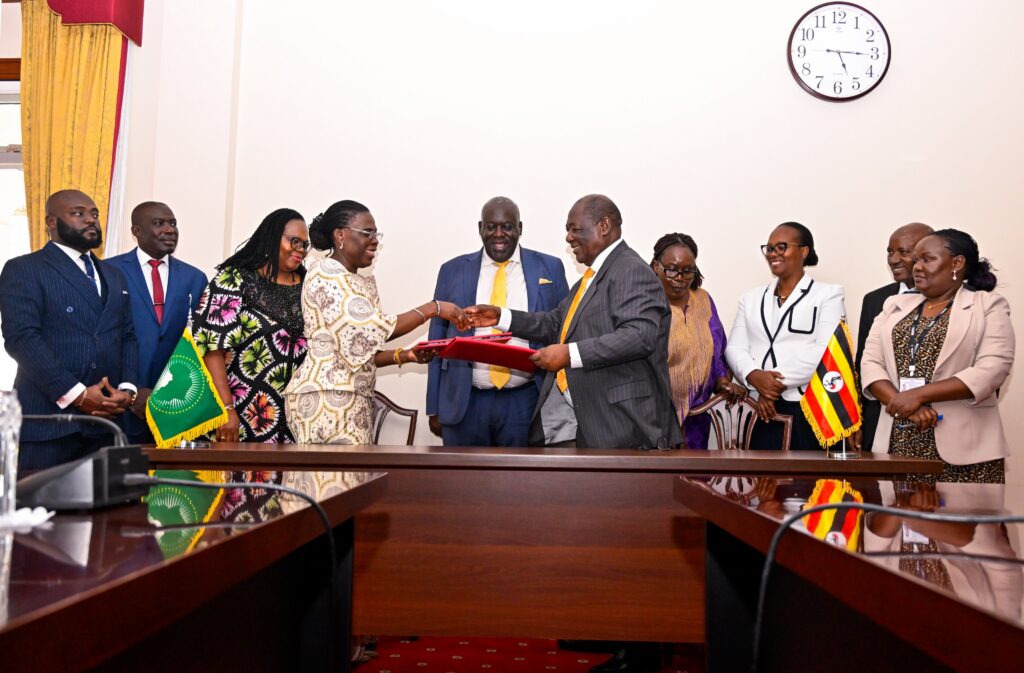
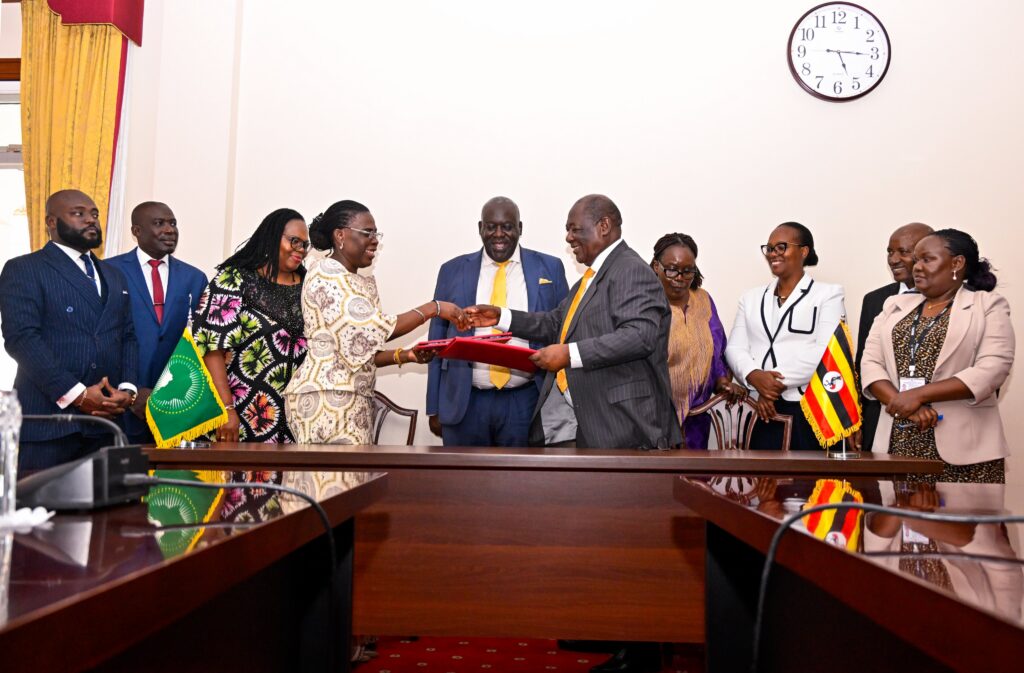
Uganda and the African Union have signed a Host Country Agreement to base the continental humanitarian agency in Uganda. The deal sets the stage for Kampala to become a coordination hub for emergency aid across Africa.
President Yoweri Museveni witnessed the signing at State House, Entebbe, on Monday, November 9. The agreement provides the legal and institutional framework for establishing and running the agency, which is meant to strengthen Africa’s ability to coordinate relief during emergencies.
Attorney General Sam Mayanja said Uganda won the hosting rights after scoring 85 percent in the AU’s selection process. He credited Museveni with leading the bid. Mayanja said the setup process is expected to begin in December 2026 and take about three years before the agency is fully operational.
He added that the agreement spells out the government’s obligations and that Uganda is committed to meeting them.
Today, I witnessed the signing of the Host Country Agreement between Uganda and the African Union for the establishment of the African Union Humanitarian Agency. I thank the African Member States for the confidence they have placed in Uganda.
The humanitarian challenges facing Africa require a coordinated continental response. We must work together to ensure that our people have access to the basic necessities of life, including food, shelter, clothing and medicine. This is a responsibility for all African countries, and every Member State must play its part.
— Yoweri K Museveni (@KagutaMuseveni) November 9, 2026
Museveni welcomed the decision, saying the agency would help coordinate the delivery of food and other essential supplies to people hit by disasters and crises. He said it would improve Africa’s capacity to respond to humanitarian challenges and support vulnerable communities.
Relief, Disaster Preparedness and Refugees Minister Sam Engola called the signing a milestone for humanitarian cooperation among African states.
He said the AU’s choice reflects Uganda’s long record of assisting displaced people, particularly its open-door refugee policy. That experience, he said, gives the agency a strong foundation.
AU Commissioner for Health, Humanitarian Affairs and Social Development Amma Twum-Amoah thanked Museveni and Ugandans for agreeing to host the agency.
She said the agreement was more than a diplomatic formality. In her view, it moves Africa’s political commitments toward institutional reality and strengthens the continent’s ownership of its humanitarian response.
Twum-Amoah pointed to Kampala’s link to the 2009 Kampala Convention, Africa’s landmark legal instrument on protecting and assisting internally displaced persons.
She said the city could become a continental center for humanitarian action. She listed armed conflict, forced displacement, climate-related disasters, food insecurity and disease outbreaks among the pressures facing Africa, and said expectations for the agency are high.
She said it must be more than an institution on paper, and should serve as a platform for coordinated action and humanitarian diplomacy.
She said the AU Commission has already assembled the initial staff needed to start operations. It hopes to deploy them to Kampala by the end of November, or by mid-December 2026 at the latest.
She said Africa cannot afford delays when millions need timely, coordinated help, and that the early team would mark the agency’s first step in Uganda.