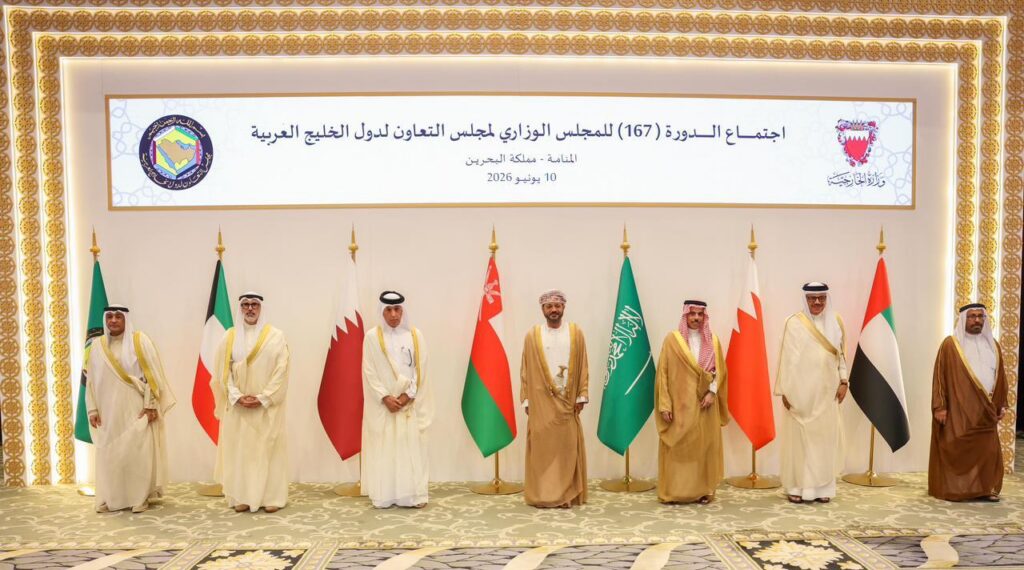
The Gulf Cooperation Council (GCC) has called for the inclusion of Gulf states in any future negotiations or agreements concerning Iran, stressing that regional security arrangements must take into account the interests of countries directly affected by the ongoing tensions.
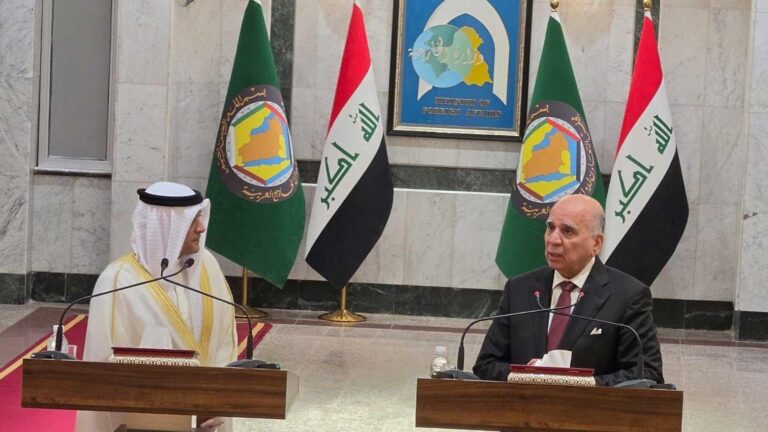
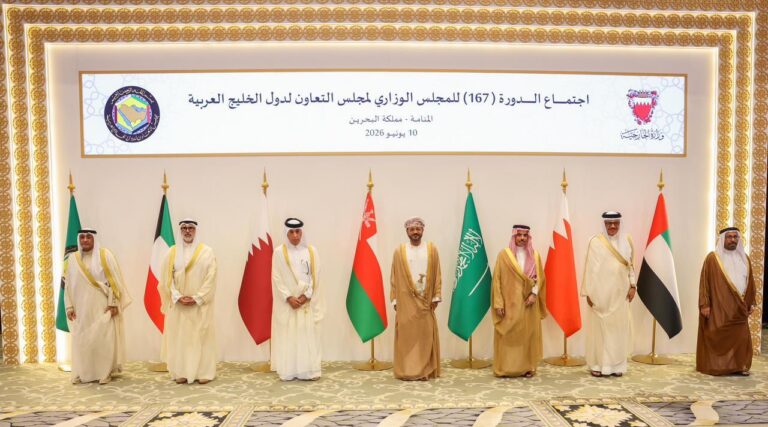
The position was outlined in the final communiqué of the GCC Ministerial Council’s 168th session, held in Manama, Bahrain, on Sunday.
The meeting was chaired by Bahrain’s Foreign Minister Abdullatif bin Rashid Al Zayani and attended by foreign ministers of the six GCC member states.
The council discussed recent regional developments, including Houthi attacks against Saudi Arabia, Iranian military activities and growing concerns over maritime security.
The ministers emphasized the need for a diplomatic solution to the regional crisis while reaffirming their collective commitment to protecting the sovereignty and security of member states.
Read More: GCC and European Lawmakers Prepare for New Round of Parliamentary Diplomacy
The council condemned the continued missile and drone attacks that it attributed to Iran and its regional allies, calling for an immediate end to actions threatening civilian infrastructure and regional stability.
It also expressed solidarity with Saudi Arabia following Houthi attacks against civilian airports and other facilities, stressing that the security of GCC countries is indivisible.
Referring to the GCC Joint Defense Agreement, the ministers reaffirmed that an attack against one member state concerns the security of the entire bloc.
The communiqué further called for the enforcement of United Nations Security Council resolutions concerning Yemen and restrictions on arms supplies to the Houthis.
On Iran, the council emphasized that any diplomatic settlement should address outstanding concerns relating to its nuclear program, ballistic missiles, unmanned aerial vehicles and support for armed groups.
Read More: GCC Secretary General Urges Gulf-Asia Partnership to Unlock Investments
It also highlighted the importance of restoring safe navigation through the Strait of Hormuz, the Red Sea and the Bab Al Mandeb Strait, which remain important routes for international trade and energy supplies.
The declaration reflects the GCC’s efforts to play a more direct role in discussions concerning the future of regional security.
Gulf countries have repeatedly emphasized that diplomatic arrangements involving Iran should consider the security concerns of neighboring states, particularly when tensions affect maritime routes, economic infrastructure and cross-border relations.
By calling for participation in future negotiations, the GCC is seeking to ensure that its member states are represented in decisions with direct consequences for the region.
At the same time, the council’s support for dialogue indicates that Gulf governments continue to view diplomacy as an important means of preventing further escalation.
The latest communiqué therefore brings together two priorities: maintaining collective security commitments and pursuing a political settlement that addresses the concerns of regional countries.

Anoush Taimur is an International Relations graduate from DHA Suffa University, Karachi, currently based in Doha. Her research interests include Gulf politics, small-state diplomacy, Global South studies and conflict
mediation. Her work examines how states create influence through connectivity, institutions and strategic relationships. She can be reached at [email protected]