The Turkic world stretching from the Adriatic to the Great Wall of China, in the old formulation has spent the past decade and a half converting a shared civilizational memory into an institutional reality. What began in 2009 as the Turkic Council has since evolved into the Organization of Turkic States (OTS), a full-fledged intergovernmental body now guiding roughly 180 million people across Azerbaijan, Kazakhstan, Kyrgyzstan, Türkiye, and Uzbekistan, with Hungary, Turkmenistan, and Northern Cyprus engaged as observers or affiliated partners.
In an era when regional blocs are being tested by fractured supply chains, shifting alliances, and competition over connectivity corridors, the OTS has positioned itself as a rare example of an organization built on cultural kinship that is now trying to prove its economic and strategic worth.
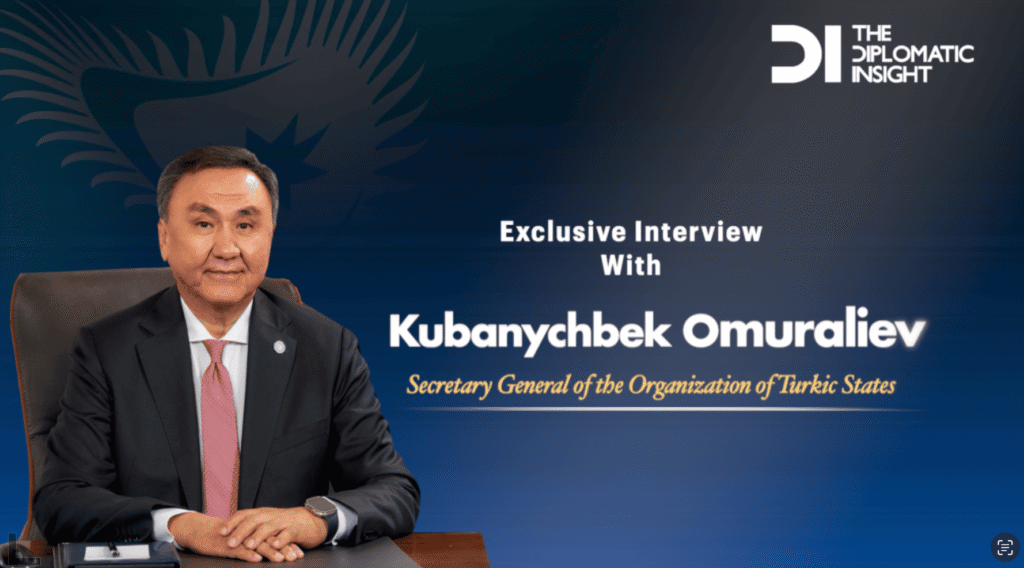
At the helm of this effort is H.E. Ambassador Kubanychbek Omuraliev, the veteran Kyrgyz diplomat who took office as the fourth Secretary General of the OTS in November 2022. A career diplomat fluent in Kyrgyz, Russian, English, and Turkish, Omuraliev inherited an organization at an inflection point—freshly transformed from council to full institution, and tasked with showing that shared language and history could translate into hard outcomes: trade corridors, investment funds, and digital infrastructure.
In this exclusive interview with The Diplomatic Insight, Secretary General Omuraliev discusses how the OTS is operationalizing its Strategy 2022–2026 and the longer-term Turkic World Vision 2040 as well as cultural anchors such as TÜRKSOY and the Common Turkic Alphabet.
TDI: Could you briefly share your professional journey and what led you to a career in diplomacy and, eventually, to leading the Organization of Turkic States?
My professional journey has been guided by a strong belief in diplomacy as a means to build trust, foster understanding, and transform shared interests into lasting cooperation. Throughout my diplomatic career, including my service as Ambassador and Permanent Representative to international organizations, I gained extensive experience in bilateral and multilateral diplomacy, international negotiations, regional cooperation, and institutional development.
I have always believed that diplomacy is more than managing relations between states—it is about identifying common ground, building confidence, and creating lasting frameworks for cooperation. This conviction naturally led me to the position of Secretary General of the Organization of Turkic States.
The OTS is a unique achievement, bringing together the Turkic States within a comprehensive international organization founded on shared history, culture, language, and values. Our mission, however, extends beyond preserving this common heritage. It is to translate it into practical cooperation that addresses the needs of our member states and peoples. Since assuming office, my priority has been to help transform the OTS into a mature, effective, forward-looking, and globally respected organization that turns political vision into tangible results for the Turkic World.
TDI: As Secretary General, how would you define the Organization of Turkic States’ core mission today, and what are its key priorities under the OTS Strategy 2022–2026 and the Turkic World Vision 2040?
The core mission of the Organization of Turkic States is to transform the natural solidarity of the Turkic World into an institutional, sustainable, and future-oriented partnership. Our common history, linguistic affinities, cultural heritage, and bonds of brotherhood provide an exceptional foundation of trust. Our task today is to use that foundation to build a common future defined by peace, prosperity, connectivity, resilience, technological progress, and constructive international engagement.
The Turkic World Vision 2040 sets out our long-term strategic direction: a more integrated, connected, and influential Turkic World that contributes to regional stability and global cooperation. The OTS Strategy 2022–2026 translates this vision into practical priorities and implementation mechanisms. These include stronger political coordination, deeper economic integration, expanded trade and investment, the development of the Middle Corridor, energy cooperation, digital transformation, green growth, food and supply-chain security, and investment in education, science, innovation, and human capital.
Today, the international system is undergoing profound transformation. Geopolitical uncertainty, the reconfiguration of global supply chains, technological competition, and the growing role of regional organizations are reshaping international cooperation. In this evolving environment, the Organization of Turkic States provides an effective platform through which its Member States can respond collectively to common opportunities and shared challenges while contributing constructively to regional and global stability.
Economic integration is central to this agenda because political solidarity must be supported by a strong material foundation. The Turkic Investment Fund, with an authorized capital of USD 600 million, is the first joint financial institution of the Turkic States. The Turkic Chamber of Commerce and Industry connects more than two million companies, while the Turkic Investment Promotion Network, the Council of Central Banks, the Turkic Green Finance Council, and cooperation among Financial Intelligence Units and Competition Authorities are helping to create a more integrated financial and business environment.
We are also working to unlock new opportunities through a possible agreement on free trade in services and investment. Once fully operational, the Digital Economy Partnership Agreement will strengthen confidence in electronic transactions, facilitate digital trade, and support the emergence of a more connected regional market.
Digital transformation has become one of the defining pillars of our work. Artificial intelligence, cybersecurity, digital public services, emerging technologies, and cross-border digital cooperation will shape the competitiveness and strategic resilience of our region. Our initiatives on the Digital Silk Way, the Turkic Large Language Model, and joint innovation ecosystems reflect our determination that the Turkic World should not merely adapt to technological change, but actively shape it.
Today, the OTS operates through approximately 60 cooperation mechanisms covering virtually every strategic sector. However, our success cannot be measured by the number of meetings held or documents adopted. The real measure is whether cooperation creates opportunities, improves connectivity, supports businesses, strengthens institutions, empowers young people, and raises the well-being of our citizens.
In an era of geopolitical uncertainty, economic fragmentation, and reconfigured supply chains, the OTS matters because it offers a model of cooperation based on solidarity without confrontation, integration without exclusion, and shared identity combined with pragmatic action.
TDI: The Organization of Turkic States brings together nations bound by shared history, language, and heritage. How does the OTS translate this civilizational kinship into practical, results-oriented cooperation among Member States?
The distinctive strength of the Organization of Turkic States lies in the relationship between identity and action. Many regional organizations begin with economic or political necessity and only later seek to cultivate a common identity. The OTS has evolved in a different manner. Our cooperation is rooted in centuries of shared history, common linguistic and cultural foundations, and a genuine sense of kinship among our peoples.
This creates a level of trust and mutual understanding that cannot be artificially constructed. Yet identity alone is not sufficient. Its true value emerges when it enables states to cooperate more effectively, take decisions with greater confidence, and translate political consensus into practical outcomes.
The OTS therefore converts civilizational kinship into cooperation through shared strategies, institutional mechanisms, joint projects, and coordinated policies. In the economic sphere, the Turkic Investment Fund provides a platform for financing development, innovation, entrepreneurship, and connectivity. The Turkic Chamber of Commerce and Industry, bringing together more than two million companies, helps connect the private sectors of our countries, while TurkIPAnet strengthens cooperation among investment promotion agencies.
The Turkic region is emerging not as a periphery, but increasingly as one of Eurasia’s principal zones of connectivity linking Europe, Asia, the Caucasus and the Middle East. Geography alone, however, does not create integration. It must be supported by institutions, investment, common rules and trust. The OTS therefore transforms our shared identity into practical cooperation through coordinated policies, institutional mechanisms and flagship initiatives.
We are also strengthening the physical foundations of connectivity through major projects such as the China–Kyrgyzstan–Uzbekistan railway, which is expected to expand regional transit capacity significantly. Together with the development of the Trans-Caspian route, these initiatives can reinforce the Turkic region’s role as a central bridge between Asia and Europe.
The human dimension remains equally essential. Cooperation through the Turkic Universities Union, youth platforms, academic mobility, tourism routes, cultural institutions, and the Common Turkic Alphabet brings integration closer to our citizens. TURKSOY, the Turkic Academy, and the Turkic Culture and Heritage Foundation ensure that our common heritage is not treated as something static, but as a living source of knowledge, creativity, and common purpose.
What distinguishes the OTS is therefore not simply that our Member States cooperate, but that this cooperation is supported by a deep reservoir of public goodwill and shared belonging. This makes our integration more organic, resilient, and sustainable.
Our objective is that citizens increasingly experience the practical value of the OTS through easier mobility, stronger business and educational opportunities, more efficient transport, wider cultural interaction, and a growing sense of common future.
TDI: Every period of leadership comes with its own opportunities and challenges. As Secretary General, what are the key priorities shaping your agenda, and what legacy do you hope to leave for the Organization of Turkic States?
When I assumed office, the Organization of Turkic States had already entered an important new phase following its transformation from the Turkic Council into a full-fledged international organization. The central challenge was to ensure that this institutional transformation was matched by stronger implementation, greater operational capacity, and tangible results.
My foremost priority has therefore been to contribute to the institutional maturity of the Organization. This means strengthening the Secretariat, improving coordination among our Member States and Turkic cooperation institutions, expanding mechanisms where necessary, and ensuring that decisions adopted by our Heads of State are translated into concrete action.
A regional organization must be judged not only by the ambition of its declarations, but by its capacity to implement them. For this reason, I have consistently emphasized the transition from dialogue to delivery, from intention to implementation, and from symbolic unity to practical integration.
A second priority has been to reinforce the economic and strategic foundations of the Turkic World. Our geography occupies a critical position connecting East and West and linking major markets across Eurasia. As global supply chains are reconfigured and countries seek more diversified and reliable routes, the Middle Corridor has acquired growing strategic significance.
The OTS must help its Member States convert this geographic advantage into sustainable prosperity. This requires coordinated action on infrastructure, transport, customs, investment, energy, digital systems, and regional value chains. It also requires institutions capable of mobilizing capital and connecting businesses, such as the Turkic Investment Fund, the Turkic Chamber of Commerce and Industry, and the emerging financial cooperation architecture of the OTS.
A third priority has been to prepare the Organization for the future. Artificial intelligence, cybersecurity, the green transition, and technological competition are already reshaping international relations. Institutions that fail to anticipate these transformations risk losing relevance. The OTS must therefore remain adaptive, innovative, and strategically forward-looking.
At the same time, we are strengthening the international profile of the Organization. Through greater cooperation with international and regional organizations, enhanced diplomatic engagement, Turkic Week initiatives, and the emerging OTS+ format, we are demonstrating that the OTS is an outward-looking and constructive actor.
We are also expanding cooperation with regional and international organizations, recognizing that today’s challenges require complementary rather than competing regional architectures. The OTS seeks to serve as a constructive bridge between regions and to contribute to dialogue, connectivity and sustainable development well beyond the Turkic World.
The OTS is an outward-looking and constructive platform that seeks to strengthen cooperation among its members while contributing to peace, stability, connectivity, energy security, and sustainable development in the wider region.
As for legacy, I would hope to leave behind an Organization that is stronger institutionally, clearer strategically, more effective operationally, and more respected internationally. More importantly, I hope this period will be remembered as one in which the OTS consolidated its transition from an organization of shared identity into an organization of shared action—capable of delivering lasting results for present and future generations.
TDI: The OTS is active in over 35 fields, from trade and transport to education and the green economy. Which areas have delivered the most significant impact so far, and where do you see the greatest untapped potential?
The scope of the Organization has expanded considerably, and today the OTS framework encompasses approximately 60 cooperation mechanisms. This reflects not only institutional growth, but also recognition that the challenges and opportunities facing our region are increasingly interconnected.
The most visible impact has been achieved in connectivity. The Middle Corridor is gaining importance as global trade routes and supply chains are being reassessed. Its value lies not merely in being one of the shortest overland links between Asia and Europe, but in offering a diversified, resilient, and increasingly efficient route supported by regional ownership.
Infrastructure alone, however, is not enough. Competitiveness depends on coordination, harmonized procedures, and digital systems. The implementation of ePermit, eCMR, and eTIR, together with the regional roadmap for eTIR and the 2026 memorandum on eCMR, is helping reduce delays, improve transparency, and make the corridor more predictable. The China–Kyrgyzstan–Uzbekistan railway, with projected capacity of up to 15 million tonnes annually, can further strengthen this connectivity architecture.
A second major achievement is economic institutionalization. As I mentioned earlier, platforms such as TIF, TCCI, TurkIPAnet, the Council of Central Banks, the Turkic Green Finance Council, and cooperation among Financial Intelligence Units and Competition Authorities are gradually building a more integrated regional economic ecosystem.
A third area is digital transformation. The DEPA can deepen trust in electronic transactions and accelerate e-commerce across the OTS region. Combined with the Digital Silk Way, artificial intelligence initiatives, cybersecurity cooperation, and digital public services, it can help build a modern economic space in which physical and digital connectivity reinforce one another.
Energy cooperation is another field of major strategic importance. Looking ahead, the greatest untapped potential lies in bringing together physical, digital, financial, energy and human connectivity into a single integrated regional ecosystem. Success will increasingly depend not only on infrastructure, but also on trusted data flows, digital identity, artificial intelligence, fintech, innovation ecosystems, research collaboration, start-ups and highly skilled human capital.
The human and cultural dimension has also generated important long-term impact. Educational networks, youth cooperation, academic mobility, tourism initiatives, and cultural institutions strengthen the social foundations of integration. These areas may not always produce immediate economic figures, but they create the mutual understanding and shared consciousness on which durable cooperation depends.
Looking ahead, the greatest untapped potential lies in the convergence of physical, digital, financial, energy, and human connectivity. A transport corridor becomes far more valuable when it is supported by digital customs, reliable energy, investment capital, innovative enterprises, skilled people, and compatible regulatory systems.
There is also considerable potential in free trade in services and investment, renewable energy, green finance, critical minerals, food security, healthcare, space technologies, and scientific research. The Turkic World possesses significant strategic assets: around 180 million people, a combined economic output exceeding USD 2.4 trillion, abundant resources, dynamic societies, and a central position in Eurasia.
Our future success will depend on whether we can bring these assets together through effective institutions, coordinated policies, and a shared strategic vision. In a changing international order, the OTS enables the Turkic States to navigate uncertainty through cooperation, strengthen their resilience, and contribute to a more balanced, connected, and cooperative international system.
TDI: Cultural heritage preservation, through bodies such as TÜRKSOY, the Turkic Academy, and initiatives like the Common Turkic Alphabet, is central to the OTS’s work. How does safeguarding this shared heritage strengthen unity and mutual understanding among member states?
The greatest strength of the Organization of Turkic States lies in its unique ability to combine a rich cultural and humanitarian foundation with practical cooperation. Our Member States are connected by centuries-old historical ties, common linguistic roots, and shared cultural traditions. This relationship is not based solely on converging interests, but on a genuine sense of brotherhood and shared identity.
Cultural diplomacy is not simply about preserving the past. It creates the trust, mutual understanding and sense of common purpose that make deeper political, economic and institutional cooperation possible.
Safeguarding this shared heritage strengthens unity by bringing our societies closer together and fostering mutual understanding among our peoples. These efforts are reflected in initiatives that celebrate our common identity and transform our shared values into meaningful cooperation. Following the decision of the Heads of State in the Budapest Declaration to recognize Nowruz as a bridge between cultures and a symbol of universal values, the Organization of Turkic States celebrated Nowruz for the first time within its institutional framework in Gaziantep on 21 March 2026, bringing together diplomatic representatives, international organizations, and cultural performers from across the Turkic world.
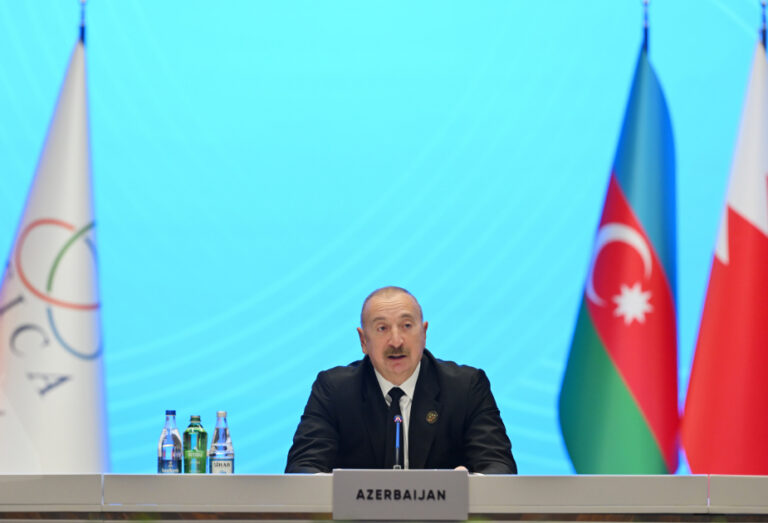
This spirit of cooperation was further reinforced through the Turkic World Week, held this year in Baku with the support of H.E. Ilham Aliyev, President of the Republic of Azerbaijan. Dedicated to the 100th anniversary of the First Turkological Congress, the event celebrated our shared intellectual and cultural heritage while fostering dialogue, academic cooperation, and people-to-people ties among Turkic nations.
The Common Turkic Alphabet is another landmark initiative that demonstrates how cultural heritage can contribute to deeper integration. More than a linguistic project, it facilitates communication, educational cooperation, publishing, and the exchange of ideas across the Turkic world, while preserving the richness and diversity of our shared cultural heritage. Together with the work of institutions such as TÜRKSOY and the Turkic Academy, these initiatives help strengthen a common sense of belonging, reinforce mutual trust, and lay a solid foundation for closer cooperation across all fields.
TDI: Intra-OTS trade still represents only a small share of member states’ total external trade. What concrete steps is the Organization taking, through initiatives such as the Trans-Caspian Corridor and the proposed Turkic Investment Fund, to deepen economic integration?
While intra-OTS trade still accounts for a relatively modest share of our Member States’ overall external trade, we are steadily creating the institutional and physical foundations for deeper economic integration.
One of our flagship initiatives is the Turkic Investment Fund, with an authorized capital of USD 600 million, which promotes mutual investment, supports innovation, and facilitates the growth of small and medium-sized enterprises across the Turkic region. To further strengthen the investment ecosystem, we also launched the Turkic Investment Promotion Network (TurkIPAnet), which enhances cooperation among national investment agencies and helps attract cross-border investment.
Another key priority is improving connectivity through the Trans-Caspian International Transport Route (Middle Corridor). Together with digital trade facilitation tools such as eTIR, eCMR, and ePermit, we are making cross-border transport faster, more efficient, and more transparent, reducing barriers to trade between our Member States.
At the same time, we are working to remove regulatory obstacles through the proposed Free Trade Agreement in Services and Investments and the DEPA, which will facilitate digital trade and strengthen trust in electronic transactions across the region.
Equally important is our support for the private sector through the Union of Turkic Chambers of Commerce and Industry (TCCI), which brings together more than two million businesses and promotes practical business-to-business cooperation. This effort is further complemented by the TURAN Special Economic Zone (TURANSEZ) initiative, which aims to create a favorable environment for investment, industrial cooperation, and cross-border value chains, strengthening the Turkic region’s attractiveness as a competitive destination for business and manufacturing.
Taken together, these initiatives demonstrate that the OTS is moving beyond declarations to concrete mechanisms that facilitate trade, encourage investment, improve connectivity, and lay the foundations for a more integrated and competitive Turkic economic space.
TDI: Beyond formal cooperation, how does the OTS foster people-to-people ties, youth engagement, and cultural diplomacy across the Turkic world?
People-to-people connectivity is one of the cornerstones of the Organization of Turkic States. Lasting regional integration is built not only through agreements between governments but also through stronger ties among our citizens, particularly young people.
The OTS also supports youth engagement through initiatives such as the Turkic World Summer Forum and annual internship programmes at the OTS Secretariat, giving young people the opportunity to contribute directly to the process of Turkic cooperation and integration.
Cultural diplomacy and tourism are equally important. Projects such as the Modern Silk Road, Tabarruk Ziyarat, the Tourism Capital of the Turkic World, and the Union of Turkic Ski Resorts showcase the rich cultural and natural heritage of our region while encouraging greater travel, cultural exchange, and people-to-people interaction.
At the same time, institutions such as TÜRKSOY and the Turkic Academy play a vital role in preserving and promoting our common cultural heritage, strengthening mutual understanding and reinforcing a shared sense of identity among Turkic peoples.
Together, these initiatives help transform our shared history, culture, and values into lasting human connections, making cooperation among our Member States more inclusive, dynamic, and sustainable.
TDI: With Pakistan serving as a gateway to South Asia and the Arabian Sea, how do you see the Organization of Turkic States collaborating with Pakistan to enhance regional connectivity, trade, and economic integration?
Pakistan occupies a strategically important position as a gateway to South Asia, the Arabian Sea, the Indian Ocean, and an important bridge connecting the Middle East, Central Asia and the wider Indo-Pacific, making it a valuable partner for the Organization of Turkic States in advancing regional connectivity and economic cooperation.
The OTS places great importance on strengthening connectivity both within the Turkic region and with neighboring partners. In this context, enhanced cooperation with Pakistan could contribute to more efficient transport and logistics networks, complementing the development of the Trans-Caspian International Transport Route (Middle Corridor) by providing additional access to global markets through Pakistan’s ports.
There is also significant potential to expand cooperation in trade, investment, digital connectivity, logistics, customs modernization, and small and medium-sized enterprises. The experience gained through OTS initiatives such as the Turkic Investment Fund, the Union of Turkic Chambers of Commerce and Industry (TCCI), and digital trade facilitation tools including eTIR, eCMR, and ePermit could create new opportunities for practical cooperation with Pakistan and contribute to more efficient regional trade.
Beyond economic cooperation, Pakistan and the Turkic States share longstanding historical and cultural ties, which provide a strong foundation for expanding partnerships in tourism, education, innovation, and people-to-people exchanges.
As the OTS continues to strengthen its role as a bridge between Asia and Europe, we remain open to developing mutually beneficial partnerships with countries that share our vision of enhanced regional connectivity, sustainable development, and shared prosperity. In this regard, we see considerable potential for closer cooperation with Pakistan in areas of common interest.
TDI: Finally, what message would you like to share with the people of Pakistan and our readers?
I would like to convey my sincere greetings and best wishes to the people of Pakistan. Pakistan is a country with a rich history, vibrant culture, and a young, dynamic population, and we deeply value the longstanding friendship and close ties that exist between Pakistan and the Turkic world.
There is considerable potential to further strengthen cooperation between the OTS and Pakistan in various areas. By working together, we can create new opportunities for our peoples and contribute to a more connected and prosperous region.
I would also like to thank your readers for their interest in the Organization of Turkic States.
I am confident that the decades ahead will offer unprecedented opportunities for cooperation across our wider region. The Organization of Turkic States remains committed to building partnerships that connect regions, generate shared prosperity, and contribute to a more peaceful, resilient and cooperative international order.
I hope this interview will help them better understand our mission and the growing role of the OTS in fostering cooperation, dialogue, and shared prosperity across our wider region.

Established in December 2008, The Diplomatic Insight is Pakistan’s premier diplomacy and foreign affairs magazine, available in both digital and print formats.