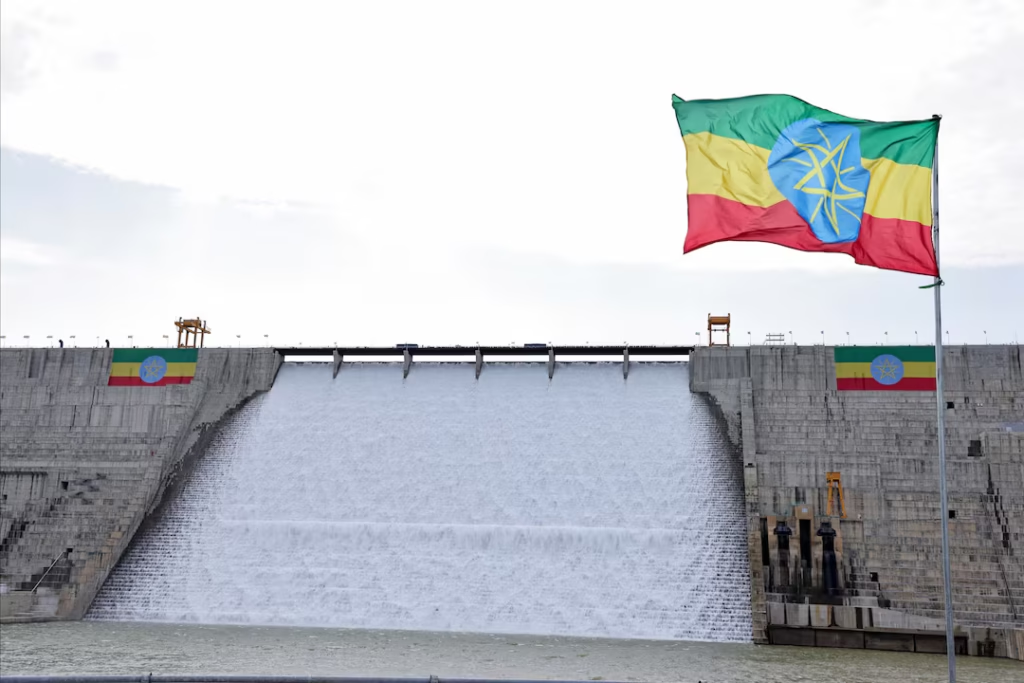
Addis Ababa (TDI): The largest dam of Africa has been launched by the second most populous country of the continent, all with its own money. The dam cost $5 billion, 91% of which came from the country’s central bank.
The remaining 9% were poured in by the citizens themselves through bond sales and gifts. The launch ceremony was observed on Tuesday, and the dam is being celebrated under the name Grand Ethiopian Renaissance Dam (GERD).
What started back in 2011 took 13 years to complete. The reservoir can hold as much water as can drown an area larger than Greater London. But for Ethiopia, the real value of this structure is hydropower generation.
For now, there are only two active turbines but the country hopes to generate enough that it fulfills the needs of the local population and surplus is also available for export. As of 2022, Ethiopia’s 55% population was on the national grid, which means electricity was not available to the remaining 45%.
Another reason why this dam matters so much for the country is the unity it has created among the sharply divided ethnicities. The ethnic diversity of the country has often brought trouble and infighting but for the dam, all people came together.
Read More: Ethiopian New Year ‘Enkutatash’ Celebrated in Islamabad
What magically dispelled the lack of unity was Egypt’s opposition to GERD. It has consistently raised objections to the construction of the dam, citing fears the downstream flow of water will be disrupted and in times of drought, Egyptian people will suffer even more.
Egypt even managed to get the support of Trump during his first presidential term but no independent studies have yet indicated GERD’s ability to disrupt downstream water flow.
Ethiopia’s leadership maintains that its intentions with the dam are only positive, where it seeks to fill the power shortages for its regional neighbors as well. But analysts also caution against the possibility of a rift with Egypt if a water flow disruption does occur.
Predictions are difficult to make because rainfall patterns are highly uncertain and climate change induced changes are abrupt and unanticipated.
By and large, self-financing a mega structure is a big win for a country like Ethiopia. Though attaining maximum power generation capability will take time, the first biggest milestone has already been achieved.

Established in December 2008, The Diplomatic Insight is Pakistan’s premier diplomacy and foreign affairs magazine, available in both digital and print formats.