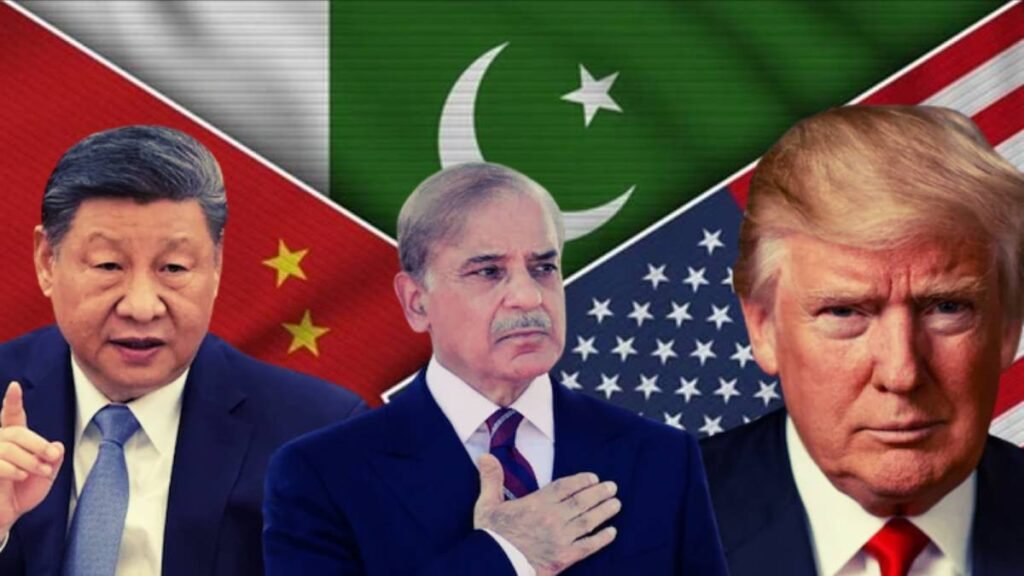
The increasing rivalry between the two powers has impacted international geopolitics, and South Asia has become one of the major regions witnessing the consequences of the rivalry. Given its geographical position at the crossroads of Asia, Pakistan faces the task of ensuring economic sustainability, national security, and political independence.
As the US strengthens ties with India and China seeks to expand its influence through connectivity and economic projects, Pakistan finds itself in a situation where balancing is not an easy task.
The change in Pakistan’s domestic politics has added another layer of complexity to Pakistan’s ability to strike the right balance. The emergence of a new coalition government under PM Shehbaz Sharif took place against the backdrop of a weak economy, political fragmentation, and security concerns.
The rising inflation, low foreign reserves, and increased dependence on foreign aid have made it necessary for the new administration to develop relationships with both great powers. While China is Pakistan’s most reliable ally and economic partner that finances CPEC, the US holds considerable sway over the global financial system and happens to be the largest importer of Pakistani goods.
The strategic autonomy has been emphasized time and again by Pakistan’s leadership, and the country is not expected to join any alliance or bloc headed by a major world power. But maintaining a neutral status is becoming increasingly difficult. For instance, the United States has become cautious about the investments made by China in the region.
Problems of transparency, sustainability, and even security issues have informed the American approach towards Pakistan. While China hopes to see its projects protected by Islamabad, there is also an expectation that Pakistan will remain committed to CPEC. Under such conditions, Pakistan’s ability to balance its relations with the two countries is being constrained.
Read More: Dar highlights deepening Pakistan China Ironclad Friendship
Besides, changes in America’s policy toward South Asia can also be regarded as an important factor influencing Pakistan’s strategies. Since the early 2000s, Washington has continuously increased its collaboration with India on defense and technology matters. It includes the development of logistics sharing agreements, improved communication security, as well as geospatial intelligence.
Such trends are leading to a regional security dilemma for Pakistan, given the emergence of asymmetry in the conventional and strategic dimensions of warfare in the region. Hence, Islamabad is obliged to maintain its deterrence and invest in missiles and defense systems.
Geopolitical competition not only involves the military aspect, but there is also a need to consider how the same competition affects economic integration among South Asian countries. South Asia is currently facing problems like low intra-regional trade volumes, poor connectivity, and political tensions. Geopolitical rivalry is contributing to more divisions in South Asia because some countries are pursuing competing corridors in South Asia.
For example, India has been advocating for alternative connectivity initiatives such as corridors which will connect Southeast Asia, the Middle East, and Europe. Such corridors weaken Pakistan’s status as an intermediary corridor linking Central Asia, South Asia, and the Middle East. While this is the case, Pakistan is pushing for CPEC as a geo-economic initiative to connect the country through Gwadar and other north-south connections.
The other challenge which limits Pakistan is the security threat. There are insurgent groups operating in Balochistan and some parts of Khyber Pakhtunkhwa. They attack economic infrastructure, foreign investments, and energy sites which affect investors negatively and increase costs. The security situation makes the government of Pakistan fail to use its advantage and take full benefits. Mineral-rich areas are underexploited due to the same reason.
US withdrawal from Afghanistan has also brought change in the regional dynamic. Earlier, Pakistan’s strategic importance to the US was determined through cooperation on counter-terrorism efforts and providing logistics for military operations. Now that the Afghanistan operation has ended, there is more of a pragmatic relationship between the two states.
Read More: Pakistan’s Mineral-Based Hedging Strategy Amidst China-US Trade Cold War
Economic importance still persists, with the US being a large export market as well as its importance in the international financial institutions to get loans and rescue packages. Hence, Pakistan wants to keep relations normal with the US and further strengthen their strategic relationship with China.
The importance of China for Pakistan is high. The projects under China-Pakistan Economic Corridor (CPEC), which include investments in infrastructure projects like energy, transportation, and industrial zones, seek to overcome the deficiencies in the economy.
Chinese assistance in power production and improving roads have helped in this regard. But there have been some issues regarding delays, debt, and security concerns. While Beijing is concerned about stability and continuity of policies, Pakistan hopes for further industrial development and investments in special economic zones.
Pakistan’s foreign policy dilemma is not to adopt a zero-sum policy of alignment. Such an approach is risky since it would narrow economic opportunities for the country and increase its vulnerabilities. Alignment with China might be detrimental to Pakistan’s ties with Western economies and international financial institutions, whereas maintaining an alignment with the United States would adversely impact Pakistan-China relations and undermine the implementation of CPEC projects.
Therefore, Islamabad needs to opt for a diversified foreign policy approach entailing cooperation with China, enhanced trade ties with America, and cooperation with Gulf countries, Central Asia, and Europe.
The field of geo-economics can help Pakistan ease its security concerns. In case Islamabad chooses to focus on trade, connectivity, and investments, the country will become an intermediary between different nations and no longer a frontline state in geopolitics.
Development of transport corridors linking Central Asia to ports located on the Arabian Sea, building energy pipelines, and establishing digital connections are some steps that can improve Pakistan’s position economically. However, political stability, regulatory changes, and improved relations within the region are needed for the success of such initiatives.
Read More: Pakistan’s Strategic Space in US-China Competition
Finally, regional organization presents an opportunity to solve some challenges. The economic integration of South Asia is hampered by geopolitical competition and political differences. Enhancing existing regional organizations can contribute to peacebuilding and the facilitation of mutual trade. Connectivity of South Asia, Central Asia, and the Middle East will be beneficial for all participant countries, but geopolitical rivalry hampers efforts in this area.
As regards Pakistan’s strategic culture, balancing is crucial when it comes to relations with other major players in international politics. Throughout the Cold War years, Pakistan’s leaders have managed to maintain a close relationship with the United States and simultaneously sustain friendly ties with Beijing.
With the end of Cold War, China became the main strategic partner of Pakistan, specifically regarding military and infrastructure cooperation. Currently, the situation is more complicated as the two world powers have entered into an open rivalry involving technologies, economy, security, and even ideology.
A stable domestic environment is crucial for the success of Pakistani foreign policy since internal political stability, economic development, and effective governance increase the opportunities for conducting successful negotiations, whereas polarization leads to limited negotiation capacity and the need to rely on foreign partners.
Hence, it is important for Pakistan’s leaders to focus on restoring the economy and implementing necessary reforms aimed at making their country attractive for foreign investments.
Consequently, Pakistan should not be viewed only in terms of risks resulting from being situated at the epicenter of US–China rivalry but rather as a state that has the opportunity to use the geopolitical realities for its benefit. Specifically, geographical location, strategic partnerships, and economic potential allow for creating leverage in its dealings with either country. At the same time, the issues of security, finances, and regional tensions restrict available options.
It is evident that the rivalry between Washington and Beijing will continue to impact developments in South Asia. However, instead of merely surviving in the current geopolitical situation, Pakistan may benefit from it and transform itself accordingly. It is necessary for the country’s government to change priorities from security concerns to geo-economics, to implement needed reforms, and to foster regional connectivity.
*The views presented in this article are the authors’ own and do not necessarily reflect the views of The Diplomatic Insight.

Saeed Awan
Saeed Awan is working as a Research Officer with the World Bank. He is also a final-year student of International Relations. He has previously been engaged with Lincoln Corner Karachi. He has a profound interest in research, diplomacy, and international engagement.