New York (TDI): Finance Minister Muhammad Aurangzeb has called for faster access to international climate financing while highlighting Pakistan’s exposure to climate-related disasters during a series of high-level engagements on the sidelines of the 81st United Nations General Assembly.
According to the Ministry of Finance, Aurangzeb participated in discussions focused on climate finance, digital cooperation and the COP31 Action Agenda, emphasizing the need to turn Pakistan’s climate commitments into practical projects capable of attracting investment.
Speaking at the World Economic Forum’s “Financing Planet and Prosperity” meeting, the finance minister highlighted Pakistan’s vulnerability to climate-related disasters, particularly floods that have damaged infrastructure and affected communities.
Aurangzeb outlined government efforts to improve disaster-response mechanisms, strengthen early-warning systems and develop costed climate-investment plans.
He said international support remained important but should be complemented by domestic resources and stronger fiscal buffers.
The minister also pointed to financing mobilized through the World Bank, Asian Development Bank and international capital markets for disaster relief, climate adaptation and reconstruction.
Read More: Why and How South Asian Youth Must Lead the Climate Fight
At the same time, he urged international climate-financing mechanisms, including the Green Climate Fund and the Loss and Damage Fund, to streamline their procedures and speed up the delivery of funds to vulnerable countries.
Aurangzeb’s UNGA engagements also covered digital cooperation and the potential role of emerging technologies in expanding economic opportunities and financial inclusion.
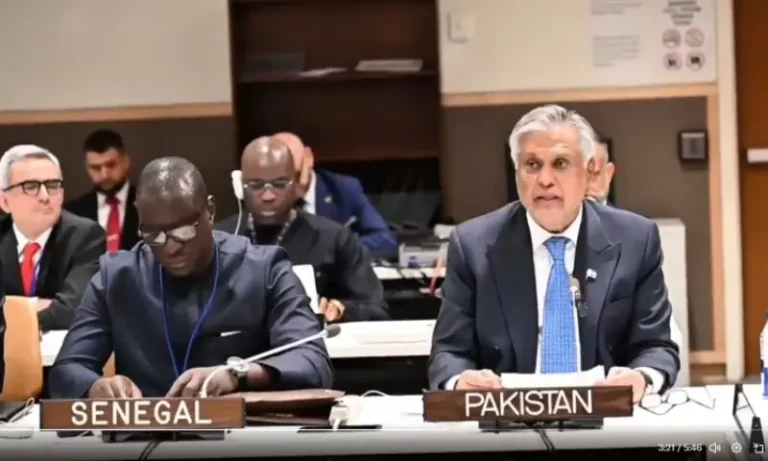
Addressing the “United Nations Digital Cooperation Day 2026 – Blockchain and the Tokenised Future: Sovereign Choices and Safeguards for Next-Gen DPI,” he discussed Pakistan’s move towards establishing a regulated framework for virtual assets.
He said tokenisation should be linked to practical economic requirements, including reducing remittance costs, improving access to financing for small and medium-sized businesses, managing sovereign debt and expanding financial inclusion.
Aurangzeb stressed that innovation by the private sector should be accompanied by effective government safeguards, inclusive digital infrastructure and international cooperation.
He also called for developing countries to have a meaningful role in shaping international standards for emerging digital technologies.
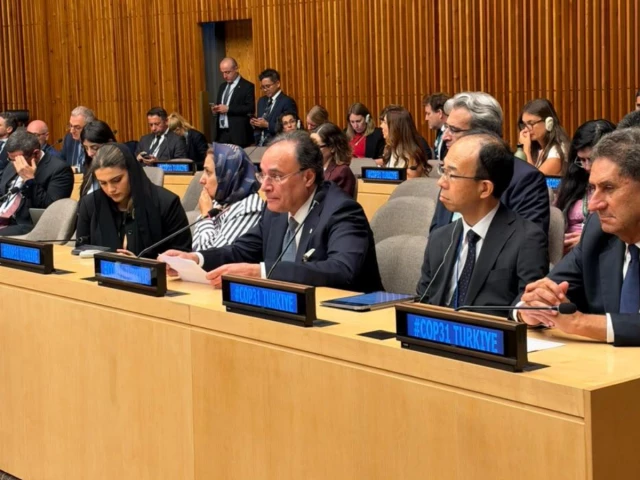
The finance minister also participated in the launch of the COP31 Action Agenda, expressing Pakistan’s support for initiatives aligned with the country’s climate priorities and Nationally Determined Contribution 3.0.
He highlighted several areas of common focus, including clean energy and electrification, expansion of renewable energy, energy-efficient buildings, climate-resilient urban development, climate education and public awareness.
Read More: Baku Climate Action Week: Bridging the Gap From Pledges to Action
Food security and climate-resilient agriculture were also identified as important priorities. Aurangzeb welcomed the proposed Climate Implementation Bridge, describing it as a mechanism that could help convert national climate commitments into projects capable of attracting financing.
He said the central challenge was increasingly about implementing climate plans rather than simply developing them. The finance minister praised the COP31 agenda for establishing defined action points and key performance indicators, describing the approach as focused on practical implementation and measurable outcomes.