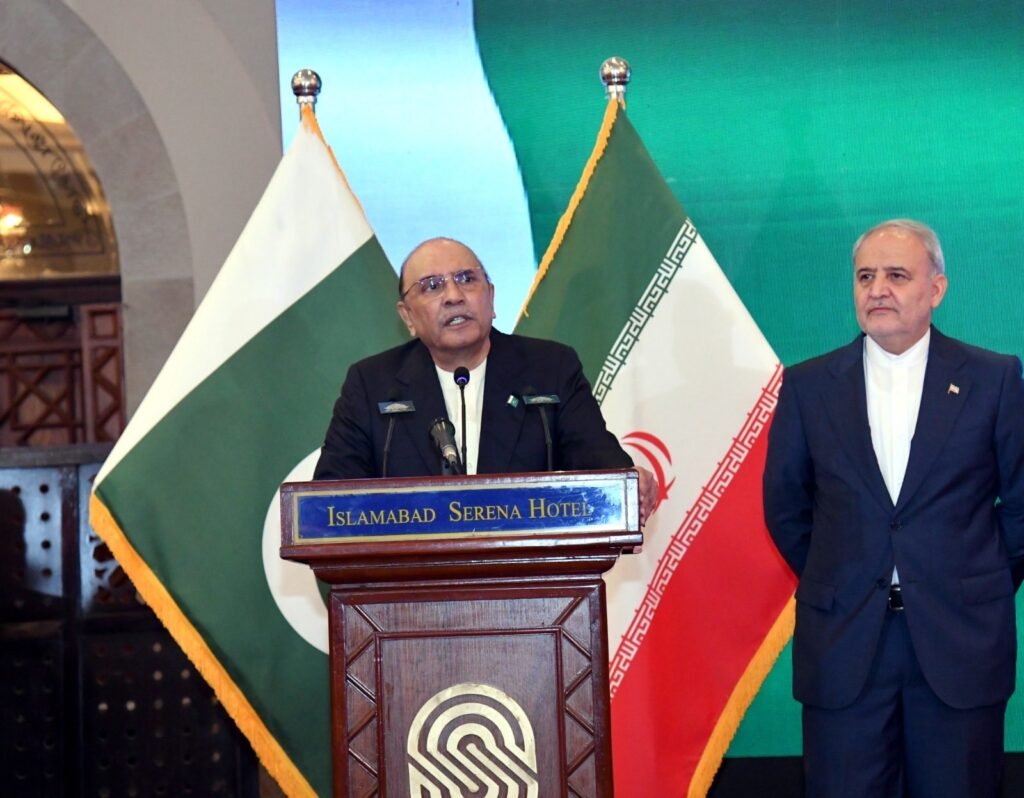
Islamabad (TDI): President Asif Ali Zardari cautioned that any military escalation involving Iran could destabilize not only the Gulf region but also South and Western Asia, urging dialogue and restraint to preserve regional and global peace.
Speaking at a reception hosted by the Embassy of Iran to mark the 47th anniversary of Iran’s National Day, on Tuesday, the president said that attempts to resolve disputes through force would carry “grave risks” for global stability and economic security.
“Any instability involving Iran, or any attempt to resolve issues through military means, carries grave risks. Such actions could undermine global peace and cause serious harm to the global economy. The stakes are far too high for confrontation,” the president said.
He reiterated Pakistan’s opposition to unilateral sanctions and coercive measures, including those imposed on Iran, stressing that peaceful engagement and constructive dialogue are the most effective means to address regional challenges.
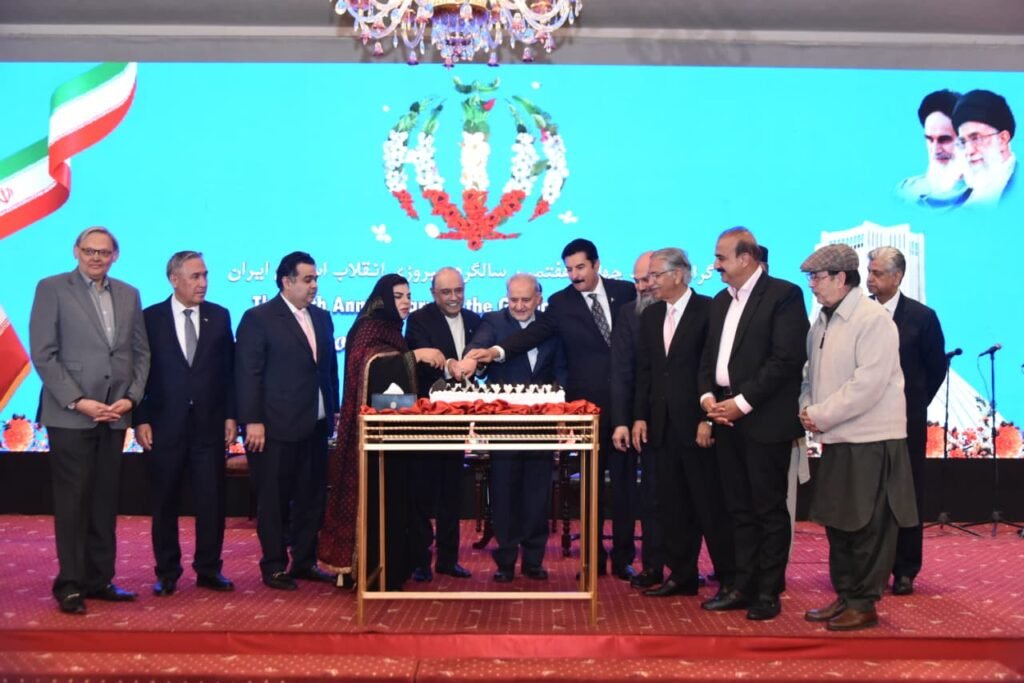
Pakistan, he added, welcomes efforts aimed at easing tensions and encourages continued dialogue among relevant parties to promote stability.
At the outset of the ceremony, President Zardari requested a one-minute silence in memory of victims of a recent blast in Islamabad and those affected by tragedies in Iran. “Let’s pray that wars never come to us,” he said.
Referring to ongoing conflicts, terrorism, external interference and unresolved regional flashpoints, the president maintained that such issues cannot not be addressed through unilateral actions or force.
He underscored the shared responsibilities of Pakistan and Iran as neighboring countries, particularly in border management, counter-terrorism cooperation, and transforming their shared frontier into a zone of lawful trade and development.
Read More: Iranian Embassy Reiterates National Sovereignty on 47th Anniversary of Revolution
Zardari also highlighted the historical and cultural ties between the two countries, describing Pakistan and Iran as “civilizational partners.”
He noted the deep influence of Persian language and literature on Pakistan’s intellectual and cultural heritage, pointing out that Persian has historically served as the official language in regions that now constitute Pakistan.
He cited poets such as Rumi, Hafiz, Saadi and Ferdowsi as widely respected in Pakistan, and referred to Allama Muhammad Iqbal’s Persian works as a shared symbol of dignity for both nations.
In his address, Iran’s Ambassador to Pakistan, Dr. Reza Amiri Moghaddam, said Iran has achieved significant progress in technology, defense, science and the economy despite external pressures. He added that Iran does not seek war and favors dialogue and diplomacy, but would retaliate if its sovereignty is threatened.