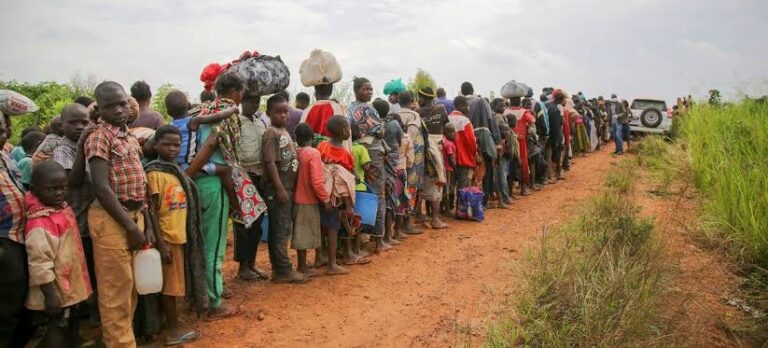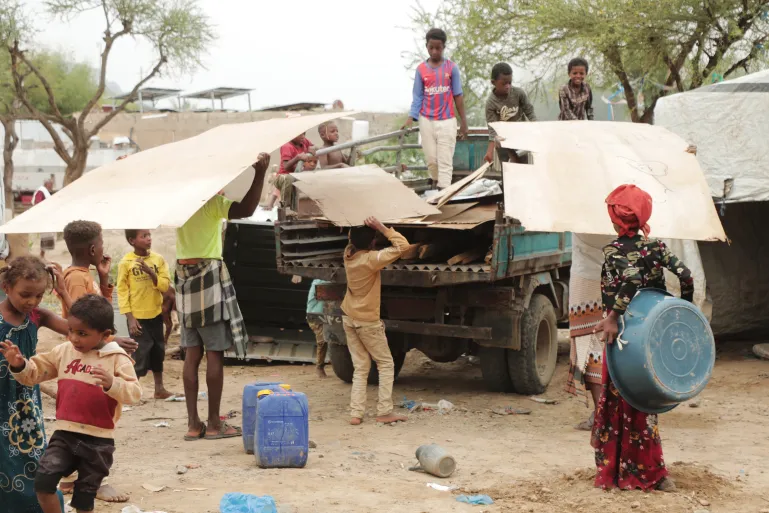
More than 100,000 people have been displaced inside Yemen as escalating fighting along the country’s western coast deepens an already severe humanitarian crisis, the United Nations Refugee Agency has warned.
UNHCR said the rapidly deteriorating security situation had forced families from their homes while thousands of others were attempting to cross the Bab Al-Mandeb Strait towards Djibouti in search of safety.
More than 2,400 people crossed from Yemen to Djibouti during four days, according to the agency, with women, children and elderly people making up a large proportion of the arrivals.
Many families fled at short notice with only limited belongings as fighting moved through communities along Yemen’s Red Sea coast.
UNHCR said shelter, clean water, food, health care and protection services were among the most urgent requirements, while displacement sites and local communities receiving those fleeing the violence were coming under increasing pressure.
Read More: Yemen Government Forces Claim Fresh Gains as Fighting Intensifies in Taiz
The agency has appealed for about $14 million in additional funding to address immediate needs inside Yemen, with more resources needed to assist arrivals in Djibouti.
Humanitarian operations are also being complicated by insecurity, damaged infrastructure, disrupted communications and restrictions on movement.
The renewed displacement comes amid intensified fighting between Yemen’s internationally recognized government and Houthi forces, which have made significant advances along the western coast.
The conflict has increasingly centered on areas surrounding the Red Sea and Bab Al-Mandeb, one of the world’s most strategically important maritime corridors.
The latest escalation risks reversing years of relative calm that followed the UN-mediated truce reached in 2022. Yemen had already endured years of conflict, economic deterioration and humanitarian shortages before the present fighting intensified.
The new wave of displacement is also affecting vulnerable communities that were already seeking protection inside the country.
UNHCR estimates that Yemen hosts more than 65,000 registered refugees and asylum seekers, predominantly from Somalia and Ethiopia, who now face additional risks as fighting expands. Across the Red Sea, Djibouti is also facing growing pressure as new arrivals reach its shores.
Read More: Houthi Gains Are Turning Yemen’s Civil War Into a Battle for Control of Red Sea
The International Organization for Migration has warned that fuel shortages and insecurity are making departures from Yemen increasingly difficult, suggesting that more people could attempt the dangerous maritime journey when movement becomes possible.
The humanitarian consequences add a critical dimension to a conflict increasingly viewed through the lens of maritime security, regional rivalry and global trade.
Bab Al-Mandeb connects the Red Sea with the Gulf of Aden and remains central to shipping between Asia, the Middle East and Europe.
Yet for civilians living along Yemen’s western coast, the strategic struggle surrounding the waterway is translating into another cycle of displacement.
UN agencies have warned that without greater access and international support, already overstretched host communities and humanitarian services may struggle to accommodate the growing number of families forced from their homes.
As regional attention remains focused on control of the Red Sea and the security of international shipping, the latest UN figures underline the human cost of Yemen’s renewed fighting, with civilians once again carrying the consequences of a conflict that remains far from resolution.

Anoush Taimur is an International Relations graduate from DHA Suffa University, Karachi, currently based in Doha. Her research interests include Gulf politics, small-state diplomacy, Global South studies and conflict
mediation. Her work examines how states create influence through connectivity, institutions and strategic relationships. She can be reached at [email protected]