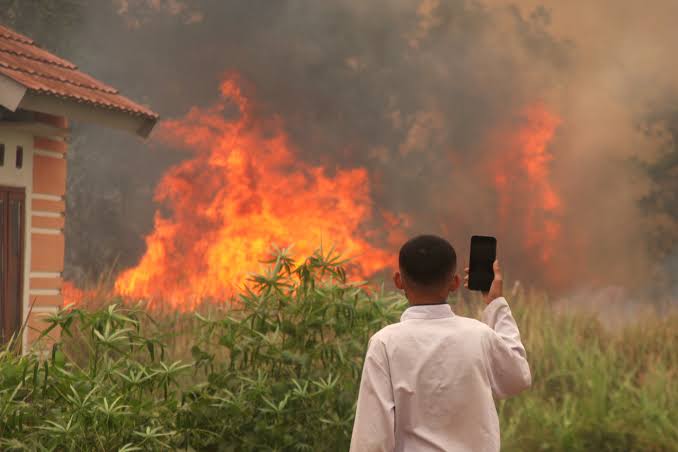
Smoke is rarely considered a competitor to small businesses. Yet every time haze blankets parts of Southeast Asia, customers disappear, transactions slow, and local economies lose momentum.
Forest and land fires are often discussed as environmental disasters. Public debate usually centers on burnt acreage, air quality indexes, biodiversity loss, and firefighting efforts. These concerns are undoubtedly important. Less discussed, however, is another casualty of recurring wildfires: the millions of micro, small and medium enterprises (MSMEs) whose markets gradually vanish beneath the haze.
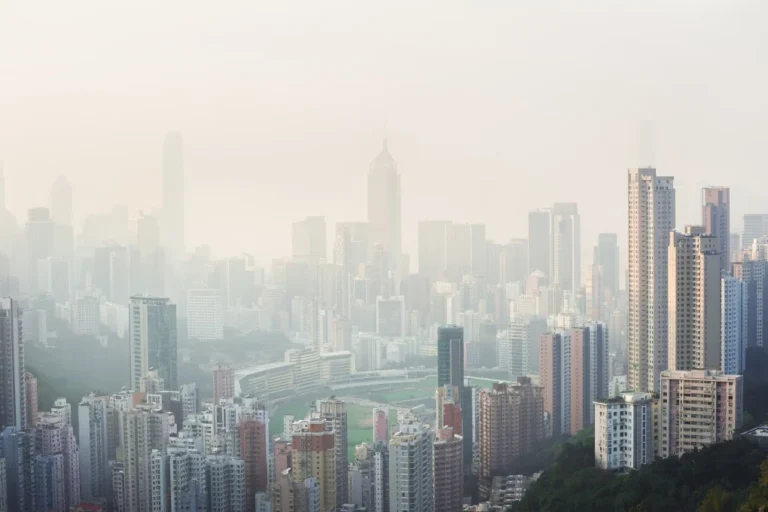
For decades, transboundary haze has been a recurring challenge across Southeast Asia. Its environmental consequences are visible and immediate. The economic consequences, particularly for small businesses, are far less apparent but equally damaging.
When thick smoke engulfs communities, economic activity contracts almost instantly. Restaurants lose customers. Traditional markets experience declining foot traffic. Transportation operators see fewer passengers. Outdoor events are canceled. Tourism-related businesses suffer declining bookings. Entrepreneurs who depend on face-to-face interactions find their customer base shrinking overnight.
Read More: Spain Battles Deadly Wildfires as New Heatwave Looms
For MSMEs, customer demand is the lifeblood of business. As long as customers continue buying, businesses can survive difficult conditions. But when air pollution forces people indoors, consumer behavior changes. Families postpone travel, avoid public places, and reduce non-essential spending. Small businesses become the first casualties of this decline in economic activity.
The damage extends well beyond falling sales. Wildfires also disrupt production. Workers suffer health problems that reduce productivity. Operating hours are shortened. Distribution networks become less reliable. Logistics costs rise. Small businesses that already struggle with limited capital, fluctuating raw material prices and intense competition suddenly face a dual burden: declining revenues and rising costs.
For many enterprises, particularly in rural regions, the challenge is even greater. Numerous MSMEs depend directly on agricultural and forest-based supply chains. When fire destroys productive land or damages ecosystems, raw material supplies become scarce and more expensive. Production capacity weakens, profit margins shrink, and competitiveness erodes.
This economic damage often remains invisible in official assessments. The costs of wildfires are typically measured through hectares burned, infrastructure losses, or emergency response budgets. Yet some of the largest losses occur beyond the statistics. Missed business opportunities, reduced labor productivity, interrupted supply chains, and weakened consumer confidence rarely receive the same attention despite their long-term economic consequences.
Read More: Wildfires in Europe Forcing Tens of Thousands to Evacuate
This matters because MSMEs are not peripheral actors in developing economies. They are often the foundation of economic resilience. Across Southeast Asia, small and medium enterprises account for the overwhelming majority of businesses and employ a substantial share of the workforce. When these enterprises suffer, local communities lose jobs, household incomes decline, and regional growth weakens.
Wildfires should therefore be viewed not merely as environmental challenges but as economic risks. This shift in perspective is important because it influences policy choices. Too often, investments in wildfire prevention are treated as costs. In reality, they are among the most cost-effective forms of economic protection.
Every dollar spent preventing fires helps preserve commercial activity, protect labor productivity, maintain consumer confidence and sustain the livelihoods of small entrepreneurs. Prevention is not simply environmental stewardship. It is economic insurance.
Looking ahead, governments face a broader strategic challenge. Long-term growth cannot rely on development models that generate environmental degradation while undermining economic resilience. Instead, policymakers should prioritize sectors that create value without increasing ecological pressure, including advanced manufacturing, creative industries, sustainable tourism and environmentally responsible MSMEs.
There is also an increasingly important international dimension. Global markets are changing. Consumers, investors and regulators are paying closer attention to sustainability standards, carbon footprints and environmental governance. Export-oriented businesses are increasingly expected to demonstrate that their products are not linked to environmental destruction.
This trend is particularly significant for developing economies seeking to strengthen their position in international trade. Products associated with recurring environmental damage risk facing reputational costs, regulatory scrutiny and reduced market access. In a world where sustainability is becoming a competitive advantage, environmental neglect can become an economic liability.
Read More: Wildfires Are Fueling Global Air Pollution: UN Report
Protecting ecosystems and supporting MSMEs therefore serve the same objective: sustainable prosperity. The healthier the environment, the more stable the conditions for commerce, investment and entrepreneurship. Likewise, the more economic opportunities communities derive from sustainable development, the fewer incentives exist for environmentally destructive practices.
Success in tackling wildfires should not be measured only by the number of hectares saved. It should also be measured by the number of businesses that remain open, the jobs that are preserved, and the economic activity that continues uninterrupted.
The costs of inaction are particularly severe for those at the bottom of the economic ladder. Political leaders, policymakers and corporate executives may experience the effects of haze indirectly. Small business owners experience them immediately. The decline in customers arrives long before the statistics do.
That is why wildfire prevention should no longer be treated as a seasonal emergency or a public-relations exercise. It must become a central component of economic policy.
Because when the smoke arrives, it threatens far more than air quality. It threatens livelihoods, local markets and the economic heartbeat of entire communities. And when small-business markets go up in smoke, the price society ultimately pays is far greater than what can be seen through the haze.
*The views presented in this article are the authors’ own and do not necessarily reflect the views of The Diplomatic Insight.*

Fetria Isai Saman
Fetria Isai Saman is a communications officer at Bank Indonesia Representative Office of Central Kalimantan.