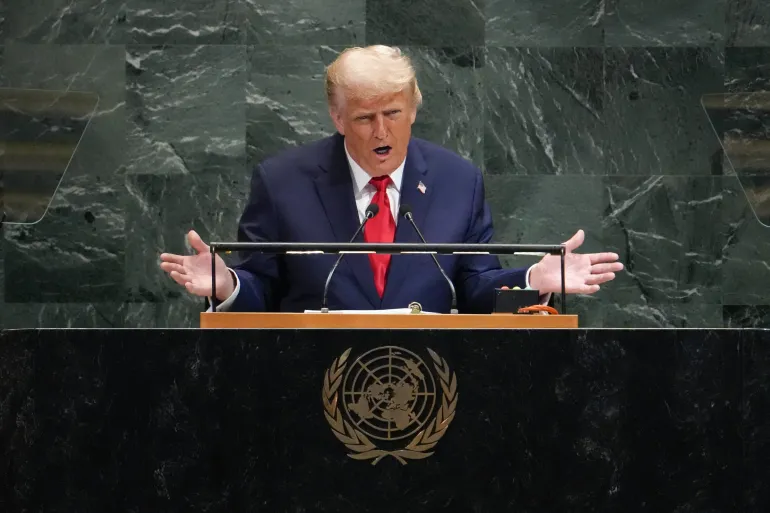
When the United States steps back, the effects do not stay in Washington, they reach around the world. President Trump’s move to withdraw the US from 66 international organizations, including 31 UN agencies, has left political, health, climate, and humanitarian leaders scrambling to understand what comes next.
Supporters call it a necessary stand for US sovereignty and finances but critics worry it could set back global cooperation at a time when the world cannot afford it. As people around the globe react, one thing is clear: this isn’t just about paperwork or budgets. It’s political, symbolic, and strategic; and its consequences could be felt far beyond the capital.
According to Trump administration, the move comes from dissatisfaction with institutions it described as mismanaged, wasteful, and politically biased. President Trump repeatedly said that many international organizations “take advantage of American generosity,” consume taxpayer money, and do not achieve meaningful results.
Those backing the decision, including analysts from the American Enterprise Institute, point out that the US has long carried most of the cost while receiving few strategic advantages. From this point of view, the withdrawal is not about leaving; it is a “recalibration.” The United States is deciding where it can make the most impact and directing resources toward targeted partnerships instead of universal participation.
Read More: Trump Administration Pulls US Out of Dozens of UN & International Organizations
On the other hand, critics argue that this explanation only tells part of the story. Many health, climate, and humanitarian specialists warn that this could weaken the global efforts to tackle shared challenges. Organizations like Physicians for Human Rights and scholars at the Council on Foreign Relations warn that pulling back from cooperative platforms could leave the US more isolated and weaken its ability to shape global decisions.
Analysts also say that when the US steps away, it creates a leadership gap and in global politics, those gaps never stay empty for long. With the limited US limited involvement, countries like China will have more room to shape global rules and institutions.
The United Nations also expressed regret over the decision, reminding that member states have obligations under the UN Charter and stressing that global challenges can only be tackled through shared responsibility.
Climate Cooperation Takes a Hit
One of the biggest and most meaningful exits was the US decision to leave the UN Framework Convention on Climate Change (UNFCCC). For more than 30 years, this body has been the main place where the world comes together to coordinate climate action. It was used by the countries to track emissions, negotiate climate agreements, and work together on environmental issues.
Organizations such as the Environmental Defense Fund and the Natural Resources Defense Council say that by stepping away, the US loses its seat at the table when it comes to shaping climate strategy, pushing negotiations, and driving new policy ideas. The move also affects reporting commitments that help monitor emissions and maintain global transparency.
The US had already pulled out of the Paris Climate Agreement, and critics say moves like this only make it harder for the world to make progress at a time when climate change is getting worse. Supporters, however, argue that climate policy should be handled at the national level, not shaped through big international frameworks.
Whichever side you’re on, the message is hard to miss: the United States is redefining how it sees its role in global climate leadership.
Does This Mean Abandonment?
Even with all these exits, the US isn’t completely leaving the UN. It remains involved in major bodies like the Security Council, UNICEF, and the World Food Program, and it still works with organizations that support national security and humanitarian goals. It has also stayed engaged with the International Atomic Energy Agency because of its importance to global security.
So it’s not a total withdrawal. It’s a selective one.
However, symbolism really does matter in global politics. It isn’t just about the policy itself; it’s about how it’s interpreted by the rest of the world. For many countries, the message seems pretty clear: the US would rather shape international affairs on its own terms than work through shared, multilateral systems.
Instead of relying heavily on big global platforms that demand negotiation and compromise, it appears more comfortable turning toward direct, one-on-one agreements, where it has more control over the process and the outcome.
Bilateral strategies have their limits. Scholars at the International Crisis Group say that, yes, such deals can move faster and adapt more easily, but they can’t match the legitimacy and broad participation that multilateral organizations bring.
Read More: US Withdraws From UNESCO Following Palestine’s Recognition as a Member State
People usually talk about this issue in terms of politics, budgets, and big ideological arguments, but misses an important part of the story. There is a real human side to what international organizations do. These organizations are not just places where officials sit in meetings or give speeches.
There is a real human side to what they do. These are places run programs that actually change people’s lives, from helping children go to school, supporting mothers during childbirth, delivering vaccines, responding to humanitarian crises, and supporting communities that need help the most.
Organizations such as the UN Population Fund (UNFPA), which supports women’s reproductive health and safe childbirth, are usually among the first to suffer when funding is cut, and these impacts are not abstract at all.
The same applies to programs working on issues like human trafficking, children’s protection, disability rights, and gender equality. When participation weakens, legitimacy weakens. And when legitimacy weakens, funding and functionality often follow.
Multilateralism versus Sovereignty: The Bigger Debate
When we talk about leadership today, we are really looking at two totally different philosophies on how to survive and thrive in a chaotic century.
For people who lean toward the approach we saw with the Trump administration, leadership is about clarity and self-preservation. The logic is straightforward: How can you lead others if your own house isn’t in order? They argue that for too long, the US has been the “world’s ATM” or its “unpaid security guard.”
In this view, stepping back from massive international groups isn’t about being isolated. It’s the idea that a leader’s first job is to protect their own people’s jobs, borders, and bank accounts. They believe that by saying “no” to bad deals, the US actually gains more respect because it’s finally acting in its own best interest rather than trying to please everyone else.
Then you have the people who believe in multilateralism, and they argue that the world’s biggest problems, like climate change, pandemics, or global trade, are too big for any one country to fix alone. To them, leadership isn’t just about power; it’s about influence. By staying in these groups, the US gets to write the rules of the game. If you walk away, you’re essentially letting other countries decide the future of the world while you’re sitting at home.
Read More: US Demands UN Reform While Reducing Global Aid
Pulling out like this isn’t just some quick policy flip; it is a sign that America’s rethinking its spot on the global stage. Whether this decision becomes permanent or becomes a temporary chapter depends on future administrations, international reactions, and global developments in the coming days.
Some organizations think that the US may eventually re-engage at some point, as it has rejoined certain agreements under later leadership. Others worry that continued withdrawal may create a domino effect, leading to the withdrawal of other states and weakening the global world order.
Ultimately, this debate is about more than policy. It is about identity. Is the United States a nation that leads by stepping forward with others, or by standing apart and setting its own path? The answer will shape international politics far beyond this moment.
*The views presented in this article are the author’s own and do not necessarily reflect the views of The Diplomatic Insight.

A passionate International Relations student with a strong interest in diplomacy, policy, and global affairs. Dedicated to contributing thoughtful analysis and research on international issues.