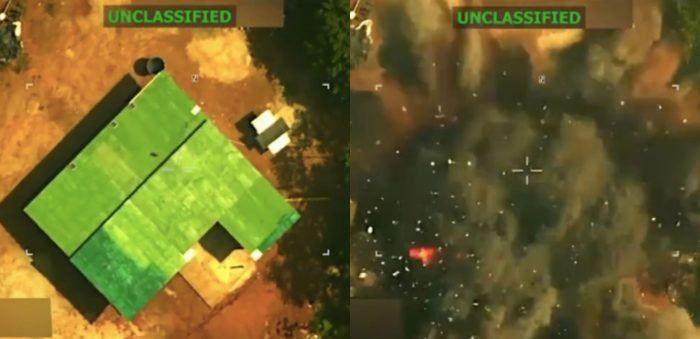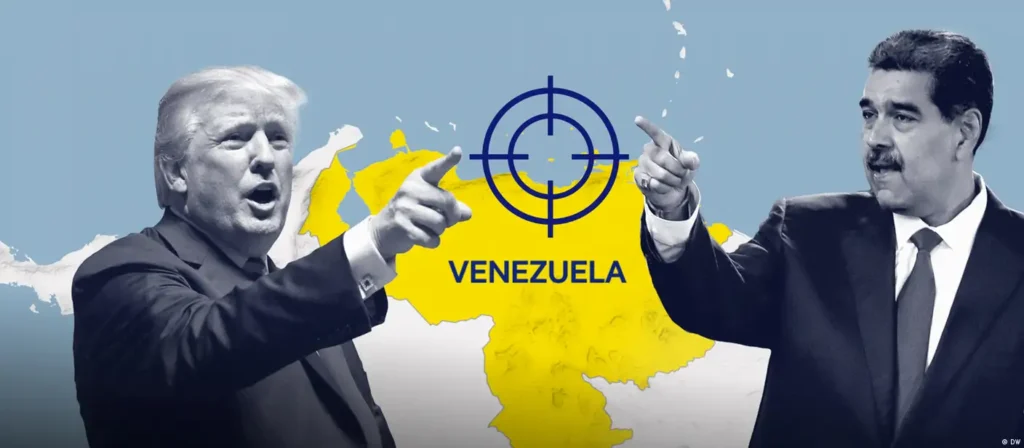
On 12 November, USS Gerald Ford, the largest aircraft carrier in the world, reached the Caribbean from the Mediterranean to support the warships, marines, and Reaper drones that US president Donald Trump had deployed earlier in the region. Two days later, the US Defense Secretary Pete Hegseth officially announced the launch of a military operation to target what he calls “narco-terrorists” emanating from Venezuela.
Writing on his X account, he said “Today, I’m announcing Operation Southern Spear. Led by Joint Task Force Southern Spear and SOUTHCOM, this mission defends our Homeland, removes narco-terrorists from our hemisphere, and secures our Homeland from drugs that are killing our people.”
The move has been widely regarded as the largest US military mobilization in the region in decades, akin to the 1989 US invasion of Panama that overthrew its dictator, Manuel Noriega.
The US administration, too, has left no doubt that they would like a regime change in Venezuela, a country that has been ruled by President Nicolás Maduro since 2013. However, amid the mounting pressure, the Maduro administration has still not succumbed to the US’ whims.
Though the Venezuelan president has been engaged in backdoor diplomacy with the US administration (where he was reportedly offered a deal of safe passage to another country, which he rejected), he remains reluctant to leave office despite the threat of US invasion or an army coup against his government.
Instead, he has warned the US of an Afghan-style “forever war” if it invades Venezuela. The Trump administration, on its part, also does not want a foreign entanglement, something that Trump considers (or at least pretends to consider) anathema. In the face of these constraints, how does Trump envision Operation Southern Spear to oust Maduro, and will it work?
Read More: Rising Tensions: US Announces Military Operation in Latin America
Not as Easy as It Seems
Though Trump’s public rhetoric has been escalatory against Venezuela and Nicolás Maduro in the past few months, it is not exactly clear how the United States will achieve its stated aims. To be sure, the Trump administration is not clear on its stated aims either.
How are they going to oust Maduro? Will it involve land forces, or would airstrikes do the job as they did in Libya? Will the Venezuelan population take to the streets against the Maduro regime, or will they retreat to the dense Amazon jungle with the army and get involved in guerrilla warfare against the United States?
None of these questions have been dealt with by the Trump administration, and the uncertainty around these and many other questions has led many regional experts to claim the macho posturing of the United States in the Caribbean is just a negotiating tactic to scare off Maduro or to pressurize the Venezuelan army to stage a coup against him.
Perhaps, precisely because of these unresolved questions, the Trump administration has also been hesitant to act and has enumerated the possibility of talks with the Maduro government. Nevertheless, Trump has also announced that he will not rule out the option of direct military attack if the talks falter.
The Opposition Option
Amidst this uncertainty, the Trump administration has also been actively engaged with the Venezuelan opposition to plan the smooth transition of government. In this respect, the Trump-supporting Nobel Prize winner María Corina Machado has played a pivotal role in championing Trump’s campaign. She has urged Washington and other major Western capitals to oust Maduro.
She has argued that the Maduro government is weak and divided, and therefore, any foreign attack in the country would not be met by firm resistance. Moreover, she has also pitched to Washington the foolproof plan that she and her party have developed to take over the government after the ouster of Maduro.
Read More: Venezuelan Opposition Leader María Corina Machado Wins 2025 Nobel Peace Prize
This, combined with the war-lobbying media in the United States that supports Machado, has nonetheless increased the likelihood that the Trump administration might take a chance at military intervention. However, counting on the Venezuelan opposition may also make the situation worse. Maduro has already been able to successfully present himself as a strongman against a foreign invader, which has increased his popularity.
Moreover, it is not entirely clear if the new government under Machado would be able to tackle the issue of cartels, as they have strong roots in all institutions of the government. If pressed hard, these elements might rebel against the Machado government and plunge the country into a civil war that will create not just a fiasco in the region but also more immigrants for the United States.
Taking the opposition option, therefore, might fire back by increasing both the amount of drugs and the number of immigrants illegally crossing US borders, the two things that provoked the US against Venezuela.
With a president like Trump, who is infamous for being unpredictable, it seems the experts would have to wait to find out the course of Trump’s strategy and the future of Venezuela. Like a good businessman, Trump is likely to weigh in all the costs and benefits of all the options rather than taking an ideological approach to Venezuela and Maduro. However, it is clear that the path to attack would be difficult for the US if not altogether impossible.

Muhammad Omer Rafiq
Muhammad Omer Rafiq is a student of politics with a passion for making sense of our tumultuous political world that always seems to be on the edge. He recently graduated in International Relations from Lahore Garrison University. He can be reached at muhammadomerrafiq@gmail.com