In some circles, the idea of flexible working is a controversial one, with some businesses
preferring to try and get employees back to the office. However, it’s something that many
employees find incredibly appealing, as it allows them more control over how they spend their own time within the week. That means that offering it can help to draw employees to your brand.
Obviously, it’s also something that you might have your own preferences about, but with so
many different options for the specific form that flexible working takes, that means you have plenty of room to customize your ideal result.
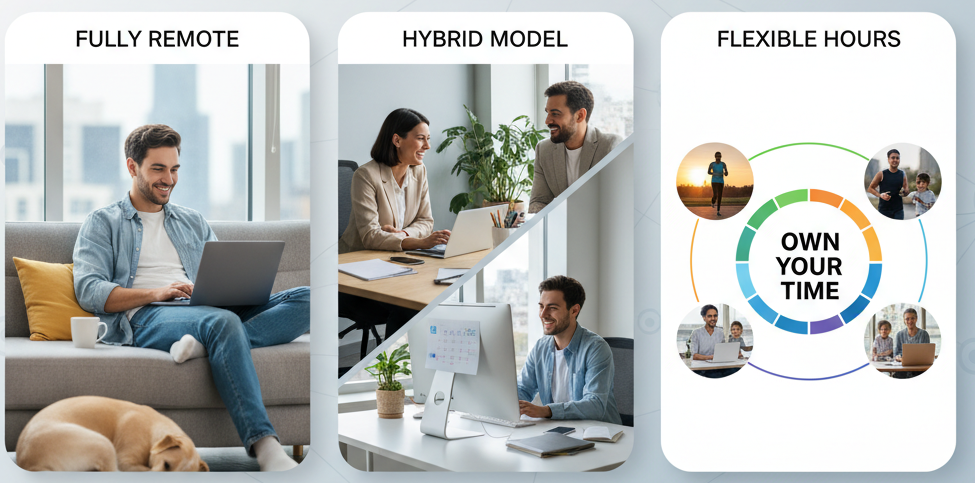
Fully Remote
The first thing that will likely come to mind for many people will be the fully remote model. From the perspective of the employee, this arguably offers the most flexibility, especially if you’re not requiring them to consistently prove that they’re online. In that case, the restrictions of the job might become more apparent than they would be in the office, and the negative impact of micromanaging could be more apparent to them than ever.
It’s an opportunity to bring employees over to your side and show them that you can offer a line of work that they’re happy with, but you need to make sure that your business doesn’t suffer as a result of ill-considered security. You might look to investigate a secure service edge (SSE) to see how you can utilize this model without opening up any unnecessary vulnerabilities.
A Hybrid Model
To some employees, on the other hand, a hybrid model might seem preferable. For those who find working entirely remotely too solitary, they might prefer the socialization that comes with seeing their co-workers at the office. A hybrid model offers that while still giving them the option to occasionally operate at home, it strikes a balance that could offer the best of both. However, you have a choice about whether you make coming into the office mandatory (and if so, how often they have to and when) or whether it’s completely on their terms. This is something that’s going to vary based on the needs of your business, but there is also room to work with your staff members to see what they might prefer so that an accord can be reached.
Flexible Hours
While not something that every business is going to be able to offer, some might look to also be flexible in the hours that employees are working. This can mean that rather than everyone working the same 9-5 block, people might have more hours on some days than others, or they might have morning shifts or night shifts. Perhaps you only require your employees to work a certain number of hours in the day, and it’s entirely up to them when they work them, though you might need it to sometimes align with other hours for the sake of meetings. However, this is an approach that can be combined with remote work for a job that your staff can really live their lives around.