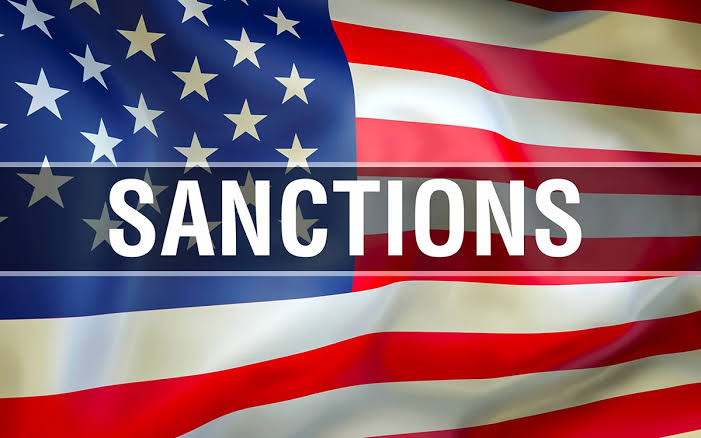
The United States has announced a new round of sanctions targeting financial institutions and networks accused of helping Iran evade international restrictions and maintain access to foreign currency.
The measures, announced by the US Department of the Treasury on Thursday under Operation Economic Outcast, target an Iraqi bank, offshore financial institutions and individuals allegedly involved in facilitating transactions on behalf of Iranian entities.
According to the Treasury, these networks have used shell companies, foreign exchange intermediaries and banking arrangements across the Middle East and Asia to move funds despite existing US sanctions. Washington said the latest measures are intended to restrict financial channels that it believes support Iran’s military activities and allied armed groups across the region.
US Treasury Secretary Scott Bessent said the administration would continue increasing financial pressure on Tehran and institutions accused of assisting its sanctions evasion activities. The Treasury identified an Iraqi banking network that it alleged had enabled Iranian institutions to access international financial services, while also targeting offshore arrangements used to transfer funds through foreign jurisdictions.
Separately, the US State Department announced sanctions against Cuba-based Banco Internacional de Comercio, accusing it of providing financial services to Iran’s Karafarin Bank since at least 2022. The Treasury also warned that foreign institutions involved in transactions supporting sanctioned Iranian entities could face additional restrictions on their access to the American financial system.
These allegations were presented by US authorities, and the announcement does not establish that all the accused institutions have independently admitted wrongdoing.
The latest sanctions come amid continuing regional tensions and diplomatic efforts to address the conflict involving Iran and the United States. Financial restrictions have remained an important part of Washington’s policy toward Tehran, particularly in relation to its nuclear program, military capabilities and regional activities.
However, the inclusion of financial institutions operating outside Iran also raises concerns about the wider consequences for regional banking and commercial relations. For Iraq, whose economy maintains important financial and trade connections with neighboring Iran, the measures could increase scrutiny of cross-border transactions and banking compliance.
The development also highlights the challenges facing diplomatic efforts to reduce regional tensions while economic pressure continues to intensify. Whether the latest restrictions influence negotiations will depend on the responses of Tehran and the affected institutions, as well as the broader direction of US-Iran relations.

Anoush Taimur is an International Relations graduate from DHA Suffa University, Karachi, currently based in Doha. Her research interests include Gulf politics, small-state diplomacy, Global South studies and conflict
mediation. Her work examines how states create influence through connectivity, institutions and strategic relationships. She can be reached at [email protected]