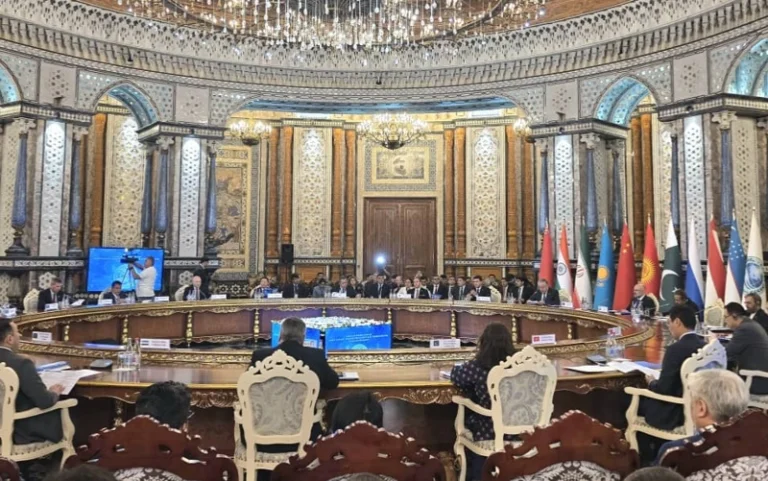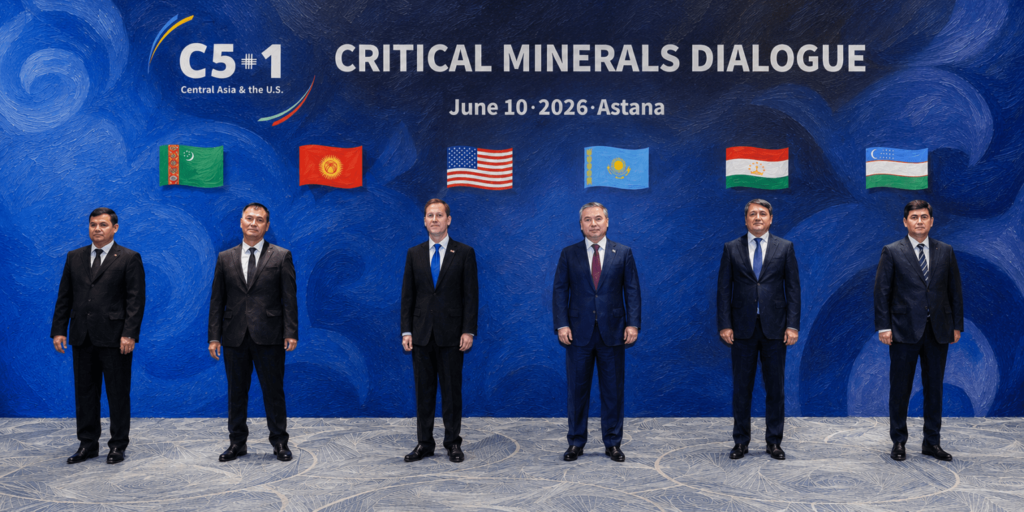
Astana (TDI): The C5+1 Critical Minerals Dialogue brought together Kazakhstan, Kyrgyzstan, Tajikistan, Turkmenistan, Uzbekistan, and the United States for sessions covering geological exploration, mining and processing, and the integration of Central Asian resources into global supply chains.
US Special Envoy for South and Central Asian Affairs, Sergio Gor, told delegates that Central Asia “has not gotten the attention it deserves from the United States,” and that the Trump administration had decided to change that.
“Our economic security depends on our ability to diversify our access to critical minerals,” Gor said, adding that ensuring reliable access requires “building resilient, transparent, and market-driven supply chains in close partnership with trusted partners.”
The summit, held on Wednesday, builds on momentum from a leaders’ meeting in Washington last year. Kazakhstan’s Industry and Construction Minister, Yersain Nagaspayev, pointed to the signing of a memorandum of understanding with the US government on critical minerals.
Read More: Recalibrating Regional Partnerships: Strategic Outcomes of C5+1 Leaders’ Summit 2025
The MoU was inked by Nagaspayev and US Commerce Secretary Howard Lutnick during President Kassym-Jomart Tokayev’s White House visit in November 2025.
Nagaspayev noted that the country holds over 9,500 mineral deposits, including more than 100 containing rare and rare earth metals, and said Kazakhstan is seeking joint production facilities, technology transfer, and workforce training alongside American partners.
He also linked the minerals agenda to the Middle Corridor, the Trans-Caspian transport route connecting Asia and Europe, arguing it could play a key role in diversifying global supply chains.
Read More: Uzbekistan in C5+1: Strengthening Strategic Dialogue US & Regional Countries
On the investment side, Gor pointed to the US International Development Finance Corporation as ready to “invest and build” in the region, with the DFC seeing “potential to transform the region’s rich deposits of critical minerals into the foundation of a new wave of industrialization.”
He added that no deal would be considered too small for US government backing. Central Asia, long seen as peripheral to US strategic interests, is emerging as a key front in Washington’s critical minerals policy.
The summit reflects a recalibration of American foreign economic policy, as Washington races to reduce dependence on Chinese-dominated supply chains for materials critical to semiconductors, electric vehicles, and defense systems.