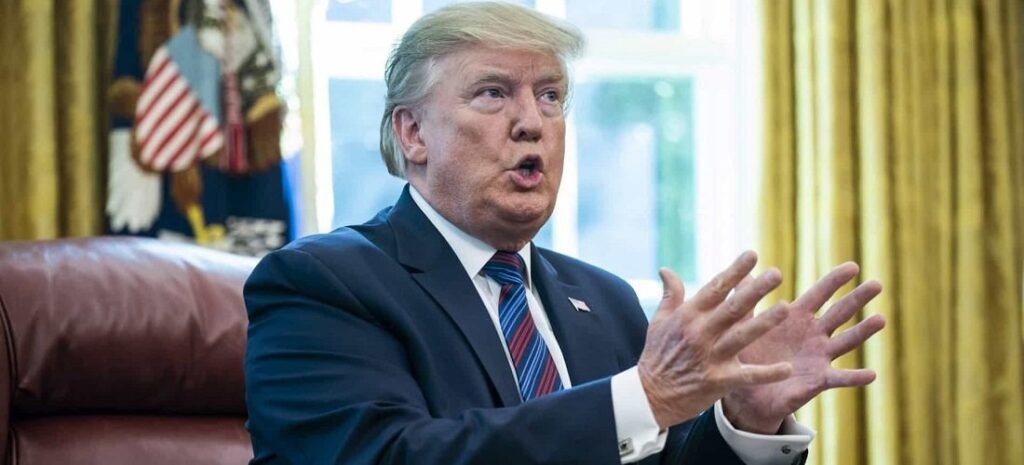
Washington (TDI): Confusion and uncertainty are mounting in Washington as Donald Trump continues to shift his public stance on the ongoing war with Iran, offering contrasting messages on regime change, negotiations and the duration of the conflict.
Since ordering strikes early Saturday that killed Iran’s Supreme Leader Ayatollah Ali Khamenei, Trump has delivered a series of remarks that appear to diverge in tone and substance.
In an interview with The Atlantic on Sunday morning, the president suggested that Tehran’s new leadership was seeking talks and that he intended to engage. However, by late afternoon, he reverted to advocating full regime change, stating that the United States would “clear the way” for the Iranian people to remove their rulers.
On Monday, Trump told ABC News that potential post-Khamenei leaders identified by his administration had been killed in the strikes. “The attack was so successful it knocked out most of the candidates,” he said, adding that “second or third place is dead.”
Read More: Escalating Iran War Forces Shutdown of Key Saudi, Kurdish and Israeli Energy Sites
Later, speaking to CNN, Trump struck a triumphant tone: “I think it’s going very well… We’re knocking the crap out of them.”
Addressing the conflict’s timeline, he said he had initially expected it to last about four weeks and claimed operations were “a little ahead of schedule,” though he added he did not want the war to drag on.
Speaking at the White House East Room on Monday evening, Trump described the strikes as the “last, best chance” to stop Iran’s alleged nuclear weapons program. Yet in his earlier ABC interview, he acknowledged that Tehran had made significant concessions in prior negotiations, saying that accepting a deal a year ago “would have been great.”
He also revealed that an alleged Iranian plot against his life in 2024 had influenced his decision-making. “I got him before he got me,” Trump said, referring to Khamenei.
The president admitted that Iran’s retaliatory strikes on regional Arab states, including Bahrain, Jordan, Kuwait, Qatar and the United Arab Emirates, had been “the biggest surprise” of the conflict.
Iranian officials responded defiantly. Senior official Ali Larijani said Iran would defend its “6,000-year-old civilization” and would not negotiate with Trump, accusing him of harbouring “delusional ambitions.”
Read More: PM Shehbaz, Oman’s Sultan Discuss Iran Crisis, Stress Diplomacy
The Islamic Revolutionary Guard Corps said it had targeted 500 US and Israeli-linked sites across the Middle East since the conflict began, including 60 strategic objectives. The Guards claimed to have launched more than 700 drones and hundreds of missiles.
Meanwhile, the Iranian Red Crescent Society reported that 131 cities had been affected by US-Israeli strikes and that 555 people had been killed.
Trump has also refused to rule out deploying US ground forces. In comments to the New York Post, he said he did not share the reluctance of past presidents to categorically reject “boots on the ground.”