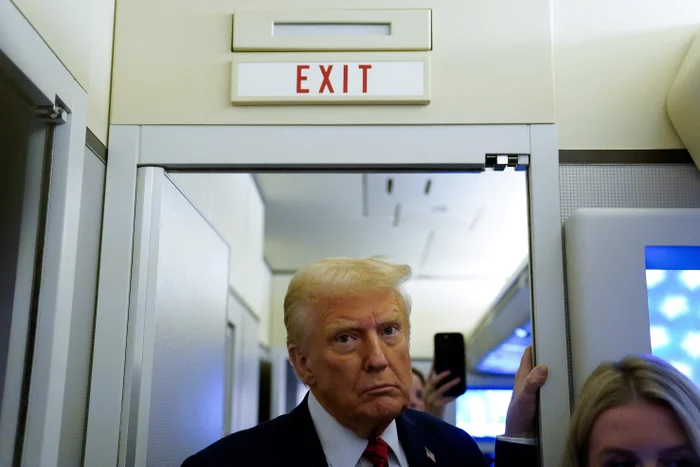
Washington displays an historical indisposition towards exit strategy, not ad-hoc off-ramps, which signals an appetite for immediate endgames over structural closures. As the US-Iran conflict exits another reactive phase and reenters a halted episode of military interactions, Trump offers a repetitive, yet crowded go-to strategy.
First, seeking immediate off-ramps by adopting a ‘stick & carrot’ model of coercive diplomacy; second, engaging in negotiations as a ‘breathing space’ to reclassify force posture and domain priority; third, avoiding diplomatic rehabilitation by prioritizing power standing and control points through a ‘military’ exit strategy; and fourth, adopting a ‘saber-rattling’ standpoint to manage battle order and domestic support.
With an overly congested interstate interaction, episodic tactical pauses through third-party intermediaries allowed both sides to avoid unilateral capitulation and disentangle conventional postures. This pause added more footnotes to their negotiating points, providing situational awareness for three time-sensitive factors.
First, reviewing stand-off deployments for chokepoint interdiction and crisis-response flexibility; second, rearming conventional arsenals for crisis bargaining and graduated deterrence; and third, adopting an ‘issue expansion’ approach to manage conventional disparities in battlespace theaters, known as tit-for-tat to equalize political scorecards and doctrinal variations.
Trump has taken ‘coercive diplomacy’ too literally in this conflict, with no limits in sight. Now the interceptor crisis has taken over his operational dominance, bringing Iran to the negotiating table provides another ‘breathing space’ to reclassify force postures.
He is seeking dual off-ramps through multi-domain military force and backdoor diplomatic interaction to show a prioritization of calling the shots either way. Whereas Iran continues with its dangerous gambit of deepening Washington’s strategic fatigue by using a horizontal escalation posture, spreading the mission creep into several operational theaters.
Five months down, Iran’s sporadic retaliation pattern has disincentivized the US to decisively characterize victory conditions and streamline operational goals with mission directives through protracted offense. Now the conflict faces a strategic vacuum: searching for points of conflict escalation in an asymmetric environment to secure a conclusive exit, where domain shifting has given rise to Trump’s military adventurism, coercive intent disallowed mutual crisis termination, and geographic spread enabled Iran to checkmate Washington’s technological ascendancy.
Post-negotiations, the political coercion and conventional firepower of both sides have reemerged to increase bargaining leverage through tactical endurance. Also, both sides continue to show a reluctance towards conditional concessions.
Meanwhile, Trump would offer another ‘door-in-the-face’ (DITF) model for the next round of negotiations, moving from the unthinkable to manageable bargains. By creating urgency with unattainable demands and then backpedaling, Trump uses a psychological tactic of shifting the burden of compliance to the adversary as a moral imperative.
This compelled Iran to offer reciprocal concessions as well, as the anchor set by the previous bargains made the subsequent concessions appear moderate.
However, with both sides presenting negotiations as a win-loss contestation, even gradual rehabilitation has become challenging.
As rebuilding military capacity over re-contextualizing political end state has been Washington’s historical pattern, the prolonged conventional interactions have drawn textbook examples of its political gambles in Vietnam, Iraq, and Afghanistan.
All three of the aforementioned military interactions developed one common factor: compressed time windows for political withdrawals and military exits, triggering a collapse of local governments after multi-year interventions, thus making destabilization through civil insurrection a post-crisis feature.
Trump’s strategic thinking followed this recurrent pattern without a coherent exit strategy for post-crisis power transition, risk mitigation, and military adaptation if a regime change had been achieved for nation-building.
Using a repetitive pattern of unpredictable signaling to Iran as a crisis management strategy has met with detrimental results. The continual aim to disconcert the regime’s political composure to miscalculate, so Washington could justify the mission creep and political overextension, requires a ‘knockout’ blow.
From seeking a regime change by intensifying decapitation strikes and sedition to preventing nuclearization through infrastructure warfare and economic capitulation, the interaction appeared more about psychological endurance. Still, the rhetorical warfare combined with military maneuvers secured less than what Trump expected.
Trump has shown an inclination towards Coercion without Diplomacy, which is not to be confused with Coercive Diplomacy.
Now that consistent bombing and diplomatic urgency have invited new operational fronts, Trump has eyes on the Pickaxe Mountain and Kharg Island. If the US had pushed the envelope by adding the Kurdish factor as a counterstrategy and two-front theater, the situational aggravation would have created far more entanglements.
To counteract Washington’s threat amplification, Iran’s asymmetric cost-imposition strategies have adopted a formalized posture of conflict regionalization. This sustained Iranian position on Hormuz made Trump’s gunboat diplomacy counterproductive; thus, reducing Washington’s threat credibility.
The capability-vulnerability paradox of the US is still being tested after Operation Epic Fury, as Iran revealed a paradox of modern warfare: technological supremacy enables force maximization for tactical smartness but remains susceptible to asymmetric adaptabilities and entanglements.
This is popularly phrased as fighting the ‘unfair’ war, where both sides face structural payoffs and tradeoffs, with an unending appetite for maximalist gains through transitory settlements. It also culminates in showing reluctance to develop exit strategies for appropriate crisis management, as attrition moves two-way: creating operational fatigue and adventurous temptations.
Relying on off-ramps and signaling to act as kill switches has created a transitory sense of security, where not having an exit strategy outpaced force posturing.
Trump’s psychological inclination towards military operations and political aversion to an exit strategy is not an isolated byproduct of Washington’s history with protracted wars. Post 9/11, the adventurous political ambition to use counterterrorism directives without declared wars became a foreign policy strategy.
This was witnessed in Iraq and Afghanistan during the Global War on Terror (GWOT). As heavily influenced by Bush’s national security strategy of ‘preemption’ for self-defense as a counterstrategy against national threats, it placed sovereign states and non-state actors in one line.
Bush’s doctrine of ‘anticipatory self-defense” in Operation Iraqi Freedom manifested in Trump’s Midnight Hammer and Epic Fury in Iran by evolving into the strategy of preemptive containment. Post 9/11, where Bush’s doctrine was largely based on a neoclassical realism model, with ideological reactiveness and nation-building as domestic variables, Trump’s model focuses on localized dominance through flexible realism to meet strategic ends. However, both leaders had one political strategy in common: machtpolitik, bringing coercion to outpace cooperation.
Replacing the ‘Defense’ with ‘War’ in the Department of Defense (DoD) signaled the psychological tilt in Trump’s national security and foreign policy strategy for future military interactions. It highlighted a threefold paradigm shift: a deviation from traditional deterrence to maximum lethality for preemptive threat neutralization, aiming for decisive victories; second, it reinforced ideological lexicons in force postures to sync political ends with military ways; and third, it redefined Washington’s conflict-oriented approach by prioritizing homeland defense and alliance burden-sharing.
Trump has utilized all three of the aforementioned strategies in a distinct manner, where force multiplication was used to prevent the materialization of Tehran’s nuclear ambitions. However, with no knockout blows, Washington appears to hold some of its cards to protect its deterrence credibility from structural fragility.
Whereas the US military buildup in the Middle East signals another coercive maneuver to compel Tehran into understanding the threat sensitivity of conventional signaling.
Also, it highlights Washington’s objective to continue with the ‘maximum pressure’ strategy for deterrence restoration, ultimately leading to another military engagement. This is a manifestation of the ‘high-risk, high-reward’ model as a supplementary tool, after episodic efforts for political subversion failed.
With maximalist demands failing to make ends meet, Trump continues to neglect a reductionist approach to understanding the dangers of mission creep, risks of Iran’s prolonged strategy of Hart’s indirect approach, and the centrality of an exit strategy for deterrence credibility and domestic support.
*The views presented in this article are the author’s own and do not necessarily reflect the views of The Diplomatic Insight.*

Muhammad Hamza Chaudhary
Muhammad Hamza Chaudhary is a student of International Relations at the University of Punjab, Lahore. His research interests are nuclear security, emerging warfare technologies, and deterrence dynamics of the Middle East and South Asia. He can be reached at [email protected]