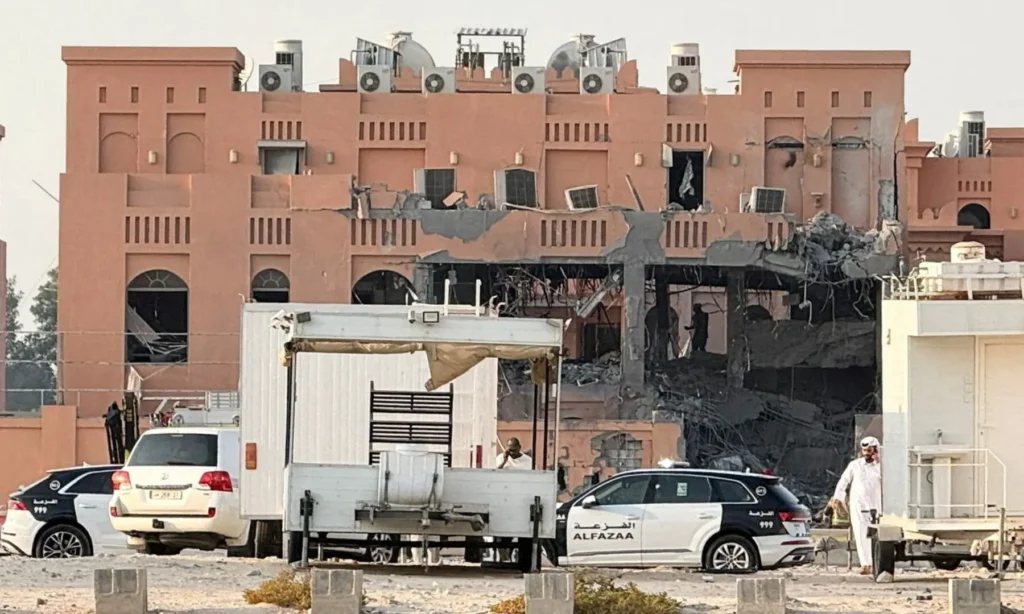
The unprovoked Israeli attack on Doha, the capital of Qatar, not only blatantly violates international law and Qatar’s sovereignty, but it also highlights the inherent weaknesses and precarious reliance of Arab states on Western security guarantees. This highlights the urgent need for regional cooperation, collective self-reliance, and firm support for the Palestine’s equal right to exist in the international community.
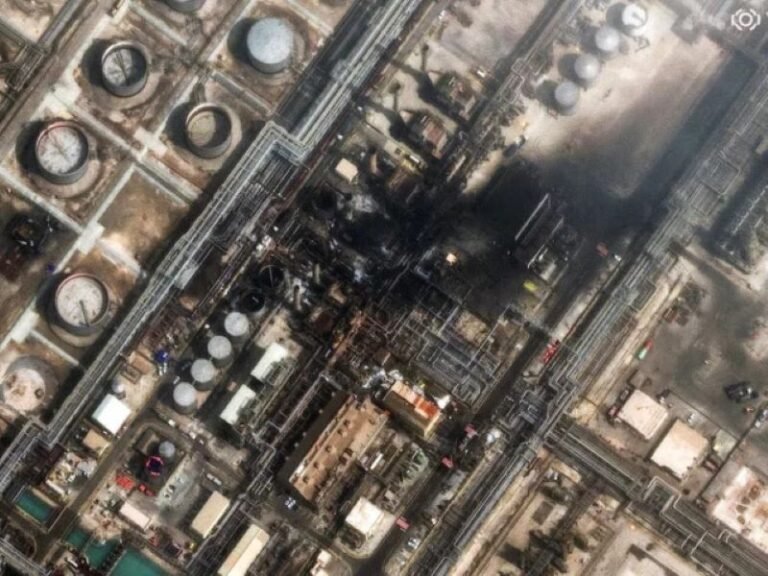
The September 9, 2025, Israeli airstrike on Doha, the capital of Qatar, was a historic violation of sovereignty that rocked the Middle East and beyond. Six people, including a Qatari security officer, were killed in this attack, which targeted Hamas political leaders in a residential complex as they were debating a ceasefire proposal. Several civilians were also injured.
The attack revealed the perilous brittleness of security arrangements that many Muslim countries have grown to rely on, in addition to shattering Qatar’s apparent immunity from regional conflicts.
Legal experts characterize Israel’s strike as an act of aggression under the UN Charter, and from the standpoint of international law, it clearly violates Qatar’s territorial sovereignty. The attack is against the UN Charter’s Article 2(4), which forbids threatening or using force against a state’s political independence or territorial integrity.
During the Security Council emergency session, the ambassador of Pakistan to the UN, Asim Iftikhar Ahmad, vehemently declared, “this reckless and provocative attack constitutes a flagrant violation of the sovereignty and territorial integrity of Qatar, contrary to the fundamental principles of international law.”
The ramifications for the law go beyond a simple invasion of sovereignty.
In addition to attacking Qatar, the strike also attacked diplomacy since it targeted a country that is a key mediator in peace talks in Gaza.
According to Ambassador Ahmad, “striking the territory of a principal mediator and those directly involved in negotiations is a deliberate attempt to sabotage diplomacy, derail peace efforts, and prolong the suffering of civilians.”
Historical interpretations of the right to self-defense by the International Court of Justice have been restrictive, requiring states to obtain host nation cooperation before launching military operations against non-state actors on their soil.
Read More: Why Arab Leaders Cannot Save Palestine
The Israeli aircraft were not detected by Qatar’s radar systems, and American forces there did not step in to stop the approaching missiles. This technological and defensive blunder highlights how even highly developed military alliances can fall short when political considerations take precedence over security pledges.
The attack showed that Israel could strike deep into the Gulf despite several layers of alleged defense, with eight Israeli F-15 fighter jets and four F-35s firing air-launched ballistic missiles from over the Red Sea.
The Arab-Islamic Summit convened in Doha on September 15, 2025, represents a significant collective response to Israel’s aggression. The emergency gathering, attended by leaders from over 50 Organization of Islamic Cooperation member states, issued a resolute condemnation of what Qatar’s Prime Minister Sheikh Mohammed bin Abdulrahman Al-Thani called ‘state terrorism’.
The summit’s draft resolution described the Israeli attack as ‘cowardly and illegal’ emphasizing it as “a blatant violation of the sovereignty of the State of Qatar and a threat to regional peace and security”.
Shehbaz Sharif, the prime minister of Pakistan, showed his unwavering support for Qatar by attending the summit. The wider Muslim world’s recognition that the attack on Qatar is an attack on the entire Islamic community is reflected in the summit, which Pakistan co-sponsored. Qatar is ‘not alone’ and ‘Arab and Islamic states stand by it’ as stated by Arab League Secretary-General Ahmed Aboul Gheit, according to the collective response.
The larger Palestinian fight for statehood and self-determination is inextricably linked to the background of this attack.
Palestine maintains its equal rights to exist, a principle that the international community has repeatedly upheld in a number of UN resolutions. The Palestinian people’s unalienable rights to self-determination, national independence, and sovereignty over their occupied territory since 1967 have been reaffirmed by the UN General Assembly on numerous occasions.
By 2025, more than 76% of the 193 UN members — 147 of them — recognized Palestine as a sovereign state. International law serves as the basis for the right of Palestinian statehood, and the UN has continuously endorsed the two-state solution as the only workable way to achieve peace. This dedication to Palestinian sovereignty was reaffirmed in a recent UN General Assembly resolution supported by 142 member states.
Palestine will prevail: This is a moral and legal requirement based on decades of international consensus, not just a political catchphrase. Since the time of the League of Nations, the right of the Palestinian people to self-determination has been acknowledged, and since 1947, it has been collectively protected by UN mechanisms. The international community has repeatedly denounced the continued Israeli occupation and settlement growth in Palestinian territories as violations of international law.
The Doha strike highlights the basic weakness in entrusting security to outside parties.
Qatar was unable to stop an attack on its sovereign territory even though it had the biggest American military base in the Gulf and substantial financial reserves. This fact shows that Western protection is strategic and conditional rather than absolute, and that it serves the interests of the protecting power rather than the security requirements of the protected nation.
The assault highlights how Muslim nations have found themselves caught in a vicious cycle of reliance brought about by giving up sovereignty in favor of security. Wealth from oil creates income but not true independence. Military spending is still high, but defense capabilities are still low, and the majority of cutting-edge systems are bought rather than created in-country.
These countries find that their military forces serve more as showpieces than as effective defenses when faced with actual threats.
Read More: Gaza: From a Humanitarian-International Perspective
Ambassador Ahmad’s statement at the UN highlighted this dangerous pattern: “Israel’s destructive policies are incompatible with the international community’s quest for peace and stability. Sadly, it has been emboldened by the weak response, and inaction by this Council.” The entire foundation of international law is threatened by the absence of strong international action against Israeli sovereignty violations, which in turn encourages more aggression.
Attacks on specific states are condemned but do not result in effective deterrence because of the fragmentation within the Muslim world. Muslim countries do not have strong mutual security agreements that would make an attack on one state a threat to all, in contrast to NATO’s collective defense mechanisms. This tactical flaw tells would-be attackers that there is little chance of widespread reprisals.
The Abraham Accords and other normalization agreements between Israel and Arab nations are also in jeopardy due to the attack on Qatar. Willingness of Israel to infringe on the sovereignty of a US ally and peace mediator has caused Gulf states that had been pursuing closer ties with Israel to revaluate those ties.
The Doha attack serves as a crucial reminder to Muslim nations to put their own security first and stop relying on dubious external security assurances.
It emphasizes how urgent it is to build strong regional security mechanisms, diversify alliances, and strengthen domestic defense capabilities.
In reaffirming its right to defend sovereignty under international law, Pakistan’s ambassador to the UN expressed unwavering solidarity with Qatar. This strike is a serious threat to diplomacy and sovereignty, requiring not only a united condemnation but also tangible steps to ensure collective independence.
With increasing costs for inaction, the Muslim world must now choose between remaining vulnerable and pursuing true sovereignty and cooperation.
*The views expressed in this article are the author’s own and do not necessarily reflect the editorial policy of TDI.

Abdul Haq
Abdul Haq holds an MS degree in International Relations from the School of International and Public Affairs (SIPA), Jilin University, the People’s Republic of China. He writes on global issues, international politics, international law, peace, conflict, and security. He currently works as a research assistant in CCTVES, the Institute of Regional Studies (IRS), Islamabad, Pakistan. He can be reached at ahsafi.edu@gmail.com