The Syrian battlefield, which already has multiple overlapping conflicts and power-struggles already taking place, has again opened a new front with the Syrian Arab Army launching a large-scale military operation against the Syrian Democratic Forces (SDF) in Aleppo governorate in early January 2026. This development, though not a complete surprise, is a major break in the tenuous power sharing arrangements that had prevailed since the collapse of centralized Assad-era governance in the region. What makes this operation especially consequential is not only the timing and scale of the operation, but also the strategic nature of the operation for the future of Kurdish autonomy, Syrian sovereignty and realignments amongst regional and global powers.
The roots of this confrontation are found in a turbulent year of transition in the political landscape of Syria. After the sudden departure from politics of Bashar al-Assad in mid-2025 due to the combined effect of internal pressure as well as external realignments, different factions rushed to consolidate their gains and draw new lines of control in what remained of the shattered Syrian State. The Kurdish-led but multi-ethnic Syrian Democratic Forces had set foot in a tenuous avenue of normalization with Syrian state institutions under a tentative national framework buttressing what had become, at least at first, a static middle ground by means of residual U.S. and Russian coordination mechanisms.
The Kurdish-led but multi-ethnic Syrian Democratic Forces had put one foot in a fragile door of normalization with Syrian state institutions under the rubric of an interim national framework buttressing what had been transformed into, at least initially, a static middle ground by means of residual U.S. and Russian coordination mechanisms. That integration deal of 2025 was able to uphold limited security jurisdiction of the SDF in some urban and rural pockets of northern Aleppo, especially in the Sheikh Maqsoud and Ashrafieh neighborhoods in Aleppo city, as well as some surrounding strategic villages with a strong and substantial Kurdish demographic presence.
But the agreement from the beginning was riddled with contradictions. On one hand, it reflected a temporary compromise not to have open confrontation between the SDF and Syrian regular forces. On the other, it left such critical questions as sovereignty, disarmament, and command hierarchy unresolved. It also did not account for Turkish concerns with legitimization of SDF control anywhere in the north of Syria.
Turkey still sees the SDF as an extension of the PKK, a designated terrorist organization, and had explicitly rejected the normalization pact via diplomatic measures. Russia, a historical supporter of Assad and a power player in northern Syria, did not feel compelled to become too involved at that time, viewing potential risk and reward with a clash between Damascus and the Kurdish-dominated forces.
By late 2025, these tensions had begun to take shape as a more volatile reality. There were reports of sporadic clashes between SDF-aligned internal security units (Asayish) and progovernment militia groups in disputed districts. Local Arab tribal leaders in the western outskirts of Aleppo, who had harbored strong resentment to the SDF’s model of governance for years, accusing it of exclusionary policies, began to realign with Damascus, partly anticipating the weakening position of the SDF following the partial drawdown of US support.
These local dynamics dovetailed with the wider re-assertion of Syrian state ambitions. The new leadership in Syria, itself very eager to consolidate territory and re-establish the country’s sense of legitimacy, increasingly assumed a stance that would not allow the maintenance of autonomous zones not under the direct control of the central government.
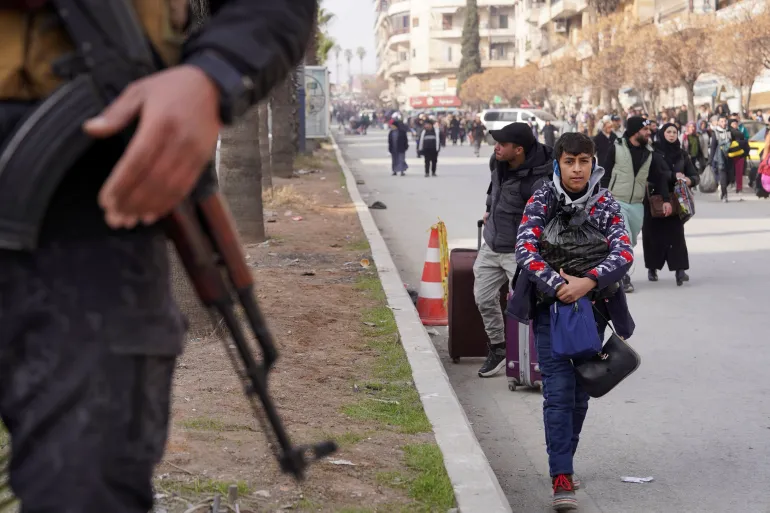
The military operation that occurred in January 2026 was therefore a culmination of building political, ethnic, and territorial frictions. Syrian Arab Army troops with the help of mechanized units and allied tribal militias carried out simultaneous attacks on several SDF positions in the northern belt of Aleppo. In the first 48 hours, state television declared that the government troops had regained control of several key villages including Tel Rifaat and parts of Sheikh Maqsoud, although these claims were fought by SDF affiliated media outlets. Independent verification by on the ground observers and NGOs have confirmed great casualties on both sides in terms of civilian displacements and infrastructure damage.
Read More: Clashes Erupt Between Syrian Forces, Kurdish Fighters in Eastern Aleppo
What is striking about the nature of this offensive is that it was apparently unsynchronized with foreign powers. Unlike past operations where Russia or the United States had either mediating or restraining roles, this campaign seems to have been made unilaterally by Damascus, with at most Russian tacit approval. Moscow’s response has been low key and has only included calls for restraint, without direct condemnation or intervention. The United States, which has a much reduced military presence in Syria since 2024, issued a carefully worded statement condemning violence against “partner forces” but refraining from explicitly naming the Syrian government.
Turkey, meanwhile, has taken the operation with as much satisfaction as suspicion, welcoming the withdrawal of Kurdish military presence, but being suspicious of a complete return of the SAA to the border regions, which Turkey has viewed as being within its buffer zone of influence.
The implications of this offensive go so much further than Aleppo. They speak to the unraveling of the post-ISIS strategic position of the SDF. Having been the US’s main local partner in the fight against the Islamic State, the SDF built its power on the twin pillars of battlefield credibility and limited US protection. However, in the absence of long-term international guarantees, that position is becoming increasingly vulnerable to both regional and internal challenges.
Kurdish leaders from the SDF have publicly condemned what they have called a “betrayal of promises” and a “coordinated campaign to dismantle Kurdish self-rule” and called on the international community to get involved. Yet the appetite for renewed involvement in the Syrian conflict remains low around the world, particularly as the spotlight moves to crises in other parts of the world.
Compounding this vulnerability is the internal fragmentation of the SDF, which is increasing. Over the last year, tensions between Kurdish and Arab elements in the force have increased, especially in Deir Ezzor and Raqqa. Disputes over governance, distribution of resources and recruitment have resulted in defections, localized clashes and loss of territorial control over several areas. The Aleppo operation, therefore, strikes the SDF at a time of strategic overstretch and political instability.
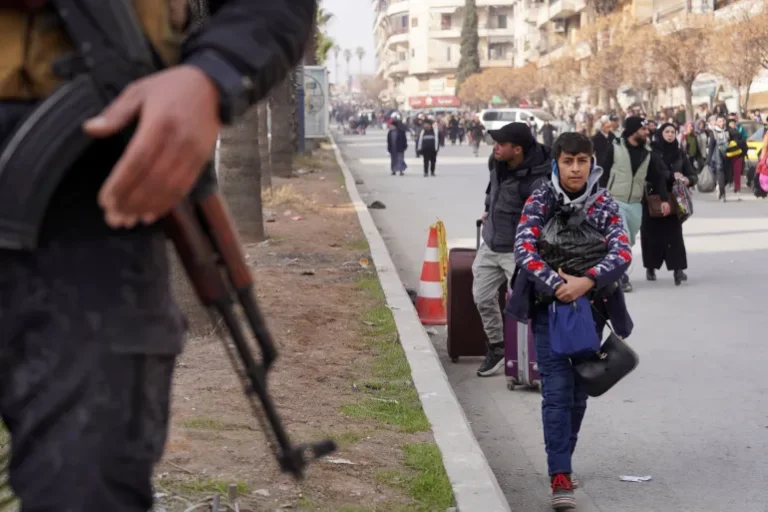
At the humanitarian level, the continuation of the fighting has already led to the displacement of thousands of civilians. Reporting from humanitarian organizations suggests that many of the families fleeing the combat areas are prevented from entering the government held areas due to the security vetting, while areas under the control of the SDF do not have the capacity to absorb new waves of internally displaced persons. Medical services are overwhelmed and there is growing concern that the situation will spiral to another protracted displacement crisis reminiscent of previous years of the war.
The question in the longer-term is whether this operation represents the start of a wider state-led campaign to reintegrate by force all the Kurdish controlled zones or whether it is a limited military operation designed to extract political concessions. There is reason to believe Damascus may be developing a phased strategy, beginning with urban enclaves, which may eventually be extended toward the core of the Autonomous Administration of North and East Syria. Such a strategy would have enormous risks. A full-scale attack on Kurdish heartlands would most likely result in greater international responses, including from European countries who continue to fund stabilization programs in the region.
Equally important is the reaction, or lack of reaction, by Russia and Iran. Russia, despite being occupied with its own problems, remains the most influential external actor in Syrian military affairs of the state. Its calculus seems to be one of restoring the state’s territorial integrity without provoking open confrontation with other stakeholders. Iran, on the other hand, views the SDF as a US proxy, and would likely be supportive of steps to weaken the SDF, so long as they do not endanger its own presence in eastern Syria. Both powers, however, are also aware that Kurdish forces have traditionally acted as buffers against the resurgence of jihadism and to destabilize them altogether could be a recipe for creating vacuums that extremists might exploit.
Read More: Syria Declares Ceasefire in Aleppo After Days of Deadly Cashes
In this changing world, the role of Turkey is a huge one. Ankara has been threatening to mount its own cross-border operations against Kurdish-held areas, especially on the Tel Rifaat and Manbij corridors. Should Damascus and Ankara begin to take a more tactical alignment against the SDF, even if not in a formal sense, there is the risk of the operational and psychological pressure on Kurdish forces growing substantially. Yet Turkish-Syrian rapprochement is still tentative and held back by years of animosity and irreconcilable visions for post-war Syria.
Internationally there have been mixed reactions to the Aleppo operation. The humanitarian consequences have raised concern in the United Nations while regional actors such as the UAE and Egypt have urged for restraint. Of note, Kurdish diaspora communities in Europe and North America have organized protests and lobbying efforts for political recognition and protective measures. But without a major change in geopolitics, their leverage is limited.
For Syria, this operation could well be a test case of whether the post-Assad government is able to command more than symbolic government. Rebuilding the centralized structure of a state after over a decade of fragmentation is a massive challenge. It demands not only military success but also political reconciliation and institutional reform and integration of diverse and often antagonistic local structures. Whether Damascus will be able to achieve this by force alone is still deeply uncertain.
For the Kurds, this is a time of strategic refitting. The dream of decentralized self-rule, not extinguished but tested possibly as severely as it has ever been since the collapse of ISIS. In the absence of any external guarantees or a tenable political settlement, they are left with few good choices. Confrontation is the danger of devastation. Capitulation risks erasure. Where negotiation is still the better option, it may no longer be available on favorable terms.
In a broader sense, the Aleppo offensive highlights the fact that the Syrian war is far from over. The fall of Assad brought no clear or closure. Instead, it led to a new era of fractured sovereignty, contested legitimacy and recalibrated ambitions. The battle for Aleppo’s Kurdish districts is more than an episode of tactics, because it is a reflection of issues that remain unresolved at the heart of Syria’s future. Who gets to govern? Who defines the nation? And who, if anyone is to guarantee peace?
Only time will determine whether this operation will tighten divisions or open new channels in terms of settlement. But for now, it is a sobering reminder that in Syria, the war may end-and the conflict doesn’t.
*The views presented in this article are the author’s own and do not necessarily reflect the views of The Diplomatic Insight.

Atiqullah Baig Mughul
Atiqullah Baig Mughul is a graduate in International Relations, specializing in security studies, Middle East politics, diplomacy, and policy-oriented geopolitical research. He can be reached at atiqullahmughal18@gmail.com