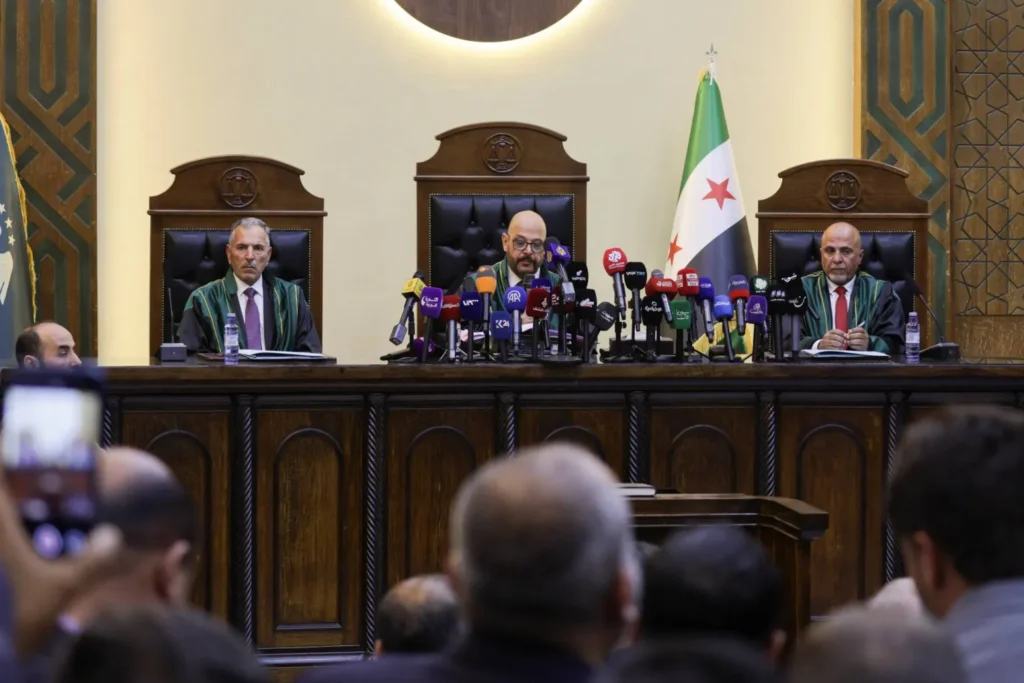
Damascus (TDI): Syria has started its first public trial of a former official from the era of ex-president Bashar Assad, on Sunday, as an attempt to confront years of war crimes and human rights abuses.
At the center of the proceedings is Atef Najib, a former brigadier general and cousin of Assad, who appeared in a Damascus courtroom facing charges of committing “crimes against the Syrian people.”
Najib once headed the Political Security Branch in the southern province of Daraa, where his actions in 2011 are widely seen as a spark for the uprising that escalated into Syria’s devastating civil war.
He is accused of overseeing the arrest and torture of teenagers who had written anti government graffiti — an incident that triggered mass protests against the regime.
Those protests were met with a violent crackdown by government forces, setting off a conflict that lasted 14 years, killed more than 500,000 people, and displaced millions.
Read More: Syrian Kurdish Forces Agree to a Phased Integration Into the State
Sunday’s court session was largely procedural, with further hearings expected in the coming weeks. Still, the trial has drawn crowds of Syrians and activists who see it as a long-awaited moment of accountability.
The proceedings are part of a broader transitional justice effort launched after Assad was overthrown in December 2024 and fled to Russia. The country’s new leader, Ahmed al-Sharaa has pledged time and again to prosecute figures linked to atrocities committed during the conflict.
Other senior figures from the former regime, including Assad himself and members of his inner circle, have been charged in absentia with offenses ranging from torture to extrajudicial killings and corruption.
In parallel, Syrian authorities have also begun pursuing additional suspects tied to wartime abuses. The recent arrest of a former intelligence officer linked to a notorious massacre underscores what officials describe as a growing commitment to justice and national reconciliation.
For many Syrians, however, the trial is only a first step. Rights advocates caution that achieving meaningful accountability will require transparent proceedings and the prosecution of a wider network of perpetrators.