Doha (TDI): Qatar and Pakistan are continuing diplomatic efforts to preserve the pause in direct fighting between the United States and Iran, as both sides complete a third consecutive day without military strikes.
According to an Associated Press report citing regional officials, Qatar and Pakistan have facilitated indirect contacts between Washington and Tehran to prevent another round of escalation. Iran, however, has continued to deny that direct negotiations with the United States are taking place.
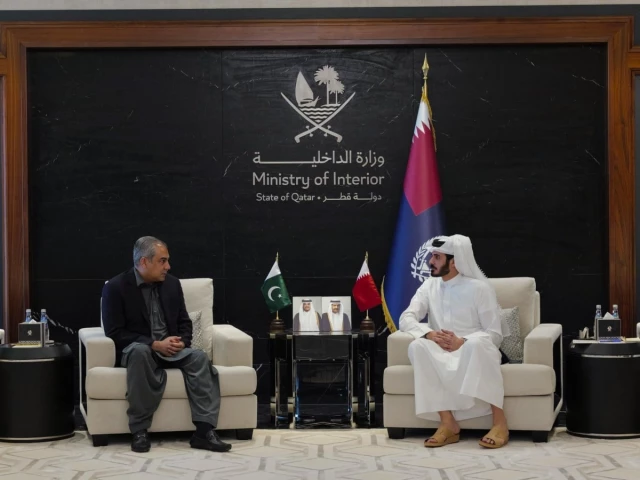
The diplomatic push also gained momentum after Pakistan’s Interior Minister Mohsin Naqvi met his Qatari counterpart, Sheikh Khalifa bin Hamad bin Khalifa Al Thani, in Doha on Monday.
Official statements described the meeting as focused on bilateral security cooperation and regional developments. Pakistani and regional media, however, linked the discussions to wider efforts aimed at reducing tensions and to support diplomatic engagement between the United States and Iran.
Hormuz Remains a Key Challenge
While Qatar and Pakistan continue political engagement, Oman is leading a separate diplomatic effort focused on the Strait of Hormuz.
According to Reuters, Muscat has proposed a regional mechanism for managing commercial shipping through the strategic waterway.
The proposal includes cooperation on maritime safety, environmental protection and search-and-rescue operations, offering an alternative framework for managing one of the world’s busiest energy corridors.
However, the proposal faces a major obstacle. Iran has maintained that it should retain authority over shipping through the strait and has previously rejected US calls for unrestricted passage without Iranian oversight.
The disagreement means that even if broader diplomatic progress continues, one of the central issues behind the crisis remains unresolved.
A Complex Region Complicates Diplomacy
The current pause also faces pressure from developments beyond the direct US-Iran relationship.
Iran-aligned groups in Iraq and Yemen’s Houthis have continued or claimed attacks against Saudi energy infrastructure and other regional targets despite the halt in direct military exchanges between Washington and Tehran.
Although these groups are broadly aligned with Iran, they do not necessarily operate under a single command structure.
Their actions could complicate mediation efforts by triggering new tensions even if governments continue pursuing diplomacy.
Another important development is Israeli Prime Minister Benjamin Netanyahu’s meeting with US President Donald Trump in Washington, on Tuesday.
Iran was expected to be high on the agenda, and the meeting could influence whether Washington continues giving diplomacy more time or shifts back towards a tougher military approach.
For now, the absence of direct attacks has created an opportunity for diplomacy. However, sustaining the current pause will depend on more than negotiations between Washington and Tehran.
Disagreements over the Strait of Hormuz, the actions of regional armed groups and the positions of key regional partners all remain capable of influencing whether the current calm develops into a longer-term diplomatic process or gives way to renewed escalation.

Anoush Taimur is an International Relations graduate from DHA Suffa University, Karachi, currently based in Doha. Her research interests include Gulf politics, small-state diplomacy, Global South studies and conflict
mediation. Her work examines how states create influence through connectivity, institutions and strategic relationships. She can be reached at [email protected]