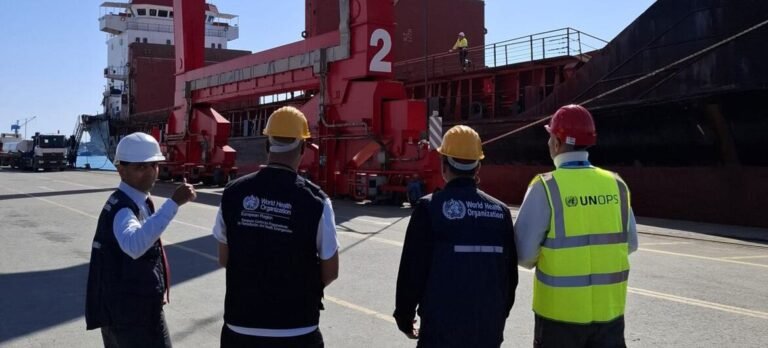
The Bangladesh interim government’s decision in late 2025 to hand over the operation of several Chittagong Port terminals—including Laldia Container Terminal, New Mooring Container Terminal (NCT), and Pangaon Inland Container Terminal— under public-private partnership for 30 years to foreign operator APM Terminals of A.P. Moller -Maersk has sparked a national discussion that goes far beyond the technical aspects of the port.
This decision, taken during a period of political transition and amidst the urgent need to increase national logistics capacity, raises fundamental questions about the direction of Bangladesh’s current and future development model and the character of the state.
Does this move signal a transformation toward a developmental state, like those seen in Japan, South Korea, and Taiwan? Or does it reflect the consolidation of a contemporary form of state capitalism that increasingly dominates the political economy of countries in the Global South?
Port Performance Crisis and Structural Pressures
For Bangladesh Chittagong seaport is more than just a port; it is the heart of national trade, the gateway to over 90 percent of Bangladesh’s container traffic, and a vital space for the continued survival of the textile industry, the backbone of the country’s economy. However, as Kabir and Helal (2021) demonstrated, for years, the port has faced various structural constraints, including limited capacity, inefficient bureaucracy, minimal scanning facilities, and persistently poor infrastructure.
Almost all the terminals at the port have been operating at near-maximum capacity with no significant expansion opportunities. Furthermore, the projected national container throughput is expected to increase to over five million TEUs by 2030, a surge that the current port structure cannot handle. A study by Munim et al. (2014) demonstrates that Port users rated Chittagong low on facilities, service quality, and governance.
The port’s rapid trade growth has not been matched by investment and infrastructure development, creating chronic congestion. In light of these pressures, the interim government has chosen to open up opportunities for global operators through a Public–Private Partnership (PPP) scheme.
Read More: Bangladesh Signals Openness to New Bloc with Pakistan, Surpassing India
Foreign operators are seen as capable of investing substantial capital, cutting-edge technology, and international operational standards needed to boost efficiency of the port. This decision to attract global operators appears quite pragmatic. Seemingly, technocratic public policies are never entirely free from politics and ideology. This is why we need to see the decision of handing over of the port’s operational aspect to foreign firm through the lens of state theory and political economy. I think this choice is not simply a technocratic response to efficiency issues.
It demonstrates that the country faces serious capacity constraints in managing strategic assets. This decision, therefore, opens the puzzle whether Bangladesh is moving toward an East Asian-style developmental state model, or is it deepening the patterns of pragmatic global state capitalism.
Developmental State?
A developmental state demonstrates three key characteristics such as: a strong, autonomous, and development-oriented technocratic bureaucracy; a stable political coalition committed to industrialization; and the state’s ability to build productive relationships with domestic capital. Bangladesh currently does not meet these criteria altogether.
First, the capacity of Bangladesh’s bureaucracy is far from the technocratic character of MITI in Japan or EPB in South Korea. Chittagong Port, for example, has long been plagued by governance problems, conflicts of interest, and weak long-term planning. As argued by Öniș, a developmental state requires a coherent, small, and meritocratic bureaucracy—something that is not yet evident in Bangladesh’s port authority.
Second, Bangladesh’s current political coalition is fragile and volatile. The developmental state model as seen in Doner et al. (2005) arose from a state of systemic vulnerability—a combination of external threats, domestic pressures, and fiscal constraints that forced elites to build a strong bureaucracy and coherent industrial policies. Bangladesh currently faces fiscal pressures and capacity challenges, but it is not facing the existential threat that forced state consolidation like South Korea in the 1960s or Taiwan in the 1950s.
Third, state-business relations in Bangladesh do not reflect the embedded autonomy as seen in developmental states. The state-private capital relationship in Bangladesh is more of a patron-client relationship than a strategic collaboration as argued by Walters et al. (2021). Political patronage and vested interests in the country often distort policies that should be development-oriented. Thus, handing over the operation of the terminals of Chittagong port to APM Terminals is not a sign of the emergence of a developmental state, but rather indicates the state’s weakness in consolidating internal development capacity.
Read More: Pakistan Announces 500 Scholarships for Bangladeshi Students
The Logic of State Capitalism in the Chittagong Case
I propose we should see the decision regarding Chittagong case from the lens of state capitalism as it offers a sharper analytical tool for the case. Ports in Asia and the Global South are increasingly adopting development models that combine state ownership of strategic assets with intensive involvement of global investors, while maintaining the state’s role as a driver of the economic system. For instance, East Asian countries responded to financial globalization by expanding publicly listed state-owned enterprises as a stabilization tool.
Similar pattern also seen in Indonesia as an example of restrained state capitalism, a model in which the state does not dominate like China but still directs strategic investment through state-owned enterprises and public-private partnerships. In the context of Bangladesh, evidently it is following the similar pattern in the case of Chittagong Port.
The state retains full ownership of port assets, while foreign operator is granted management and investment rights for a specified contract period. APM Terminals, for example, expected to cover the entire investment cost of terminal construction—approximately $550 million—while asset ownership remains with the Bangladesh’s Chittagong Port Authority (CPA). This pattern aligns with the principles of state capitalism, not neoliberal privatization. The state retains control over strategic assets and regulation, but leverages the efficiency, capital, and technology of global companies to address domestic capacity gaps.
This model also reflects the logic of the de-risking state as seen in contemporary state capitalism of many states demonstrated by Schindler et al (2022). Global South countries, including Bangladesh, create conditions that minimize risk for global investors through minimum revenue guarantees, long-term contract certainty, and certain institutional reforms to enable large infrastructure projects to attract international capital.
Within this framework, Bangladesh’s efforts constitute a strengthening of pragmatic state capitalism: the state does not directly manage operations, but retains control over the ownership architecture, regulates tariffs, sets standards, and selects strategic global partners.
To conclude, Bangladesh is developing a pragmatic, hybrid model of state capitalism, where strategic asset the port itself remains state-owned while APM Terminals will provide efficiency and capital. This integration enhances connectivity and export competitiveness but carries the risk of technological dependency and power asymmetries if not transparently regulated.
The success of this model depends on strong regulatory capacity, political legitimacy, and linkages to the national industrialization strategy. If managed well, Chittagong Port can be a catalyst for development; if it fails, Bangladesh risks becoming a passive actor in a global logistics network without strategic direction.
*The views presented in this article are the author’s own and do not necessarily reflect the views of The Diplomatic Insight.

Asheke Alahi
Asheke Alahi is an MA student in Political Science at Universitas Islam Internasional Indonesia. His research interests include comparative politics, international relations, international security studies, and diplomacy. He currently serves as Vice President of the Students Union at Universitas Islam Internasional Indonesia and is an executive member of the university’s 'South Asia Update' Forum. He can be reached at asheke.alahi@uiii.ac.id