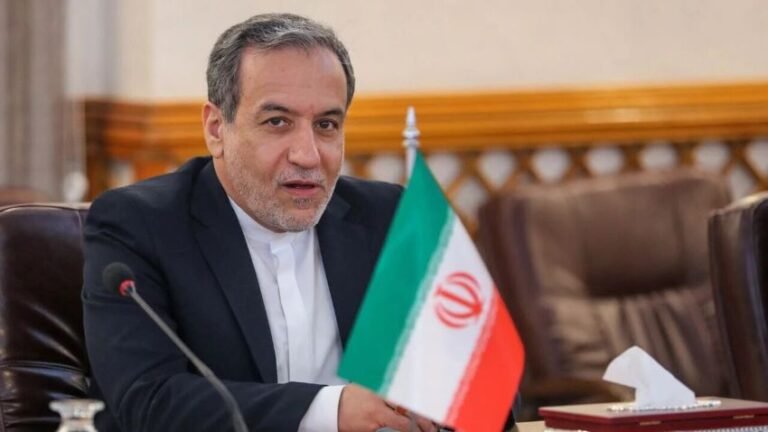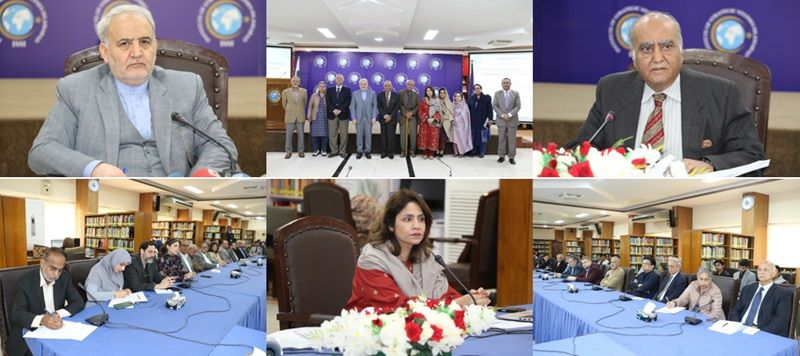
Islamabad (TDI): Pakistan and Iran must enhance cooperation to effectively counter terrorism and separatist threats while expanding economic, diplomatic and regional engagement, Iranian Ambassador Reza Amiri-Moghaddam said, describing bilateral relations as entering one of their most constructive phases in decades.
The remarks were made at a public talk titled “Pakistan–Iran Relations: An Enduring Partnership in a Changing Region,” organized by the Institute of Strategic Studies Islamabad (ISSI) through its Centre for Afghanistan, Middle East and Africa (CAMEA). The event featured Reza Amiri-Moghaddam, Ambassador of Iran to Pakistan; Khalid Mahmood, Chairman Board of Governors ISSI; and Dr. Amina Khan, Director CAMEA.
Ambassador Reza highlighted that the two neighboring countries share a long border and together represent nearly 350 million people. He pointed to strong people-to-people linkages, strategic geography, and complementary economic structures as foundations for expanded cooperation. He noted that Tehran and Islamabad maintain aligned positions on several regional and international matters, including Palestine.
Emphasizing shared security concerns, he said terrorism and separatist movements remain serious challenges that require stronger coordination and joint efforts. He also underscored collaboration within multilateral platforms such as the Shanghai Cooperation Organization, Organization of Islamic Cooperation, Economic Cooperation Organization (ECO), and the Developing Eight Organization for Economic Cooperation (D-8) as reinforcing bilateral ties.
Read More: Iranian Envoy Urges Calm Amid Pakistan-Afghanistan Tensions
Referring to recent diplomatic momentum, Ambassador Reza noted that more than 25 high-level exchanges have taken place over the past two years, alongside the signing of around 25 agreements and memoranda of understanding across various sectors. He described this period as one of the most positive in recent decades, marked by presidential visits and sustained senior-level engagement.
He also highlighted the broader economic potential of regional connectivity, observing that Pakistan and Iran are part of a wider market of nearly two billion people, a figure that could grow further with Türkiye’s inclusion. He concluded that bilateral ties are anchored in shared history, cultural affinity, and common strategic interests.
Ambassador Khalid Mahmood described Pakistan and Iran as brotherly nations whose ties predate Pakistan’s independence, recalling that Iran was the first country to recognize Pakistan. He also referenced Iran’s support during the 1965 and 1971 wars as evidence of enduring solidarity.
Read More: Pakistan, Iran Vow to Deepen Cooperation on Agriculture and Food Security
While acknowledging that relations have faced challenges at times, he stated that both countries are now closer than ever, despite ongoing issues such as terrorism and sectarianism. In a shifting regional landscape marked by emerging tensions, he stressed that Islamabad and Tehran remain committed to collaborative and peaceful solutions.
The session was attended by diplomats, academics, students, and members of civil society, and concluded with an interactive question-and-answer segment.
Sohail Majeed
Sohail Majeed is a Special Correspondent at The Diplomatic Insight. He has twelve plus years of experience in journalism & reporting. He covers International Affairs, Diplomacy, UN, Sports, Climate Change, Economy, Technology, and Health.