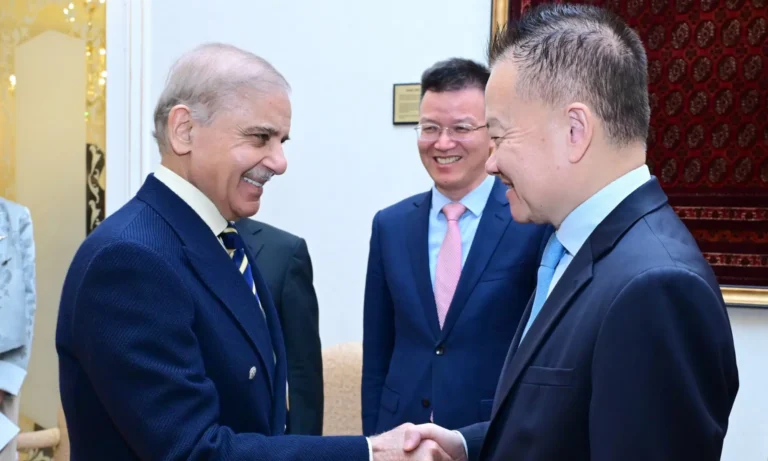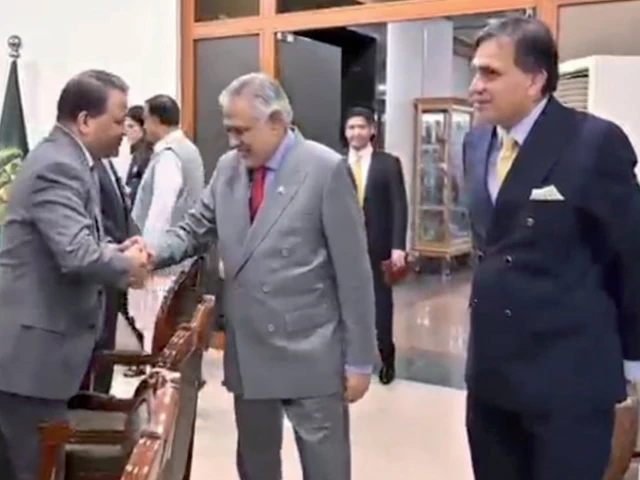
Islamabad (TDI): Pakistan and India set aside their recent diplomatic friction during a Shanghai Cooperation Organization (SCO) engagement in Islamabad, where Indian SCO National Coordinator Alok Dimri publicly exchanged a handshake with Deputy Prime Minister and Foreign Minister Ishaq Dar.
Dimri, an Additional Secretary at India’s Ministry of External Affairs, led the Indian delegation at the first meeting of the SCO Council of National Coordinators under Pakistan’s 2026–27 chairmanship. The three-day meeting concluded in Islamabad on Wednesday.
The participating national coordinators later called on Dar at the Ministry of Foreign Affairs. Footage released by Pakistan’s Foreign Office showed Dimri greeting Dar with a handshake before standing alongside the Pakistani foreign minister and Pakistan’s SCO National Coordinator Muhammad Faisal.
The interaction came against the backdrop of continuing tensions between the two nuclear-armed neighbours. India and Pakistan recently exchanged sharply worded statements at the United Nations General Assembly, underscoring the differences that continue to define their bilateral relationship.
Read More: Three Tables, One Web: Gap Between Diplomacy & Implementation at UN, SCO, ECO
The Islamabad engagement, however, took place within the SCO’s multilateral framework, where both countries have continued to participate despite their bilateral disputes.
Speaking to Pakistan Television during his visit, Dimri described his first trip to Pakistan positively and said he was “happy to visit Islamabad.” He also expressed interest in visiting Lahore, Faisalabad and Sialkot.
Dimri highlighted the SCO’s broader agenda, particularly regional connectivity, trade and transit, and said these areas could contribute to regional prosperity. He also noted Lahore’s designation as an SCO cultural city and referred to opportunities for India’s participation in cultural activities during Pakistan’s chairmanship.
The Indian delegation’s presence marks a significant multilateral engagement in Pakistan amid strained bilateral ties. India has continued participating in SCO mechanisms while maintaining its position that progress on bilateral engagement with Pakistan requires an appropriate environment.
Read More: Dar Urges SCO Members to Turn Vision in Outcomes at First Coordinators’ Meeting
The national coordinators’ meeting focused on the SCO’s program of activities under Pakistan’s chairmanship, preparations for upcoming meetings and events, and coordination among member states. Pakistan’s Foreign Office said the meeting was part of preparations for the organization’s high-level engagements, including the 2027 Council of Heads of State summit in Islamabad.
Pakistan formally assumed the SCO Council of Heads of State chairmanship for 2026–27 following the organization’s summit in Bishkek. Islamabad has selected “Turning Vision into Action: Connectivity, Innovation and Shared Prosperity” as the theme of its chairmanship, with priorities including connectivity, innovation, economic cooperation and people-to-people exchanges.
The next SCO Council of Heads of State summit is scheduled to be hosted by Pakistan in Islamabad in August 2027. Preparations for the event are already underway, covering areas including venue arrangements, accommodation, security, transport and logistics.
The upcoming summit will also bring attention to the level of India’s representation. Pakistan has previously indicated that invitations would be extended to the heads of government of all SCO member states, while India has not yet announced who would represent it at the Islamabad summit.
For now, the participation of a senior Indian diplomat in the Islamabad meeting and his cordial public interaction with Pakistan’s foreign minister illustrate that India and Pakistan continue to engage through the SCO even as their bilateral differences remain unresolved.
The SCO framework therefore continues to provide a channel for institutional interaction between the two countries, although the extent to which such multilateral engagement affects their broader bilateral relationship remains to be seen.