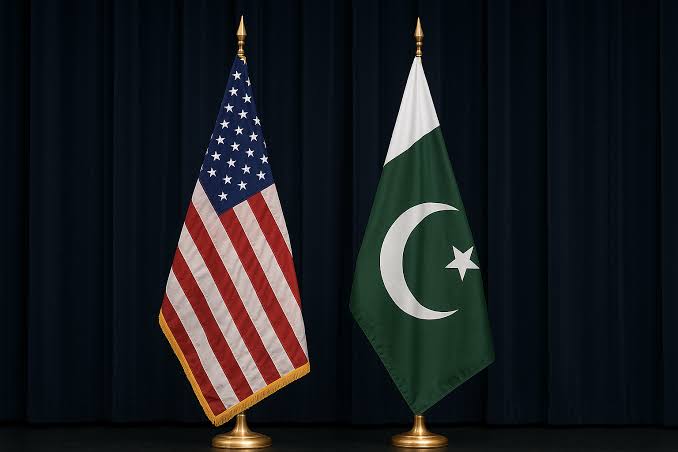
The consequences of American elections extend far beyond America’s borders. As the world’s leading economic and military power the United States defines international alliances, trade arrangements and geopolitical priorities.
For Pakistan, which has had a relationship with Washington that has swung between strategic cooperation and diplomatic estrangement, changes in American political leadership are especially significant. The 2026 mid-term US elections, which confirmed Democratic power in Congress, pose important questions about the future of Pakistan-US relations and the durability of the diplomatic rapprochement built under President Donald Trump.
To understand the implications it is useful to note that Pakistan–US relations have not been consistently along ideological lines. Instead, they have often been driven by strategic and security considerations.
Donald Trump’s return to the White House in January 2025 created an opportunity to reset the relationship. His administration’s transactional approach to foreign policy opened diplomatic space for Islamabad. Pakistan’s cooperation in the arrest of a suspect linked to the 2021 Abbey Gate bombing received public acknowledgement from Trump.
The May 2025 military confrontation between India and Pakistan provided another opening, with Trump announcing a ceasefire on May 10. Subsequent high-level engagements, and discussions on trade and investment contributed to a noticeable improvement in diplomatic relations.
Then there is a new level of security cooperation, in which Pakistan has been instrumental in brokering talks between the United States and Iran. Ever since the beginning of the war in February 2026, Islamabad has been using its diplomatic networks with Washington and Tehran to pass on messages and help de-escalate the situation. This has made Pakistan an important diplomatic conduit between the two nations.
Pakistan’s role has increased the country’s importance not only in terms of security cooperation in Afghanistan and South Asia but in other areas as well. For the United States, Pakistan is a means through which it can communicate with Tehran, while for Pakistan, this mediation attempt represents an opportunity to enhance its diplomatic credentials on the international front.
But this diplomatic reconciliation prompts an essential question whether Pakistan is once again becoming strategically important for Washington, or is it becoming relevant due to President Trump’s personal diplomatic objectives. The electoral success of the Democrats in Congress post-midterm elections makes this issue more relevant than ever before.
While the power of the US President in terms of formulating foreign policy is significant, Congress plays a crucial role in the passing of legislation, budget, trade deals, and sanctions. Given that the Democrats have become more powerful, the Trump administration will possibly face a lot of hurdles in implementing its foreign policy strategy, which includes engagement with Pakistan as well.
However, it should be noted that a change in congressional control does not guarantee a reversal of US foreign policy. Counter-terrorism cooperation, nuclear security, and regional stability continue to be matters of institutional interest regardless of changes in presidential administration.
The State Department, the Pentagon, and intelligence services maintain institutional ties that are not affected by political change. Therefore, what is more urgent for Islamabad is to build wider institutional contacts with Congress and the US government officials rather than just with the White House.
A solid basis for developing a sustainable partnership is the economic one. The U.S. is still considered an important market for the country’s export products, such as textiles and apparel. Current negotiations regarding tariffs, minerals and investment have brought about some opportunities; however, only diplomatic statements cannot solve the problems that Pakistan is facing in terms of its economy.
The country is suffering from an export structure that is narrow, lack of investment and payments problems. Pakistan can work on attracting investments into such industries as information technologies, renewable energy, agriculture, minerals and manufacturing. Such partnership would be more stable in case of changes in the American administration.
Pakistan should go with strategic diversification. The cooperation between Pakistan and the US in trade, education, technology, climate change adaptation and counter-terrorism can go hand in hand with its relations with other close allies such as China. However, this will call for effective diplomacy, transparency and clearer priorities from Pakistan’s side. Pakistan should not allow itself to become the playground of big powers but should try to be a regional power that can work with several states.
Cooperation in the area of security is still important. Even though the Americans have withdrawn from Afghanistan, the networks of militants and insecurity in the region continue to worry both Pakistan and the US. However, such cooperation is likely to be more durable when done out of mutual interest than temporary need.
Ultimately, the fate of Pakistan-US relations will not only hinge upon who runs things in Washington but upon whether or not both sides are able to build an understanding of the interest of each. Pakistan needs to move past personalized diplomacy and build its institutional ties that will endure through various American administrations.
The 2026 midterm elections have altered the political balance in Washington, with Democratic gains in Congress proving more substantial than expected. What Pakistan must learn from this experience is that it should not rely upon every election cycle, but instead devise a foreign policy strategy that works irrespective of who sits in the White House.
The true test of the ongoing diplomatic thaw will be not the warmth of the political relations or the number of high-level visits; rather, whether such relations yield tangible economic benefits. Pakistan may not be able to shape American politics, but it can prepare for its consequences.
*The views presented in this article are the authors’ own and do not necessarily reflect the views of The Diplomatic Insight.*
Fareeha Sultan
Fareeha Sultan is a freelance writer based in Islamabad.
- Fareeha Sultan