London (TDI) The International Institute for Strategic Studies (IISS) launched its annual publication ‘The Military Balance, 26th Edition’ that measures the international military capacity and economic conditions.
By 2025, real-world military spending grew from 2.48 trillion to reach 2.63 trillion, with much of this growth coming out of Europe, the Indo-Pacific, and the Middle East.
The launch event happened on Tuesday, where IISS’s Director-General and Chief Executive, Dr. Bastian Giegerich, delivered opening remarks, before joining a panel discussion with major defense experts.
The latest version, which exceeds 500 pages, incorporates latest information on military organizations, equipment stocks, and budgets of more than 170 countries, as well as region-by-region coverage of the events driving defense policy and procurement.
The report provides authentic military data for analysts, defense generals, and policymakers who follow developments on the global and regional military fronts in the age of global strategic rivalry.
The release date is significant because it appears on the fourth anniversary of the Russian invasion of Ukraine. The report estimates that Russia has spent 186 billion on defense in 2025, or 7.3 percent of its GDP.
It adds that Russia might bridge the equipment and manpower shortages by the year 2030 in case the current trends in recruitment and production are maintained in the United States, which has urged European to increase their defense budgets and stop depending on its abilities.
Read More: US Congress Passes Record $901bn Defense Spending Bill
During the 2025 NATO summit, allies pledged to increase defense spending to 5% the of GDP by 2035; 3.5% of which will be on core defense capabilities.
Defense spending in Europe was at an all-time high in 2025, accounting for more than 21% of global spending. Germany exceeded 100 billion in defense spending in a single year, making it the fourth-largest defense spender in the world.
Nevertheless, for geospatial intelligence, ballistic missile early warning, and space-based assets, Europe is still largely dependent on American assistance. Although US spending on military aid dropped in 2025, it is estimated to exceed $1 trillion in 2026 under new budget plans.
The report reflects broader Western concerns that Chinese modernization in the Indo-Pacific has had a significant impact, leading to a substantial rise in military expenditure in Japan, Australia, and South Korea.
China’s defense expenditure has continued to dominate the region, rising by more than 43% since 2021. China revealed new operational capabilities at its Victory Day parade, including the JL-1 air-launched ballistic missile and increased strategic capabilities.
The aircraft carrier Fujian was commissioned into the People’s Liberation Army Navy, and several nuclear-powered submarines were commissioned between 2021 and 2025. The IISS estimates the J-20 stealth fleet to be more than 300; the more recent addition, the J-35A, is in service.
Read More: Macron Announces Extra €6.5 Billion for Military Spending
The report reveals the disparity between the military capacities of India and Pakistan, nuclear-armed neighbors whose defense stances shape regional stability. IISS data shows that India has a much larger defense budget and force posture than Pakistan, and greater conventional capabilities across its land, air, and sea forces.
Using data-based insights from the Military Balance and database, panelists were asked to discuss urgent concerns that impact policymakers, such as the role of the United States under the second term of President Trump in global defense priorities, the conflict in Ukraine, and the turmoil in the Middle East.
During the discussion on China’s military progress, IISS senior analyst Douglas Barrie brought up the May 2025 military conflict between Pakistan and India.
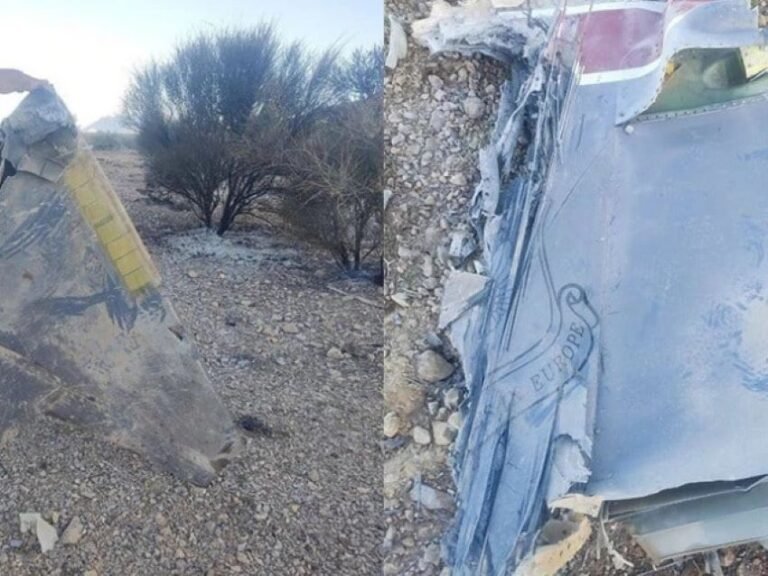
Pakistan deployed the PL-15 missile against India. In the air domain, it played an important role in two aspects. First, it proved the capability of such a weapon in the long range. Second, it gave China an operational validation and enhanced the exportability of related platforms and systems.
Dr. Giegerich stressed that in a real-world test of Chinese military technology, Pakistan-based Chinese-origin combat airplanes and air-to-air missiles fired at least one Indian Air Force Rafale aircraft. It signals US concerns regarding Chinese military technology validation.
In crux, the report has pointed to a world shifting into a period of sustained strategic rivalry and accelerating military transformation across major areas, including hypersonics, naval build-up, and unmanned platforms.

Adeela Ahmed
Adeela Ahmed is a Research Fellow at the Centre for Security, Strategy Policy Research (CSSPR), University of Lahore, Pakistan. She can be reached at adeelaahmed6@gmail.com