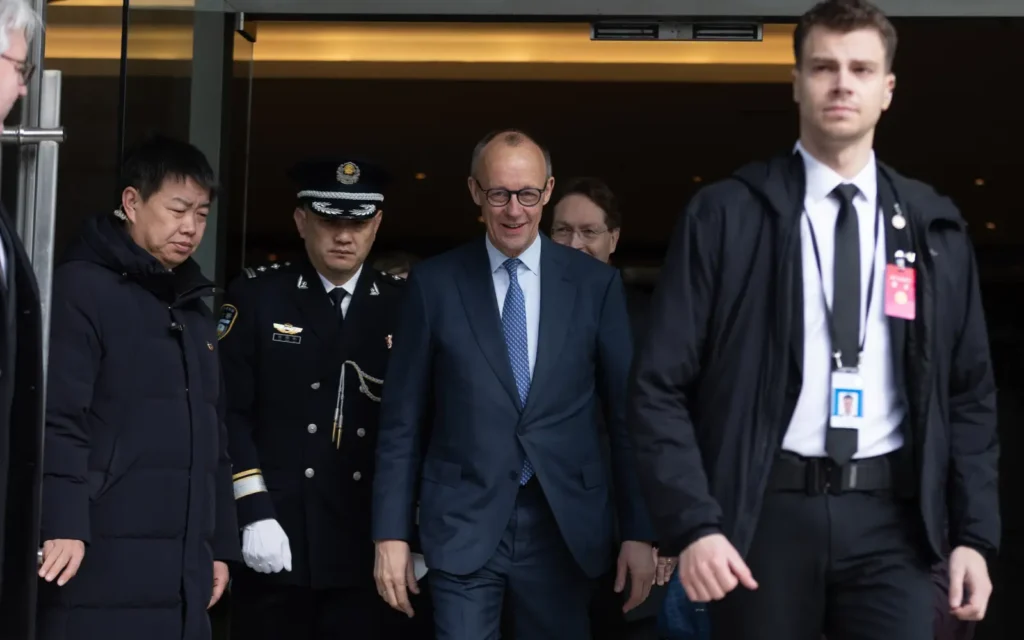
Beijing (TDI): German Chancellor Friedrich Merz has wrapped up a high-stakes visit to China that blended business aspirations with broader geopolitical signaling, as Berlin seeks to recalibrate economic relations in times of global uncertainty.
Arriving in Beijing on Wednesday, Merz met with President Xi Jinping and Premier Li Qiang to discuss a wide spectrum of economic and strategic issues.
The chancellor’s China trip has been carefully choreographed to balance commercial prospects with political realities. After Beijing talks, Merz and a large delegation of German business leaders travelled to Hangzhou, a fast-growing tech hub home to leading artificial intelligence, robotics and e-commerce firms.
Hangzhou hosts Unitree Robotics, a prominent Chinese maker of humanoid robots, and sites connected with Siemens Energy. The visits underscored Berlin’s interest in securing business deals in cutting-edge sectors such as AI, robotics, renewable energy, and industrial digitalization.
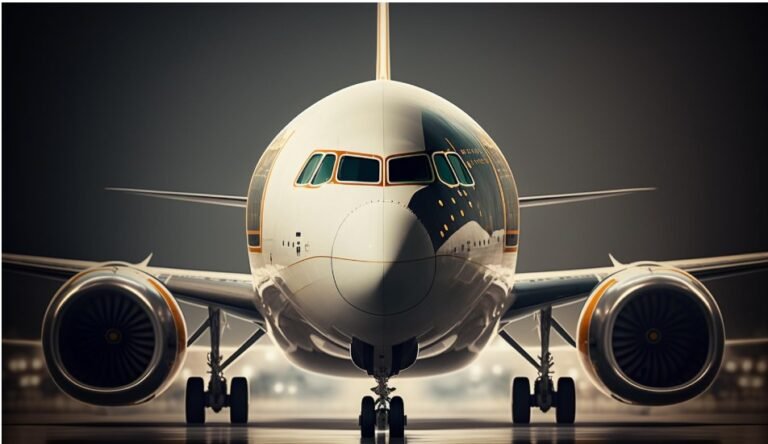
In a major concrete outcome, China agreed to order up to 120 additional aircraft from European aerospace giant Airbus, a deal Merz said underlines the value of deepening ties between the world’s second-largest and third-largest economies.
Read More: China Plans to Purchase 120 Airbus Aircraft, Says Merz During His Country Visit
Germany and China have long been deeply integrated economically, with China overtaking the United States last year as Germany’s largest trading partner.
German firms, from automotive giants to industrial manufacturers, face intensifying competition from Chinese rivals, and Berlin is grappling with a trade deficit approaching record levels.
European businesses have called on Merz to press Beijing for “fair, transparent and reciprocal” market conditions, particularly in technology and advanced manufacturing.
On one hand, Merz spoke of “great opportunity” to deepen economic ties and emphasized Germany’s desire for “balanced, reliable and fair” cooperation.
On the other, he and Chinese officials acknowledged challenges, from trade distortions to competition in strategic sectors, that will require ongoing dialogue.
With the United States pursuing tariff policies that have unsettled traditional allies, and Europe seeking to “de-risk” without fully decoupling from China, Berlin is trying to thread a needle: boosting commercial engagement while safeguarding German industrial interests and maintaining alignment with European and transatlantic partners.