Recent discussions in public and social media have revived interest in the so-called “petrodollar system”, often presenting it as the hidden foundation of American global power. While such claims are sometimes overstated, they point to an important reality: the international role of the US dollar remains central to understanding modern geopolitics.
For decades, the dominance of the United States has been explained largely through its military strength, advanced weapons systems, global bases and unmatched defense spending. Yet beneath this visible power lies a less obvious but equally significant factor: the dollar’s privileged position in the global economy. The foundations of this system were laid at the Bretton Woods Conference in 1944, which established the dollar as the anchor of the international financial order.
Initially tied to gold, the system underwent a major transformation in 1971 when President Richard Nixon ended dollar convertibility into gold. Contrary to expectations, this did not weaken the dollar’s global role. Instead, it paved the way for a new arrangement.
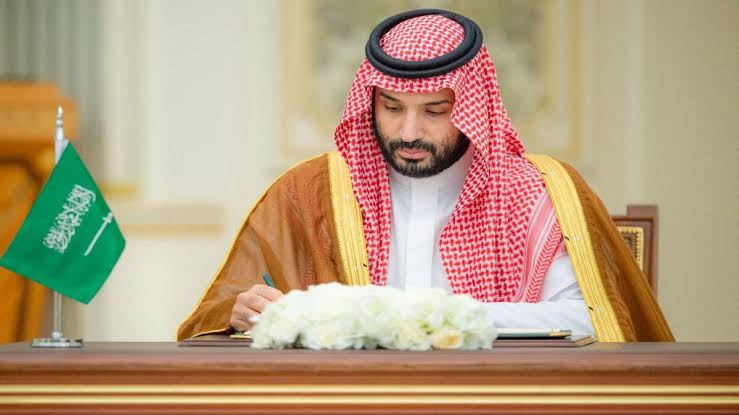
In 1974, the United States reached a strategic understanding with Saudi Arabia under which oil exports would be priced primarily in US dollars. Over time, this practice became the global norm. Given that oil is indispensable to industrial economies, the arrangement ensured a continuous demand for dollars, effectively reinforcing its dominance in global trade and finance.
Read More: US Temporarily Allows Sale of Russian Oil to Ease Global Energy Crisis
Today, the dollar still accounts for around 55–58 per cent of global foreign exchange reserves, according to the International Monetary Fund. This position provides the United States with considerable advantages, including lower borrowing costs, deep and liquid financial markets, and the ability to impose sanctions that can restrict access to the global financial system. However, recent trends suggest that this dominance, while still intact, is gradually being tested.
One of the most notable developments is the slow decline in the dollar’s share of global reserves, down from over 70 per cent at the turn of the century to the mid-50s today. At the same time, countries such as China and Russia have increasingly sought to conduct trade in their own currencies. Bilateral trade between the two is now largely denominated in yuan and rubles rather than dollars, reflecting a broader effort to reduce exposure to US financial influence.
Energy markets are also showing signs of change. China has expanded the use of the yuan in oil transactions, and discussions within the BRICS grouping indicate a growing interest in alternative financial arrangements. These include new payment systems and financial institutions designed to operate independently of Western-dominated structures. At the same time, central banks around the world have been increasing their gold reserves at an unprecedented pace.
Annual purchases have exceeded 1,000 metric tons in recent years, suggesting a cautious move towards diversification away from dollar-denominated assets. Geopolitical tensions in the Middle East further complicate this evolving landscape. The Strait of Hormuz, a narrow but critical maritime corridor through which nearly 20 per cent of global oil supply passes, remains highly sensitive to regional instability. Any disruption or attempt to alter the terms of trade in this corridor could have far-reaching implications for global energy markets and currency dynamics.
Read More: Oil Again Hits $100 Amid Iran War, Stocks Fall and Dollar Strengthens
Nevertheless, it is important to maintain perspective. Despite these emerging trends, the dollar continues to dominate global finance. Alternative currencies, including the Chinese yuan, still represent a relatively small share of global reserves, less than 5 per cent in the case of the yuan. Moreover, the global financial system remains deeply interconnected with US institutions, from banking networks to capital markets.
What is unfolding, therefore, is not a sudden collapse of the petrodollar system but a gradual shift towards a more multipolar financial order. The dollar’s dominance is being challenged at the margins, but it remains firmly at the center. For policymakers, this raises important questions about the future of global economic governance. For developing countries, including Pakistan, the implications are equally significant.
Exchange rates, inflation, energy prices and external debt dynamics are all influenced by shifts in the international monetary system. Understanding these changes is essential. The strength of the dollar does not simply reflect economic fundamentals; it is also rooted in decades of institutional arrangements, geopolitical alignments and market confidence.
The petrodollar system, often described as the backbone of American financial power, is not disappearing. But it is evolving. And in international politics, gradual transformations often prove more consequential than sudden disruptions.
*The views presented in this article are the author’s own and do not necessarily reflect the views of The Diplomatic Insight.

Shafqat Ali
Shafqat Ali is a Master’s student of Political Science at Universitas Airlangga, Surabaya, Indonesia. He can be reached at [email protected]