It is beyond any doubt that the post–Cold War liberal economic order is faltering. This topic has been extensively written about and debated worldwide. During the Biden era, cracks in the liberal order were already visible. The rise of the ultra-right such as Marine Le Pen and Jordan Bardella in France, Nigel Farage in the United Kingdom, and Alice Weidel’s Alternative für Deutschland (AfD) in Germany pointed toward tensions beneath the surface.
These developments were not isolated political shifts, but symptoms of a deeper structural unease within Western liberal democracies. In just almost one year into Trump’s second term, the march of the right has both metastasized and catalyzed. Promising “America First” and avoiding unnecessary prolonged conflicts, the United States under Trump 2.0 has nevertheless presided over an increasingly volatile international environment.
The veneer of it may appear to be sheer unpredictability or even madness. It is the majority opinion across both the developed and developing world that Netanyahu pushed Trump into his own war. On a prima facie level, Trump may appear to be a mercurial president ruled by emotions and instincts. However, the reality is far more complex and calculated. A closer and more holistic examination of events since 2025 reveals a pattern that aligns with the long-term strategic calculus of the United States.
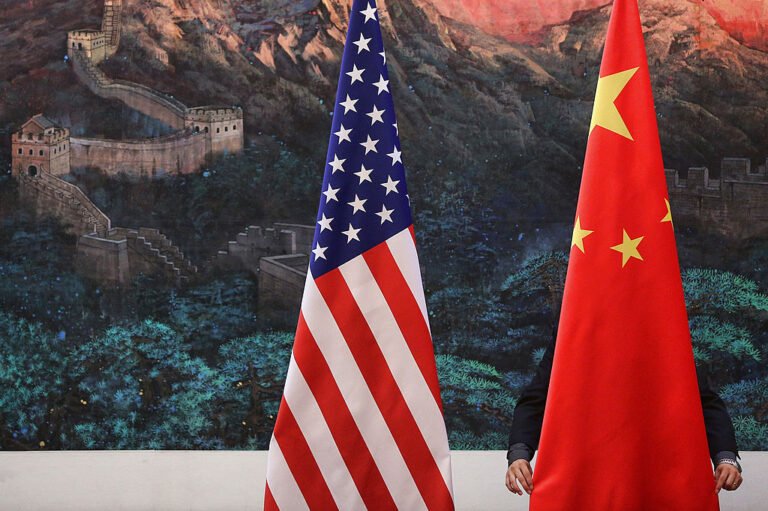
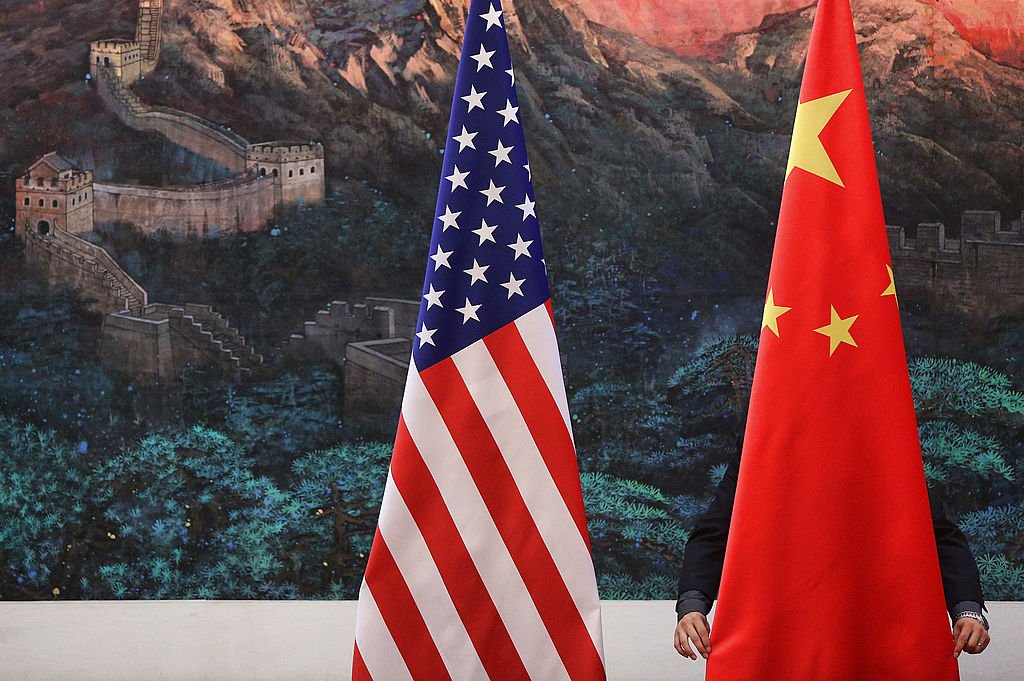
As a Korean adage goes, “When whales fight, the shrimp’s back is broken.” This perfectly encapsulates the current global order. The diverging interests between a rising power and an established hegemon—China and the United States—constitute the real elephant in the room. What is unfolding across different regions is not a series of disconnected crises, but rather interconnected moves within a broader strategic contest.
Events in Venezuela, the ongoing tensions involving Iran, and the continued economic pressure on states like Cuba can be interpreted as pieces on a larger geopolitical chessboard. These are not merely regional conflicts but part of a broader preparation for a prolonged strategic competition with China. While the two powers have not yet confronted each other militarily, the United States has increasingly sought to counter China’s influence by targeting its economic and strategic vulnerabilities, particularly in trade and resource access.
Read More: China, Energy and the Iran Crisis: A Strategic Advantage?
However, a direct military confrontation remains unlikely in the near future. Both nations possess nuclear capabilities that could lead to mutually assured destruction, effectively deterring open war. Instead, what we are witnessing is a form of indirect conflict—a “long war” aimed at weakening the opponent without direct engagement. This aligns closely with Sun Tzu’s principle of subduing the enemy without fighting. The competition has thus shifted into economic, technological, and geopolitical domains.
Several policy approaches adopted by the United States over the decades have failed to produce the desired outcomes. The first major attempt was the rapprochement with China in the 1970s, initiated through Henry Kissinger’s secret trip and culminating in the normalization of relations under Richard Nixon. This move brought China into the global fold and eventually led to its recognition as the legitimate representative of China at the United Nations.
Ironically, while the United States officially adheres to the “One China” policy, it maintains informal relations with Taiwan through mechanisms such as the American Institute in Taiwan, reflecting its policy of strategic ambiguity. The second major policy was the attempt to integrate China into the global economic system, particularly through institutions like the World Trade Organization (WTO).
The expectation was that economic integration would lead to political liberalization. However, instead of assimilating into a Western-led order, China leveraged globalization to fuel its own rapid rise. This meteoric growth transformed China into a near-peer competitor, surprising many policymakers in the West. The third policy involved efforts to contain China’s technological advancement through restrictions and export controls. Yet, this too has yielded limited success.
China has achieved significant dominance in key sectors, particularly in rare earth elements and green technologies. In fact, China produces the vast majority of the world’s rare earth elements and accounts for a significant portion of U.S. imports in this sector, highlighting a critical dependency. This dominance extends to supply chains essential for modern industries, including renewable energy and advanced electronics. Recent developments, such as China’s tightening of export controls on rare earth materials and related technologies, further demonstrate its strategic leverage in this domain.
Read More: Arctic: The Next Global Power Battleground?
Faced with these challenges, American strategic thinkers appear to be gravitating toward a more confrontational, long-term approach. As the renowned strategist Carl von Clausewitz observed, “War is the continuation of politics by other means.” While this “war” may not take the form of direct military conflict, it is nonetheless a sustained and multidimensional struggle for global primacy.
China, for its part, approaches this competition with a long-term perspective rooted in its civilizational outlook. Its emphasis on patience, incremental gains, and strategic depth contrasts with the often reactive nature of U.S. policy. Rather than seeking immediate confrontation, China appears to be carefully navigating the evolving global landscape, expanding its influence through economic partnerships, technological development, and control over critical resources.
While the United States undoubtedly has domestic political influences, including strong pro-Israel constituencies, it would be overly simplistic to argue that Trump has been merely cajoled into geopolitical conflicts. Such a view underestimates the continuity and depth of American strategic planning. The notion of a coherent “deep state” may be debated, but it is evident that U.S. foreign policy operates within a broader framework of long-term national interests.
In conclusion, what may appear as chaos on the surface is, in reality, part of a deeper and more structured global contest. The emerging “long war” between the United States and China is not defined by traditional battlefields but by economic competition, technological rivalry, and strategic positioning. Smaller states, much like the shrimp in the Korean proverb, risk bearing the consequences of this battle between giants.
*The views presented in this article are the author’s own and do not necessarily reflect the views of The Diplomatic Insight.

Idrees Khan
Idrees Khan holds a BS(Hons) degree in Government and Public Policy and is an alumnus of the SUSI exchange program at the University of Massachusetts Amherst. Currently, he is serving as Azerbaijan Youth ministry representative.