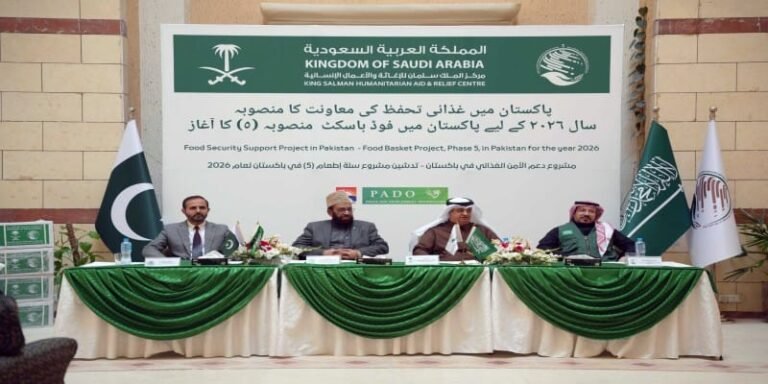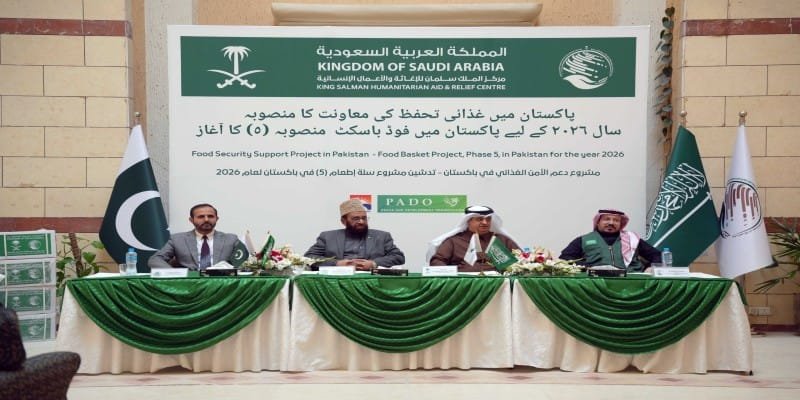
The King Salman Humanitarian Aid and Relief Centre (KSrelief), in coordination with Pakistan’s National Disaster Management Authority (NDMA), has begun distributing food assistance across 30 districts of the country in observance of the holy month of Ramadan.
The initiative is being carried out under the Food Security Support Project Pakistan 2026 (Phase-5) and aims to support 192,500 vulnerable individuals facing food insecurity.
The large-scale humanitarian effort targets families struggling with rising food prices and economic hardship, particularly during Ramadan, a month marked by fasting, reflection, and community solidarity.
The project is designed to ensure that vulnerable households can observe the month with dignity and adequate nutrition.
Under the program, beneficiary families are receiving comprehensive food baskets carefully assembled to meet their nutritional needs throughout Ramadan.
Each package weighs 97 kilograms and contains essential staples calculated to sustain an average household for the entire month.
The basket includes 80 kilograms of wheat flour, 5 liters of cooking oil, 5 kilograms of sugar, 2 kilograms of dates, and 5 kilograms of gram pulse (Daal Chana).
Read More: KSrelief Launches Winter Kit Distribution in Khyber Pakhtunkhwa
Officials overseeing the distribution emphasized that the process is being conducted in a transparent and coordinated manner.
In addition to NDMA, the initiative is being implemented in close collaboration with Provincial Disaster Management Authorities (PDMAs), the Gilgit-Baltistan Disaster Management Authority (GBDMA), and the State Disaster Management Authority (SDMA).
District administrations are also playing a key role in ensuring that aid reaches the intended recipients efficiently. KSrelief’s local implementing partners, the Hayat Foundation and the Peace and Development Organization, are supporting on-the-ground logistics, beneficiary identification, and distribution activities.
The Food Security Support Project is part of KSrelief’s broader humanitarian mandate to alleviate suffering and strengthen resilience among vulnerable communities.
By focusing on food security during Ramadan, the Centre aims to ease the burden on low-income families who might otherwise struggle to meet their daily nutritional requirements.
As food insecurity continues to affect thousands of households, the Ramadan distribution drive represents a timely intervention, offering both practical assistance and a gesture of solidarity during one of the most spiritually significant months of the Islamic calendar.