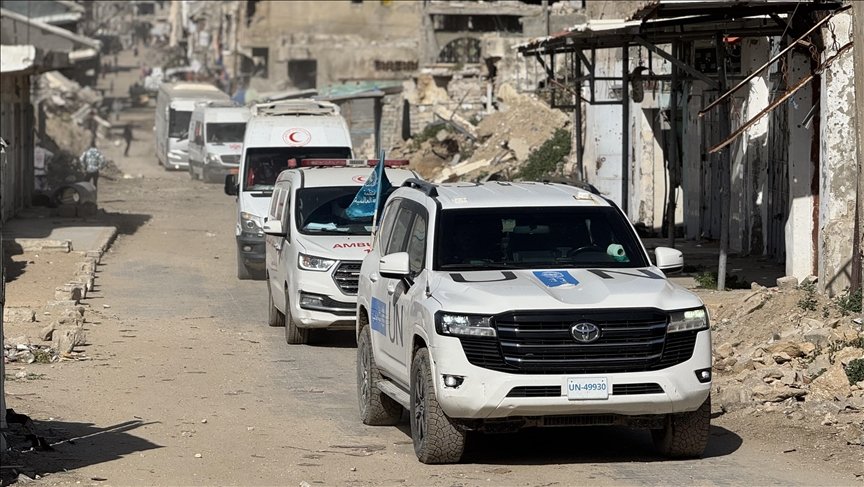
The United Nations has raised serious concerns that nearly half of all coordinated humanitarian aid missions in the Gaza Strip were either blocked or significantly impeded by Israeli authorities over a recent six-day period, despite a ceasefire agreement being in place.
In a press briefing on Monday, UN spokesperson Stéphane Dujarric cited data from the Office for the Coordination of Humanitarian Affairs (OCHA) showing that just over 50% of aid movements requiring coordination with Israel were fully facilitated between February 6 and 11.
Of nearly 50 such missions, five were denied outright, 11 were approved but significantly delayed, and two were only partially completed. Two additional denials were reported “just today,” Dujarric added.
The restrictions affected shipments entering from both Jordan and Egypt, the spokesperson said, with less than 60% of consignments from Egypt’s Kerem Shalom/Karem Abu Salem crossing successfully offloaded during the reporting period.
Read More: Pakistan Dispatches Another Humanitarian Aid Shipment to Gaza
Shipments from Jordan were also hindered by logistical inefficiencies, including the need for multiple offloading and reloading stops.
The UN has continuously emphasized that these impediments present major challenges to relief efforts. “Humanitarian operations continue to face significant impediments,” Dujarric said, stressing that discussions with Israeli authorities are ongoing.
The setbacks occur against the backdrop of a US-backed ceasefire agreement, which came into effect on October 10 last year after Israel’s prolonged military offensive that has seen tens of thousands of Palestinians dead, also causing extensive destruction in Gaza.
Although the ceasefire has reduced open hostilities, reports tell that violations have persisted, and humanitarian conditions in the enclave remain dire. According to Gaza’s Health Ministry, hundreds of Palestinians have been killed and thousands injured since the ceasefire.
Various international agencies and NGOs have repeatedly warned that bureaucratic hurdles, security stipulations, and crossing point limitations hamper the delivery of food, water, medical supplies and essential services.