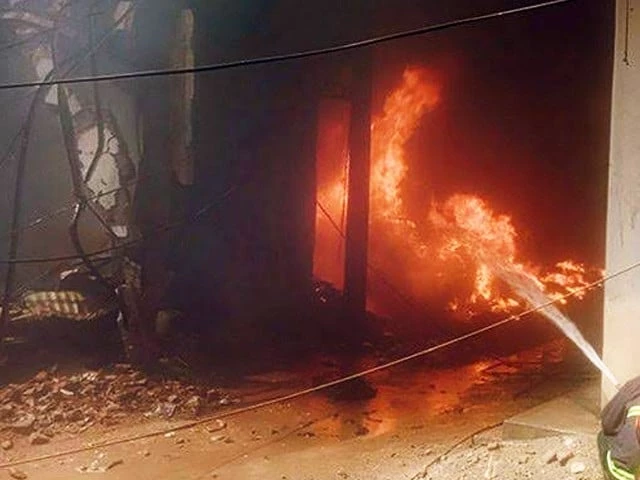
For decades, the Middle East has been described as a region where old rivalries repeatedly produce new conflicts. But the war involving Iran, Israel and the United States is different in one important respect: it is no longer simply another chapter in the region’s long history of confrontation. It is beginning to change the strategic calculations of almost every major power in the Middle East.
The war has exposed the limits of military power, challenged the assumptions behind the existing regional security architecture and pushed countries that once relied almost entirely on the United States to think more seriously about their own defense capabilities and diplomatic options.
At the same time, China is becoming more important, not necessarily because Beijing is replacing Washington militarily, but because the war is creating space for a different kind of influence: diplomacy, economic leverage, energy relationships and political mediation.
And somewhere between these competing powers sits Pakistan, a country that has traditionally tried to maintain relations with both the Arab Gulf and Iran, while also retaining close strategic ties with China and a complicated but important relationship with the United States.
The biggest question, therefore, is no longer simply who will win the war. The bigger question is, what kind of Middle East will emerge after it?
The United States remains the most powerful military actor in the Middle East. Its ability to project air and naval power over long distances is unmatched. But the Iran war has demonstrated something equally important that military superiority does not automatically translate into political control.
Iran has increasingly tried to turn geography into a weapon. The Strait of Hormuz, the Red Sea and other strategic waterways have become part of Tehran’s pressure strategy. Instead of relying solely on conventional military confrontation, Iran has sought to increase the economic and strategic costs of the war by putting pressure on shipping, energy infrastructure and regional trade routes.
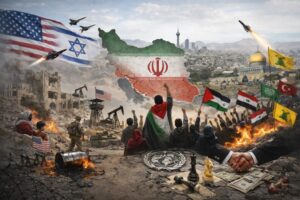
That matters because the Middle East is not simply a collection of countries. It is the centre of some of the world’s most important energy and shipping routes. A conflict that disrupts those routes quickly becomes a global crisis. The war has therefore demonstrated that a country does not necessarily have to defeat the United States militarily to challenge American strategy. It can instead make the political and economic cost of continued military engagement increasingly difficult to sustain. That could become one of the most important lessons of this conflict.
One question often asked these days is, what will be the eventual outcome of the war? Predicting the precise end of the war would be premature. But there are several possible outcomes, and none necessarily looks like a complete victory for one side.
The most realistic outcome may be some form of negotiated settlement after prolonged pressure. Iran is unlikely to accept an agreement that looks like unconditional surrender. At the same time, Washington has little incentive to remain trapped indefinitely in another large Middle Eastern conflict. This creates a familiar but complicated pattern: military escalation followed by diplomacy.
Read More: A War at Sea: From Hormuz to Bab el-Mandeb
The war could eventually produce an agreement covering several issues, Iran’s nuclear program, sanctions, regional security, maritime access and mechanisms for preventing another direct US-Iran confrontation. But even if a formal peace agreement is reached, the strategic conflict will not necessarily end. Iran will want to preserve its sovereignty, regional influence and deterrence capability.
The United States will want to prevent Iran from rebuilding a military capability capable of threatening Israel, Gulf states and American forces. Israel will seek to ensure that Iran cannot quickly restore the capabilities it considers an existential threat. And the Arab Gulf states will want something different from all three: security without becoming the battlefield of another great-power confrontation.
The next phase of the Middle East may therefore be defined less by war and more by negotiations over the security architecture that follows it. America is not leaving the Middle East, but its role is changing. Every major Middle Eastern conflict produces predictions that the United States is about to leave the region. That conclusion would be premature. Washington still has military bases, naval capabilities, intelligence networks, alliances and deep political relationships across the region. No other external power can currently replicate the entire American security infrastructure.
But the nature of American power may be changing. For years, Washington operated on the assumption that its military presence was the ultimate guarantee of regional stability. The Iran war has made that assumption harder to maintain. American allies are now asking a more uncomfortable question: What happens if Washington’s priorities change?
The answer is already influencing defense planning in Saudi Arabia, the United Arab Emirates, Qatar and other Gulf states. Rather than abandoning the United States, these countries are likely to pursue a more diversified strategy, maintaining American security ties while simultaneously expanding relationships with China, Europe, Turkiye and other regional powers. The result may not be an American withdrawal. It may instead be the end of American exclusivity in the Middle East. Washington could remain the most powerful external military actor while no longer being the only major power capable of shaping regional politics.
The Gulf states are learning a difficult lesson where monarchies have spent decades investing heavily in American weapons and security partnerships. Yet the Iran war has highlighted a basic vulnerability that sophisticated weapons cannot completely eliminate geographical risk. Saudi Arabia, the UAE, Qatar, Bahrain and other states are located within a region where missiles, drones, cyberattacks and attacks on maritime infrastructure can rapidly cross borders. This is encouraging Gulf governments to think beyond individual national defense.
The first signs of this shift are already visible. Saudi Arabia has backed a new maritime security arrangement involving a number of regional and international countries, with Pakistan, Turkiye and Egypt among the states supporting a joint statement. The initiative reflects growing concern over the security of the Red Sea, Bab al-Mandeb and wider maritime routes. If this trend continues, the Middle East could gradually move towards overlapping security arrangements rather than one dominant alliance.
Read More: Tehran Emerges Stronger as US-Iran Deal Reshapes Post-War Balance of Power in Middle East
Instead of a NATO-style organization covering the entire region, there may be several smaller networks focused on maritime security, missile defense, intelligence sharing, counterterrorism and protection of critical infrastructure. That would be a major change.
Another important question is that could new Middle Eastern alliances emerge? Very possibly, but they may not look like traditional military alliances. The old regional order was relatively simple. There were American partners. There was Iran and its network of partners and armed groups. Israel had its own strategic relationship with Washington. Turkiye pursued an increasingly independent foreign policy. And China and Russia remained important but secondary external players.
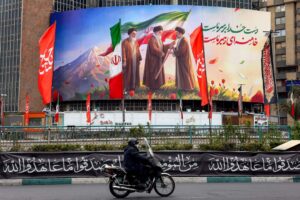
But, the new order is more complicated. Saudi Arabia is strengthening relations with China while maintaining its American partnership. The UAE is similarly diversifying. Qatar remains closely connected to Washington but also maintains extensive diplomatic and economic relations with other powers. Turkiye is seeking greater strategic autonomy. Iran is trying to preserve its influence despite the enormous pressure created by the war. And Pakistan occupies an unusual position because of its relations with Saudi Arabia, Iran, China and the United States.
This could produce a Middle East where countries no longer ask “Whose side are you on?” Instead, they may increasingly ask “Which partnership serves which interest?” That would represent a shift from bloc politics to multi-alignment.

Farkhund Yousafzai is a seasoned journalist and analyst with over a decade of experience in the media industry. He specializes in national politics and international relations and regularly contributes as an analyst to national and international media outlets.