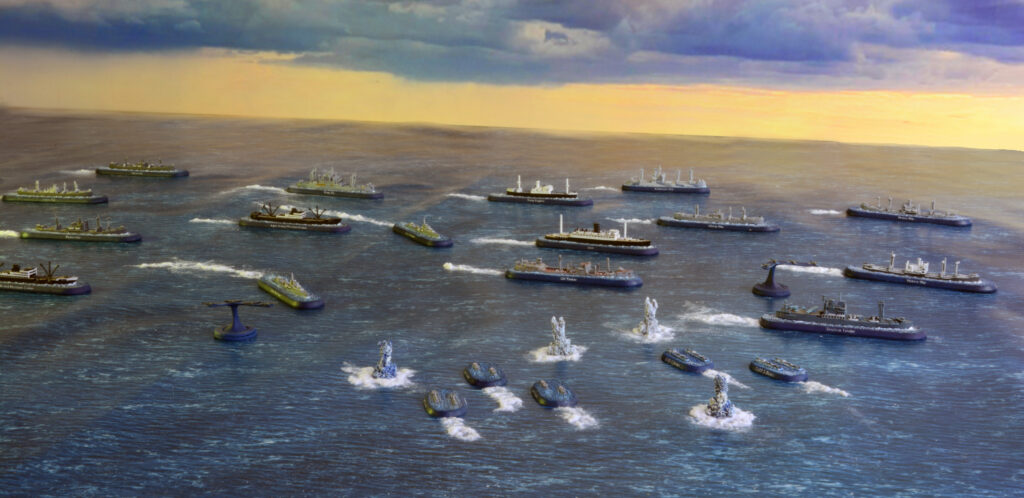
The Middle East is entering a new and potentially more dangerous phase of conflict. Just as global markets were struggling to absorb the economic shock caused by the US-Iran confrontation and the disruption of shipping through the Strait of Hormuz, another strategic chokepoint has suddenly come under threat. Yemen’s Houthi movement has announced a “naval blockade” against Saudi Arabia and warned that Saudi-linked vessels would no longer be allowed to pass safely through the Bab el-Mandeb Strait.
Whether the Houthis can fully enforce such a blockade remains uncertain. But the announcement itself has sent a strong geopolitical message, the battlefield is expanding beyond Iran, and critical maritime routes are increasingly becoming weapons in the region’s broader conflict.
If Bab el-Mandeb also becomes unstable, the consequences could extend far beyond the Middle East, affecting oil prices, global trade, inflation, food supplies, and economies from Europe to Asia.
For decades, the Strait of Hormuz has been regarded as the world’s most important energy chokepoint. Roughly one-fifth of global oil supplies traditionally passed through Hormuz before US, Israel-Iran war started on February 28. But now, shipping through Hormuz has become increasingly risky, forcing many energy companies to seek alternative routes. That alternative has been the Red Sea. Oil transported through Saudi Arabia’s East-West pipeline reaches Yanbu on the Red Sea coast before passing through the Bab el-Mandeb Strait toward the Suez Canal and European markets. Now that route is also facing uncertainty.
Bab el-Mandeb connects the Red Sea with the Gulf of Aden and ultimately the Indian Ocean. Nearly a quarter of global maritime trade passes through this narrow waterway, including millions of barrels of oil and significant volumes of liquefied natural gas (LNG). If both Hormuz and Bab el-Mandeb remain under sustained pressure, the world could witness an unprecedented disruption of maritime trade.
The Houthis argue that Saudi Arabia has maintained an air, sea, and land blockade against territories under their control for years. The latest escalation came after the Houthis accused Saudi-backed Yemeni forces of attacking Sanaa Airport to prevent an Iranian aircraft from landing. In response, the Houthis claimed to have launched missiles toward Saudi Arabia’s Abha Airport before announcing what they described as reciprocal measures against Saudi maritime traffic.
Their message was simple. “If Yemen remains under blockade, Saudi Arabia will face one as well.” However, the timing suggests there is a much broader geopolitical calculation. The Houthis are widely considered Iran’s closest regional ally outside Lebanon. As Tehran faces sustained military pressure from the United States, opening another front through Yemen allows Iran’s broader regional alliance to increase pressure on America’s partners without necessarily engaging directly.
Read More: Houthis Impose Naval Blockade on Saudi Arabia as Iran-US Conflict Escalates Again
One of Iran’s long-standing security doctrines relies on “Axis of Resistance”, a network of allied armed groups across the Middle East. Instead of responding to military pressure through conventional warfare alone, Tehran has often relied on regional partners to stretch its adversaries across multiple fronts. The Houthis in Yemen have repeatedly demonstrated their ability to threaten international shipping.
Since the Gaza war began in late 2023, they have attacked dozens of commercial vessels in the Red Sea using drones, anti-ship missiles, and naval drones. Those attacks forced major shipping companies to reroute vessels around Africa, significantly increasing transportation costs. If the current tensions continue, Yemen could once again become one of the most active fronts in the broader regional conflict.
So, what happens if Bab el-Mandeb is disrupted? The answer is worrisome. Even if the Houthis never fully close the waterway, the mere threat can produce significant economic consequences. Insurance premiums for commercial vessels typically rise sharply whenever missile or drone attacks become more likely. Shipping companies may once again divert vessels around the Cape of Good Hope in southern Africa rather than risk sailing through the Red Sea. That alternative route adds thousands of nautical miles to each voyage. Longer journeys mean higher fuel consumption, increased freight costs, delays in global supply chains, more expensive imported goods, and higher inflation worldwide.
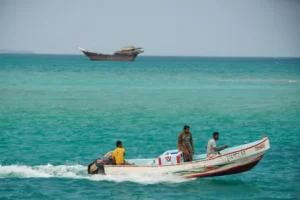
Energy markets are especially sensitive. If buyers begin fearing simultaneous disruptions in both Hormuz and Bab el-Mandeb, oil prices could experience another sharp spike regardless of whether actual exports decline significantly. Financial markets generally react not only to disruptions, but also to uncertainty.
The world economy has only recently begun recovering from years of supply-chain disruptions caused by COVID-19, the Russia-Ukraine war, and energy market volatility. Another prolonged crisis in Middle Eastern shipping lanes could reverse much of that progress. Europe would likely experience increased energy costs. Asian manufacturing economies, including China, Japan, South Korea, and India, could face higher transportation expenses. Food-importing countries may also experience higher prices as shipping costs rise. For developing economies already struggling with inflation and currency depreciation, the impact could be especially severe.
Read More: Iran Hits US Military Assets as American Strikes Enter 10th Day
So what happens next? Much depends on whether the Houthis attempt to physically enforce their declared blockade. If commercial vessels begin coming under attack, international naval coalitions operating in the Red Sea could increase military operations. Saudi Arabia may also reconsider its restrained approach toward Yemen. Iran, meanwhile, is likely to continue denying direct involvement while benefiting strategically from increased pressure on its regional adversaries. Diplomatic channels remain open, but each new military incident narrows the space for negotiations.
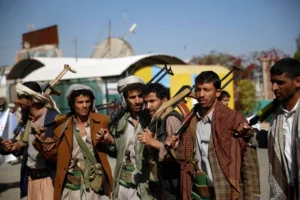
In fact, the threat against Bab el-Mandeb is not simply another development in Yemen’s long civil war. It represents a potential expansion of a broader regional conflict that now stretches from the Persian Gulf to the Red Sea. With the Strait of Hormuz already under pressure, instability at Bab el-Mandeb raises the possibility that the world’s two most critical maritime energy corridors could simultaneously face disruption, a scenario few global economies are prepared to absorb.

Farkhund Yousafzai is a seasoned journalist and analyst with over a decade of experience in the media industry. He specializes in national politics and international relations and regularly contributes as an analyst to national and international media outlets.