When US and Israeli forces launched military operations against Iran earlier this year, many analysts predicted that Tehran would emerge weakened, isolated, and ultimately forced to accept Washington’s terms. Some even suggested the conflict could trigger internal instability and reshape the balance of power in the Middle East. US President Donald Trump and Israeli Prime Minister Benjamin Netanyahu also publicly suggested that regime change in Iran was imminent. Months later, however, the outcome appears far more complicated.
The newly signed Memorandum of Understanding (MoU) between the US and Iran offers a detailed glimpse into how the war is winding down and what each side has gained from the process. While Washington secured key commitments on Iran’s nuclear program and regional security, the agreement also indicates that Tehran has preserved core strategic interests, secured a pathway toward sanctions relief, and reinforced its position as a central regional actor.
At the outset of the conflict, the prevailing assumption was that sustained military pressure would weaken Iran’s leadership, trigger domestic instability, or force Tehran into a far weaker negotiating position. Some even speculated that the confrontation could result in political transformation inside the country. Months later, none of these expectations appear to have materialized.
Instead, Iran’s political system has survived the war intact, maintained internal cohesion, and preserved its negotiating leverage. It now sits across the table as a recognized stakeholder in an agreement endorsed by Washington.
The first clause of both versions calls for an immediate and permanent cessation of military operations. What stands out is what the clause does not contain. There is no language describing Iran as the defeated party. There is no requirement for unilateral military withdrawal, no admission of responsibility, and no provision imposing punitive measures on Tehran. Instead, both sides commit to refrain from future threats and the use of force. Diplomatically, this places Iran and the United States on relatively equal footing. The agreement resembles a negotiated settlement rather than a document imposed by a victor on a defeated adversary.
The strongest indication that Iran may have gained significant leverage appears in the sanctions provisions. Both texts state that Washington will work toward ending primary and secondary sanctions while facilitating Iranian oil exports and related financial transactions. For years, sanctions have represented one of the most powerful tools available to the United States in its confrontation with Iran. The MoU effectively acknowledges that sanctions relief is now part of the pathway to regional stability.
Read More: G7 Backs US-Iran Deal, Supports Ukraine and Calls for Stronger Indo-Pacific Security
The Iranian version goes even further, describing sanctions removal as a central pillar of the negotiations and linking it to a mutually agreed implementation timetable. If sanctions are significantly reduced and oil exports recover, Tehran could gain access to billions of dollars in revenue, strengthening both its economy and regional influence.
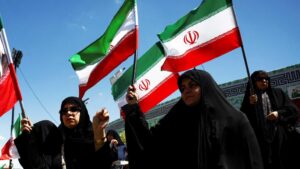
The issue of frozen Iranian assets may prove equally significant. While the US text leaves implementation details to future negotiations, the Iranian version emphasizes unrestricted access to the released funds through mechanisms approved by Iran’s Central Bank. For Tehran, access to frozen assets is not merely an economic issue. It represents recognition of Iran’s legitimacy as a negotiating partner and could provide critical financial breathing space after months of conflict.
One of the most closely watched sections concerns the Strait of Hormuz. The agreement calls for the lifting of the US naval blockade and the restoration of commercial maritime traffic. Crucially, the memorandum does not remove Iran from the equation.
Instead, it recognizes Tehran as an essential stakeholder in maintaining maritime security in one of the world’s most important energy corridors. The Iranian version goes further by referencing consultations with Oman and Gulf states regarding future arrangements in Hormuz. Rather than reducing Iran’s role, the agreement appears to institutionalize it. This may be one of Tehran’s most important geopolitical gains from the conflict.
The area where Washington can claim a significant success is the nuclear issue. Both versions state that Iran will reaffirm that it will not produce or acquire nuclear weapons. Future negotiations will also address uranium enrichment and existing stockpiles. For the United States and its regional allies, preventing a nuclear-armed Iran has long been the central strategic objective. The memorandum therefore provides Washington with an important diplomatic achievement.
The differences regarding Lebanon are also revealing. The US version treats Lebanon primarily as one front within a broader ceasefire. The Iranian text places much greater emphasis on Lebanon’s sovereignty and territorial integrity. This language reflects Tehran’s longstanding regional priorities and suggests Iran intends to remain an influential actor in regional security discussions even after the conflict ends. Far from being pushed out of regional affairs, Iran appears positioned to retain a significant voice in shaping the post-war order.
Read More: Iran Signals Unity on US Deal, Warns of Strong Response to Breaches
Perhaps the most striking provision is the proposed $300 billion reconstruction and economic development package. Although details remain unclear, the inclusion of such a figure indicates that major international and regional actors are already thinking about economic normalization rather than continued isolation of Iran. If implemented, such investment could dramatically accelerate Iran’s economic recovery and further strengthen the country’s regional standing.
So, the question is who has the stronger hand? While the US can claim diplomatic gains such as commitments on Iran’s nuclear activities, improved maritime security, and reduced risk of wider regional escalation, Iran appears to have emerged from the conflict in a stronger overall position. Despite sustained military and economic pressure, it has preserved its political system, secured pathways toward sanctions relief, gained access to frozen assets, restored oil export channels, and maintained its recognition as a key regional actor.
For a country that entered the confrontation under significant pressure, these outcomes reflect not just resilience but strategic recovery and enhanced leverage. Ultimately, the conflict has fallen short of achieving the political transformation many expected, instead reinforcing Iran’s domestic cohesion and elevating its regional standing, leaving it more politically consolidated and strategically stronger than before the war.

Farkhund Yousafzai is a seasoned journalist and analyst with over a decade of experience in the media industry. He specializes in national politics and international relations and regularly contributes as an analyst to national and international media outlets.