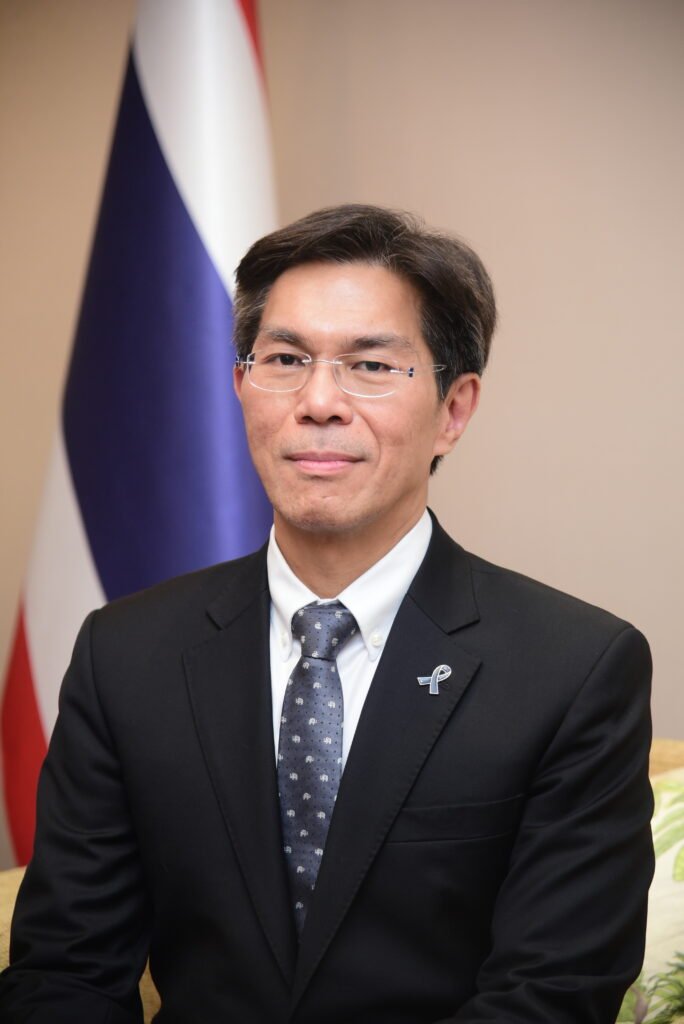
In this exclusive conversation, The Diplomatic Insight engages with His Excellency Rongvudhi Virabutr, Ambassador of the Kingdom of Thailand to the Islamic Republic of Pakistan.
Since assuming his post in Islamabad, Ambassador Virabutr has brought empathy, purpose, and strategic vision to Thailand’s relations with Pakistan.
His tenure reflects a deep commitment to strengthening economic cooperation, empowering communities, and deepening people-to-people ties between the two nations.
This exclusive interview by The Diplomatic Insight is our part in the burgeoning bilateral ties.
Your Excellency, could you share an overview of your professional journey leading to your appointment as Thailand’s Ambassador to Pakistan? How have your previous diplomatic and governmental experiences shaped your approach to international engagement?
Throughout the 25 years of diplomatic journey, I spend a lot of my time in multilateralism works. It taught me a lot in particular issues on sustainable development.
Before arriving in Pakistan, I served as Ambassador and Deputy Permanent Representative of Thailand to the United Nations in Geneva.
Working in that environment taught me that diplomacy is ultimately about people. International co-operation is not confine only with written statements or agreement that we signed but it is about improving livelihood of our people.
Being appointed as Ambassador of the Kingdom of Thailand to the Islamic Republic of Pakistan is my profound honor. This country has given me new perspectives, new friendships, and new inspiration.
Pakistan’s resilience, warmth, and generosity have reminded me that diplomacy must be rooted in empathy. Our mission is to unlock possibilities that are far greater than what any agreement alone can deliver.
Therefore, my mission here is not only to deliver bilateral written signing agreements but to bring genuine happiness to the faces of our Pakistani friends.
Diplomacy is not about prestige; it is about purpose. We have to ensure that the work we do today becomes a foundation for a better tomorrow—for both our nations and for generations yet to come.
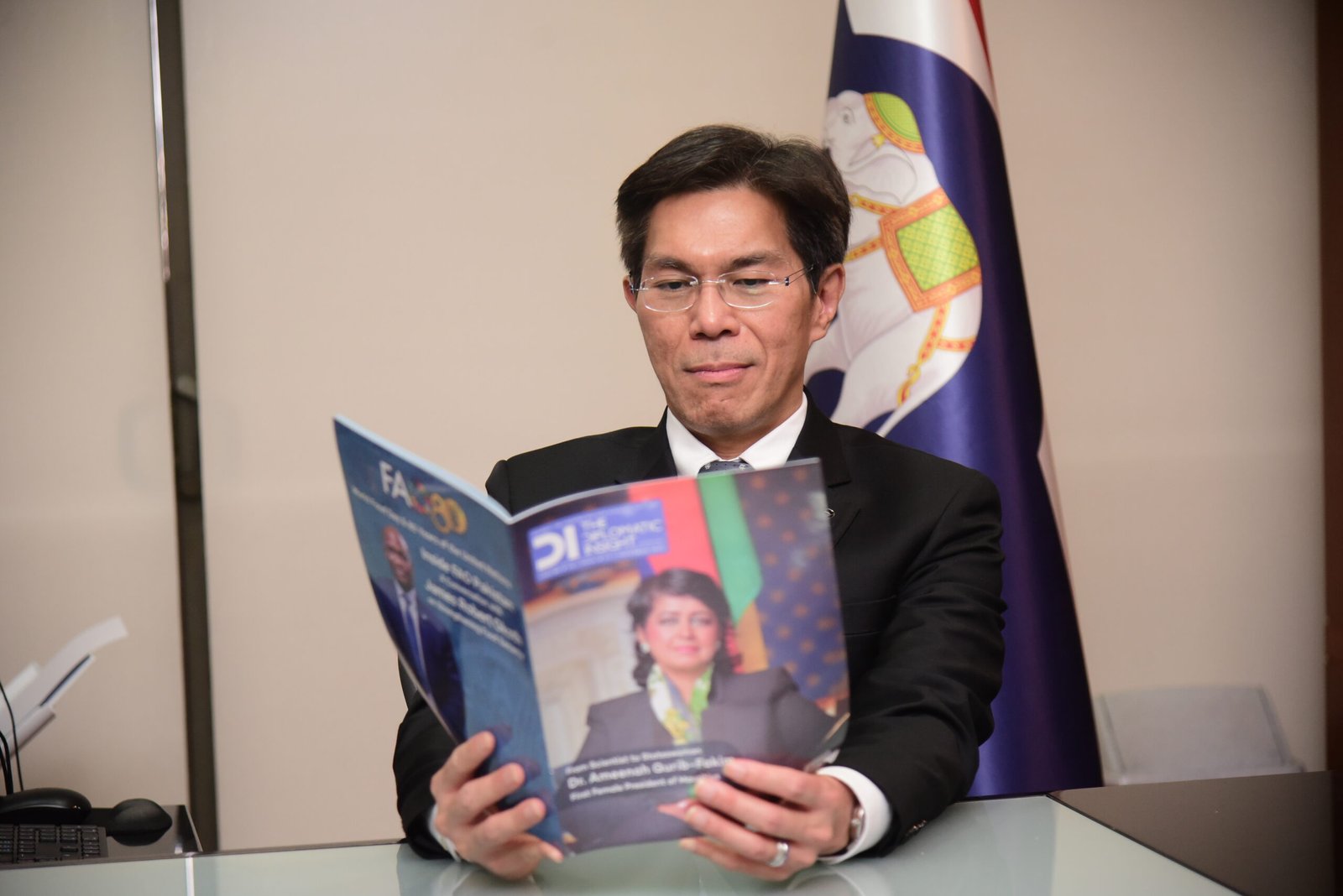 Since assuming your responsibilities as Thailand’s Ambassador to Pakistan, how would you describe your overall experience in the country? Could you highlight some of the key milestones, achievements, or memorable moments during your tenure?
Reaching my one‑year in Pakistan has been a deeply meaningful milestone. From the moment I arrived, the warmth of the Pakistani people made me feel at home.
Despite the geographic distance between our countries, the emotional distance disappeared instantly. I discovered that our peoples share a similar cultural DNA—hospitality, generosity, and a profound respect for tradition and family.
One of the most memorable milestones during my tenure has been our work with UN Women in Swabi and Sialkot. Together, we launched initiatives that helped women transform backyard gardens into income‑generating assets and provided training in beauty skills to support financial independence.
These projects were not just activities; they were designed to deliver real, tangible benefits to the people of Pakistan.
As I said, our mission is to bring genuine smiles back to the faces of our Pakistani friends. Empowering women to earn their own income is one of the most powerful ways to achieve this.
When women gain confidence, independence, and financial freedom, they not only uplift themselves but also contribute more meaningfully to their families, communities, and society at large.
Seeing the joy and pride on the faces of the women who participated was deeply touching. Although Swabi and Sialkot are small communities, the impact of these programs reminded me of a simple truth: “from small seeds, great forests grow.”
Witnessing empowerment translate into reality remind me that happiness smile of people is worth more than any rewards in the world.
Your Excellency, how do you assess the current state of Thailand–Pakistan diplomatic relations, and which priority areas are central to further strengthening these ties? Could you also share any ongoing initiatives or upcoming engagements aimed at enhancing bilateral cooperation?
Thailand and Pakistan stand at a historic turning point. Our political ties have always been warm, but the next chapter must be defined by a deeper, more purposeful partnership—one that delivers real benefits to the people of both nations.
We determine to move our relationship from friendly neighbors to true partners in development.
On the governmental side, we have set an ambitious but achievable goal: doubling bilateral trade from USD 1.1 billion to USD 2.2 billion. To reach this milestone, we are pushing for the conclusion of the Thailand–Pakistan Free Trade Agreement.
This FTA is not just a document; it is a strategic gateway to a new era of economic cooperation. We are also upgrading our Economic Commission into a Joint Commission led by our Foreign Ministers, ensuring high‑level coordination that drives results across all sectors.
The halal industry is another pillar of our cooperation. Thailand, despite not being a Muslim‑majority country, has built a strong halal ecosystem.
By harmonizing halal standards with Pakistan, we can create a trusted supply chain that benefits consumers and businesses alike.
This collaboration has the potential to unlock billions in trade and position both countries as leaders in the global halal market.
On the people‑to‑people front, we aim to double tourism flows in both directions. To support this, we are working to expand flight frequency and capacity under the Air Services Agreement.
Once achieved, travel will become easier, more affordable, and more frequent—bringing our peoples closer and strengthening the human foundation of our partnership.
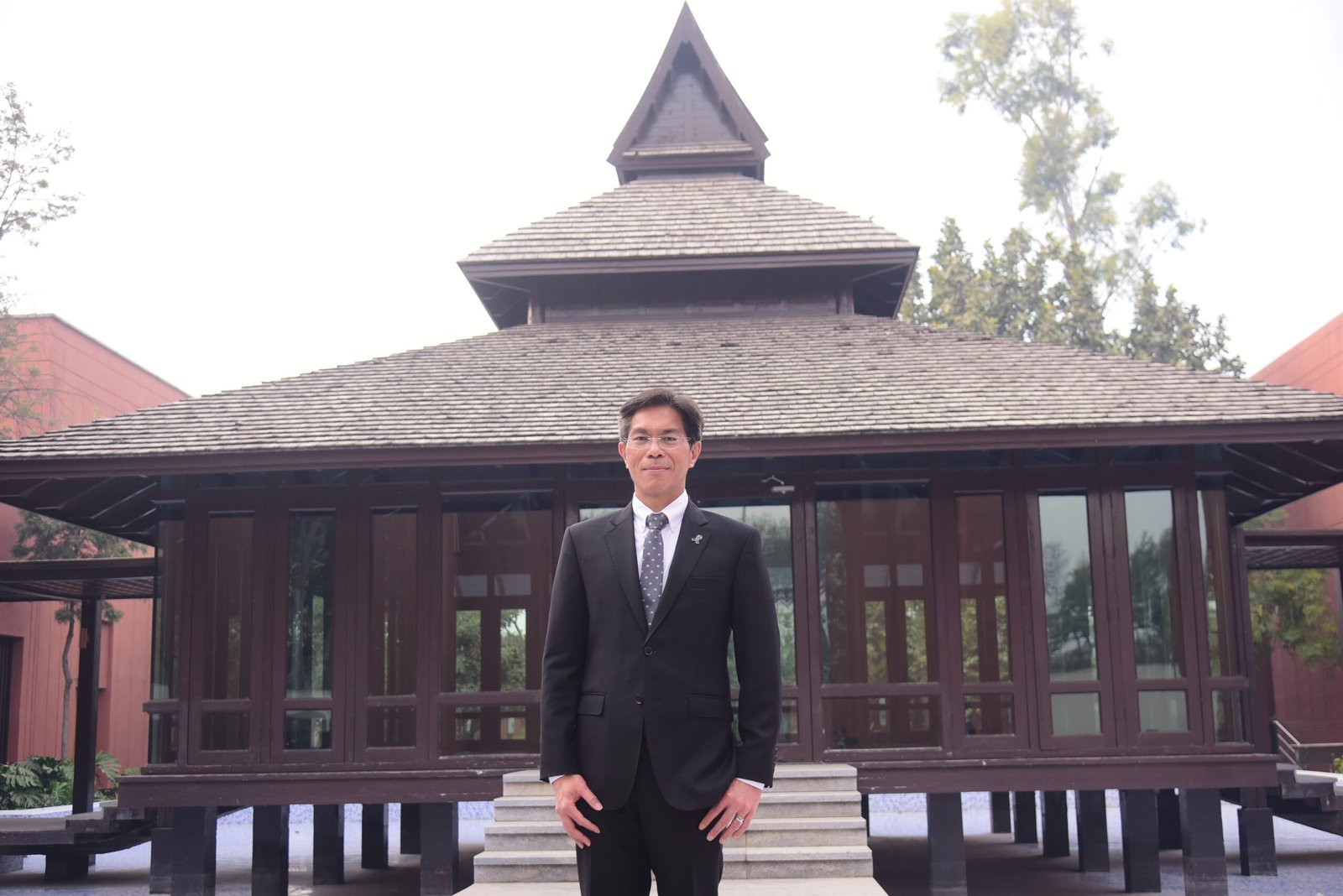
Your Excellency, Thailand and Pakistan continue to expand their trade and economic cooperation. In your view, which sectors offer the greatest potential for mutual economic growth, and how can both governments support deeper collaboration between their respective private sectors?
Our bilateral trade currently stands at USD 1.1 billion last year with around USD 1.6 billion until now this year, but the potential is far greater.
Pakistan’s strengths in textiles, seafood, IT, and defense industry complement Thailand’s expertise in automotive production, food processing, and halal industries.
These complementarities create natural pathways for collaboration that can drive growth for both nations.
The halal sector is a game changer. Mutual recognition of halal certification would allow high‑quality products to move seamlessly between our markets.
Pakistan can also support Thailand’s global halal supply chain, especially in fisheries and raw materials. Together, we can build a halal ecosystem that is trusted, efficient, and globally competitive.
The Thailand–Pakistan FTA will be the key to unlocking this potential. By reducing the cost of imported raw materials, it will enhance Pakistan’s manufacturing competitiveness and stimulate investment.
We are also exploring talent mobility in the digital sector, where Pakistan’s IT freelancers and digital nomads can contribute significantly to our digital transformation.
The future of our economic partnership lies not only in what we trade, but in what we create together. By embracing new value chains—digital, halal, automotive, food processing—we can build a partnership that is resilient, innovative, and future‑ready.
What opportunities exist for Pakistan’s business community to explore investment and partnership prospects in Thailand particularly in manufacturing, tourism, agriculture, food processing, and technology? Could you elaborate on any incentives Thailand offers to foreign investors, including those from Pakistan?
Thailand is strategically positioned as the gateway to ASEAN—a region of 600 million people and a USD 3.6 trillion economy. Pakistan, in turn, can serve as the bridge of Thailand and ASEAN to Central Asia.
Together, our regions represent nearly one billion people, forming one of the world’s most dynamic economic corridors.
At present, investment flows between our countries remain modest. One key factor is the need to improve Pakistan’s Ease of Doing Business ranking, which is a critical indicator for investors.
The Royal Thai Embassy stands ready to support Pakistan in strengthening regulatory areas that matter most to businesses. With the right reforms, Pakistan can attract significantly more investment from Thailand.
Our goal is for Pakistani companies to see Thailand not just as a market, but as a regional accelerator for their global ambitions.
Together, we can build investment corridors that create jobs, strengthen industries, and drive long‑term prosperity.
Your Excellency, how do you view the potential for enhancing academic collaboration between Thai and Pakistani institutions? In what ways can both countries further promote cultural diplomacy, tourism exchange, and people-to-people connectivity?
Academic cooperation is one of the most powerful tools for building long‑term partnership. While Pakistani students already study in Thailand and Thai students are present in several Pakistani cities, the scale can grow significantly.
We aim to expand research partnerships, faculty exchanges, and institutional linkages that create lasting academic bridges between our nations.
Thailand’s TICA continues to offer annual training programs for Pakistani government officials, and we are working with COMSTECH to integrate leading Thai universities into its Centers of Excellence.
This will create a sustainable platform for scientific and academic collaboration that benefits both countries.
Culturally, our mission is to transform familiarity into genuine closeness. Thai Food Week in Islamabad, Rawalpindi and Lahore from 8-14 December 2025 brought authentic Thai chefs to train Pakistani culinary professionals, leaving a lasting “flavour of friendship” in local restaurants. This was never meant to be a one‑time event but a sustainable culinary bridge that continues to grow.
Looking ahead, the 2027 Gandhara Civilization Exhibition in Bangkok will be a historic milestone. Showcasing Pakistan’s Buddhist heritage in Thailand will deepen cultural understanding and attract global attention to Pakistan’s archaeological treasures. This is cultural diplomacy at its finest—using our shared past to inspire a shared future.
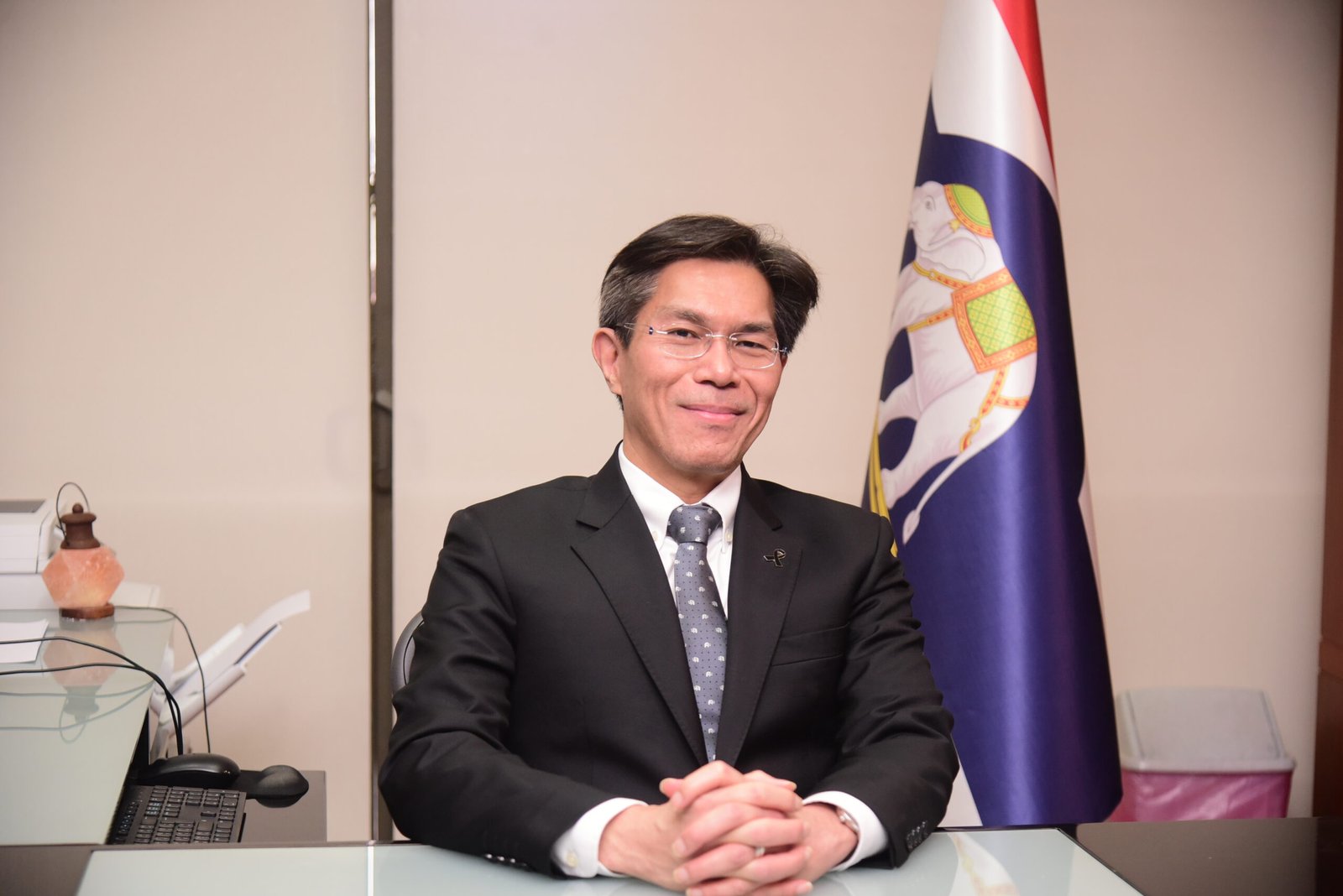
Your Excellency, how does Thailand define its role within ASEAN and the broader Asia-Pacific region, and what opportunities does this create for Pakistan to deepen engagement with Southeast Asia through Thailand?
Thailand sees itself as a connector within ASEAN. As the Chair of the ASEAN Committee in Islamabad for the second half of 2025, we are moving toward the vision of “Visibility, Tangibility, and Bring into Reality.”
ASEAN’s 600 million people and Pakistan’s 250 million together form a formidable economic force—if we can integrate our systems and ambitions.
We are looking forward to working with the Pakistani authorities to apply the paperless system for custom procedures.
By linking the paperless system of ASEAN Single Window, this will make imports and exports faster, more transparent, and more efficient.
We are also encouraging Pakistan to having FTAs with each individual ASEAN member states, creating a network of economic linkages that strengthens regional integration.
As the Chair of the ASEAN Committee in Islamabad, Thailand has initiated high‑level engagements with Pakistan’s Federal Ministers and major chambers of commerce.
Pakistan has the potential to become a Full Dialogue Partner of ASEAN, but this requires expanding its participation from 30 activities per year to closer to 100 across all three ASEAN pillars.
Two areas stand out for deeper cooperation: disaster management—linking NDMA with ASEAN’s AHA Centre—and peacekeeping, where Pakistan’s CIPS can collaborate with ASEAN member states.
These partnerships will strengthen regional resilience and elevate Pakistan’s global profile.
Your Excellency, Thailand has implemented successful initiatives in public administration, tourism development, digital transformation, and economic reforms. What best practices could be shared with Pakistan, and how can both countries collaborate on capacity building, training, or sector-specific development programs?
Thailand and Pakistan are entering a new phase—moving from friendly neighbors to partners in development.
Our cooperation is not about comparing whose practices is better, but about learning from each other and building complementary strengths. The goal is not competition, but co‑creation.
Our development initiatives must always bring real benefits to the people of Pakistan. Women’s empowerment is central to this vision.
When women gain confidence, earning their own income, and feel independence, the entire nation becomes stronger. This is why the Royal Thai Embassy is working on women empowerment.
Thailand’s experience in tourism development, digital transformation, and public administration offers valuable lessons. But the goal is not to replicate models—it is to co‑create solutions that fit Pakistan’s unique context.
We want to build systems that are sustainable, inclusive, and tailored to local needs.
The Royal Thai Embassy will continue championing initiatives that bring happiness smile to the faces of the Pakistani people. This is the heart of our partnership and the foundation of a shared future.
Together, we can build a relationship that is visible, tangible, and real—one that transforms potential into progress and progress into prosperity.
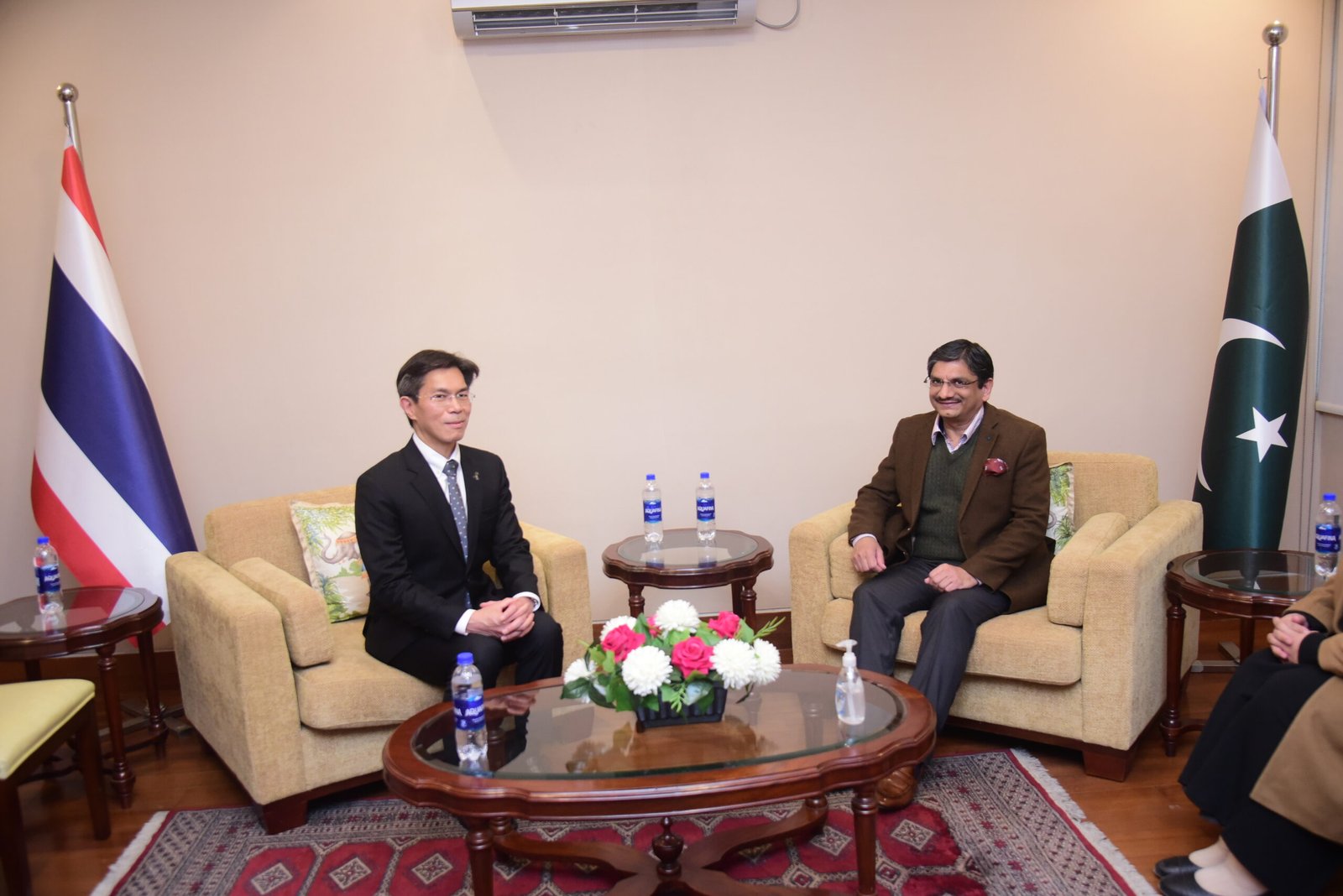
What message would you like to convey to Pakistan’s business community regarding trade, tourism, and future partnership opportunities with Thailand?
The future between Thailand and Pakistan is full of opportunity. Our economies are complementary, our markets are expanding, and our governments are committed to creating an environment where businesses can thrive.
This is the moment to explore, to connect, and to invest in each other’s strengths.
Thailand offers access not only to its own market but to the entire ASEAN region. Whether in manufacturing, tourism, halal food, agriculture, digital services, or logistics, there are countless avenues for collaboration.
With the upcoming FTA, trade will become easier, faster, and more cost‑effective—opening doors that were previously out of reach.
I encourage Pakistani businesses to view Thailand not just as a destination, but as a strategic partner. Together, we can build value chains that are competitive globally, create jobs locally, and drive prosperity regionally. The opportunities are real, and the time to seize them is now.
What advice would you offer to the youth of Pakistan, particularly those aspiring to pursue careers in diplomacy, international trade, tourism, or public service?
I place tremendous importance on the youth, and throughout my career in the foreign services —especially in advancing the Sustainable Development Goals — I have come to deeply recognize that the youth is an essential driving force for sustainable development.
In the past, we often said that it is the responsibility of our generation to hand over a better future to the next generation. That “next generation” is, of course, our youth.
However, in today’s world, I believe this mindset must evolve. Instead of simply preparing a future for them, we must prepare the youth to reshape the future for their own.
The world has changed rapidly. Today’s the youth have access to vast reservoirs of knowledges through the internet, social media, and digital platforms—far more than what was available when we were young.
They are equipped with information, tools, and global exposure that enable them to design their own future without waiting adults to hand it over.
What we must do, therefore, is to equip them intellectually—to give them the tools of critical and analytical thinking, to help them synthesize information and convert it into practical, actionable knowledge.
When young people can think critically, understand issues deeply, and apply knowledge to real‑world contexts, they gain the ability to shape their own destiny.
Concepts such as design thinking, along with many other global frameworks, are powerful tools that we should encourage them to learn.
As the world moves toward sustainable development, the youth must understand this direction and be able to design solutions to address SDG‑related challenges.
Every young person has the potential to do this—provided that they keep an open mind, commit to continuous learning, understand the problems they wish to solve, and adapt their knowledge to the social context around them.
When they can design solutions that are practical, relevant, and grounded in wisdom, they become true architects of change.
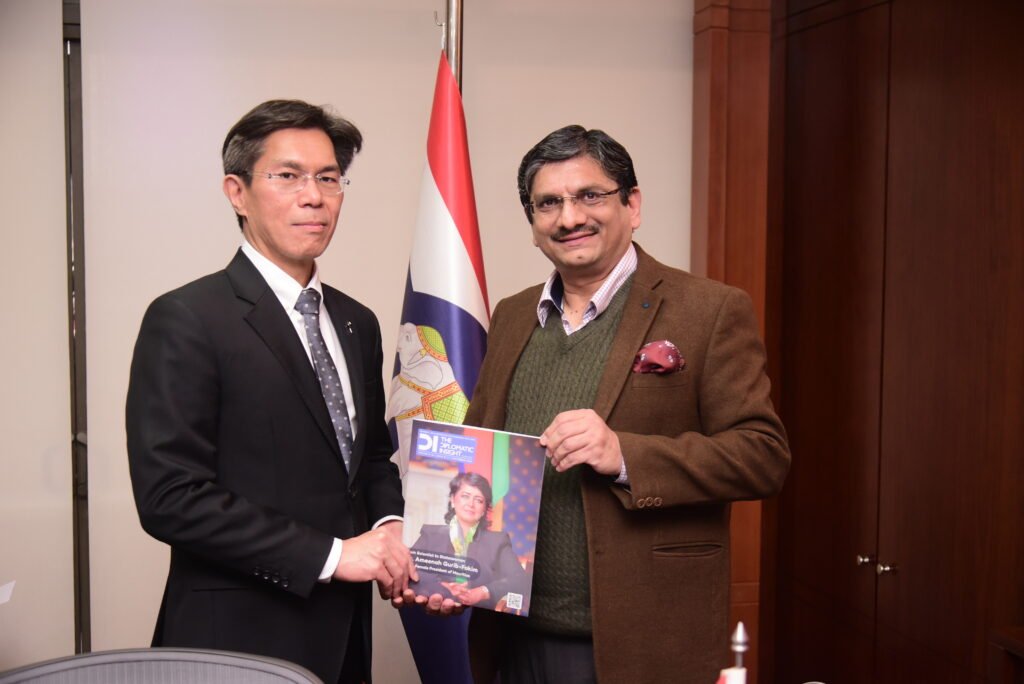
Finally, Your Excellency, do you have a message for the readers of The Diplomatic Insight regarding Thailand–Pakistan relations and the importance of regional cooperation?
I would like to emphasize that Thailand–Pakistan relations are entering a new era—one defined by partnership, purpose, and shared progress. Our two nations have always enjoyed warm ties, but today we stand on the threshold of something far greater.
Regional cooperation is no longer a choice; it is a necessity. In a world facing complex challenges—from climate change to economic uncertainty—our strength lies in our ability to work together.
Thailand is committed to serving as a connector between ASEAN and Pakistan, creating pathways for trade, tourism, cultural exchange, and development cooperation.
The future of our region depends on our willingness to collaborate, innovate, and support one another. We are confident that Thailand and Pakistan, together with our partners across Asia, can build a future that is more peaceful, more prosperous, and more connected than ever before.
We are not only a nation of friendship but we are also your development partner. We promise that in the future when our children will look back they would say “ That was the moment everything changed.”

Established in December 2008, The Diplomatic Insight is Pakistan’s premier diplomacy and foreign affairs magazine, available in both digital and print formats.